



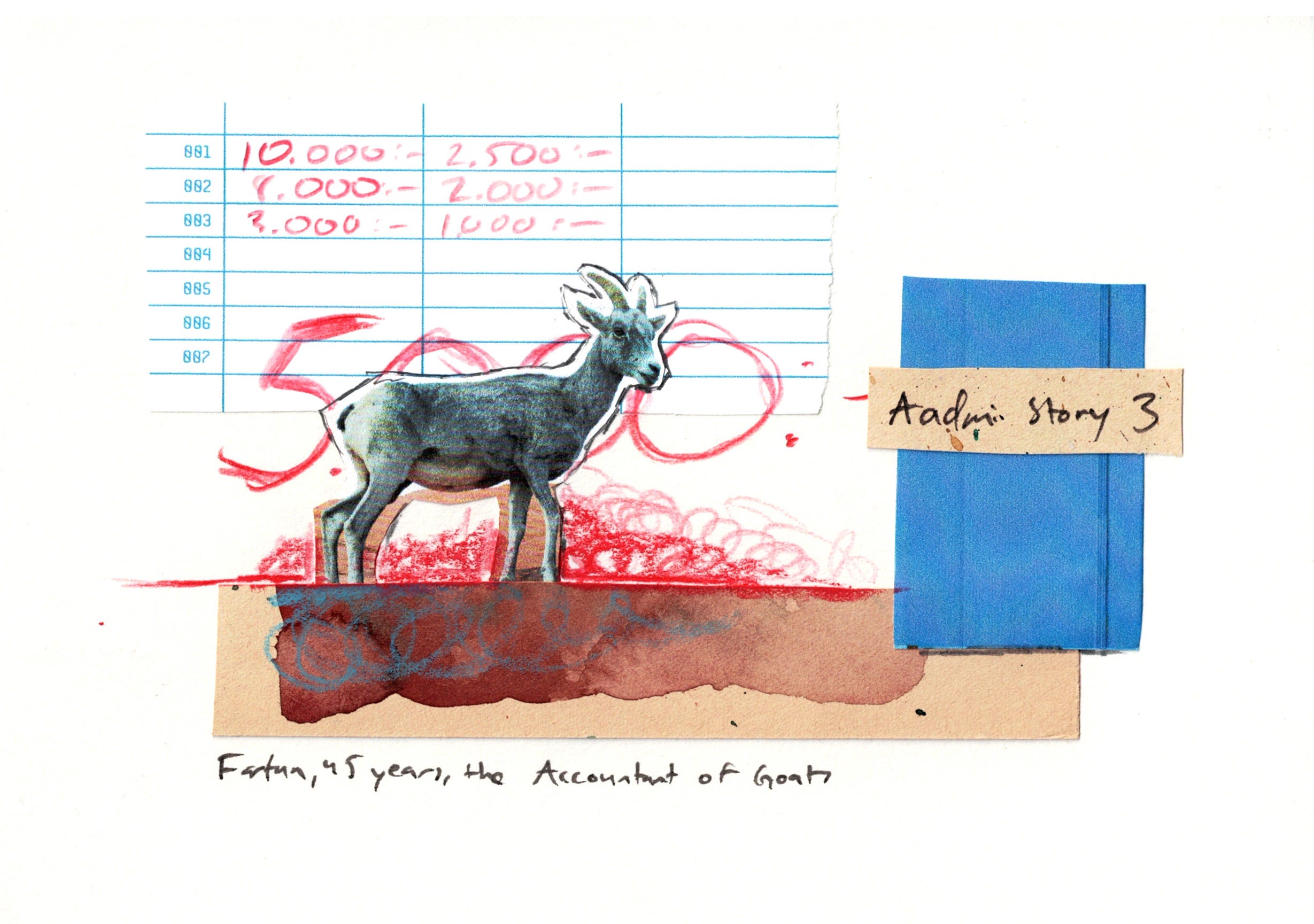
Fartun is 45. She owns goats. She also owns a small notebook with a blue cover. Every evening, she counts. Not just numbers. She writes: “Black goat with broken horn – limping but eating. White goat with twins – tired but proud. Brown goat – angry today for no reason.” She notes.
Her husband laughs. He says goats do not need notes.
Fartun says, “People who do not write things down forget that goats have characteristics.”

She used to be an accountant in a big city in Somalia. Before the war, she balanced books for a government office.
Now she balances her goats.
She wants a new notebook. The blue one has only five pages left.
Fartun is not a vulnerable Somali woman. She is an accountant who now works in goats. She buys and sells them.
Aadmi means human
This is a series of short stories by journalist Wilo Abdulle about ordinary Somali people – and about what it means to be human.
When the world looks at Somalia, it often sees only war, famine, pirates, clan killings, statelessness, displacement. Those things exist. But they are not the whole truth. They are not even most of the truth.
That version was written by the hunters.
War does not turn people into something else. It forces them to live ordinary lives in extraordinary circumstances. They still eat. Still teach. Still hope. Still sing songs for murdered leaders from other countries. The hunters’ stories never tell you that.
This is the lion’s story.
Inta libaaxu wax qorista ka
baranayo, sheeko kasta waxaa
sheegan doona ugaarsadeha.

Until the lion learns how to write,
every story will glorify the hunter.
Read the next Aadmi Story:
