



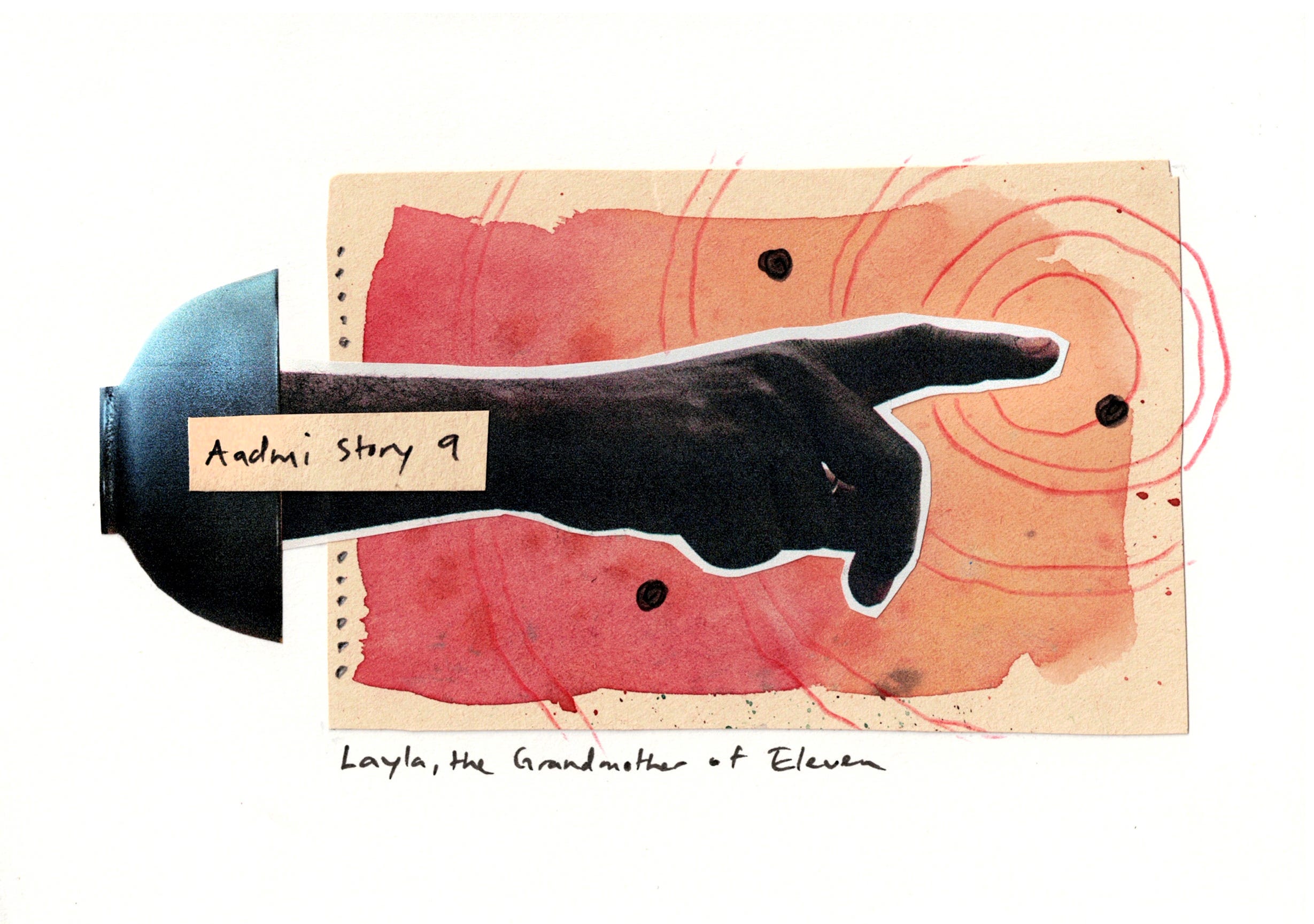
Layla is 70. She has eleven grandchildren. All of them are from her sons. She does not remember all their names. She calls all of them Waryaa (if male) or Naayaa (if female) – ”you there.”
Every afternoon, she sits under a talaal tree. She sorts beans. One handful at a time.
She removes the bad ones. She says: “Beans are like people. Some are good. Some are hard. You still cook them together.”
Her grandchildren come to her with problems. A lost goat. A broken cup. A torn notebook. A fight with a friend.
Layla listens. Then she gives them three beans.

She says: “Eat these. Then decide if it’s still a problem.”
It always works.
She wants a bigger bowl. So she can sort more beans at once.
Layla is not a vulnerable elder. She is a grandmother who solves problems with beans.
Aadmi means human
This is a series of short stories by journalist Wilo Abdulle about ordinary Somali people – and about what it means to be human.
When the world looks at Somalia, it often sees only war, famine, pirates, clan killings, statelessness, displacement. Those things exist. But they are not the whole truth. They are not even most of the truth.
That version was written by the hunters.
War does not turn people into something else. It forces them to live ordinary lives in extraordinary circumstances. They still eat. Still teach. Still hope. Still sing songs for murdered leaders from other countries. The hunters’ stories never tell you that.
This is the lion’s story.
Inta libaaxu wax qorista ka
baranayo, sheeko kasta waxaa
sheegan doona ugaarsadeha.

Until the lion learns how to write,
every story will glorify the hunter.
Read the next Aadmi Story:
