



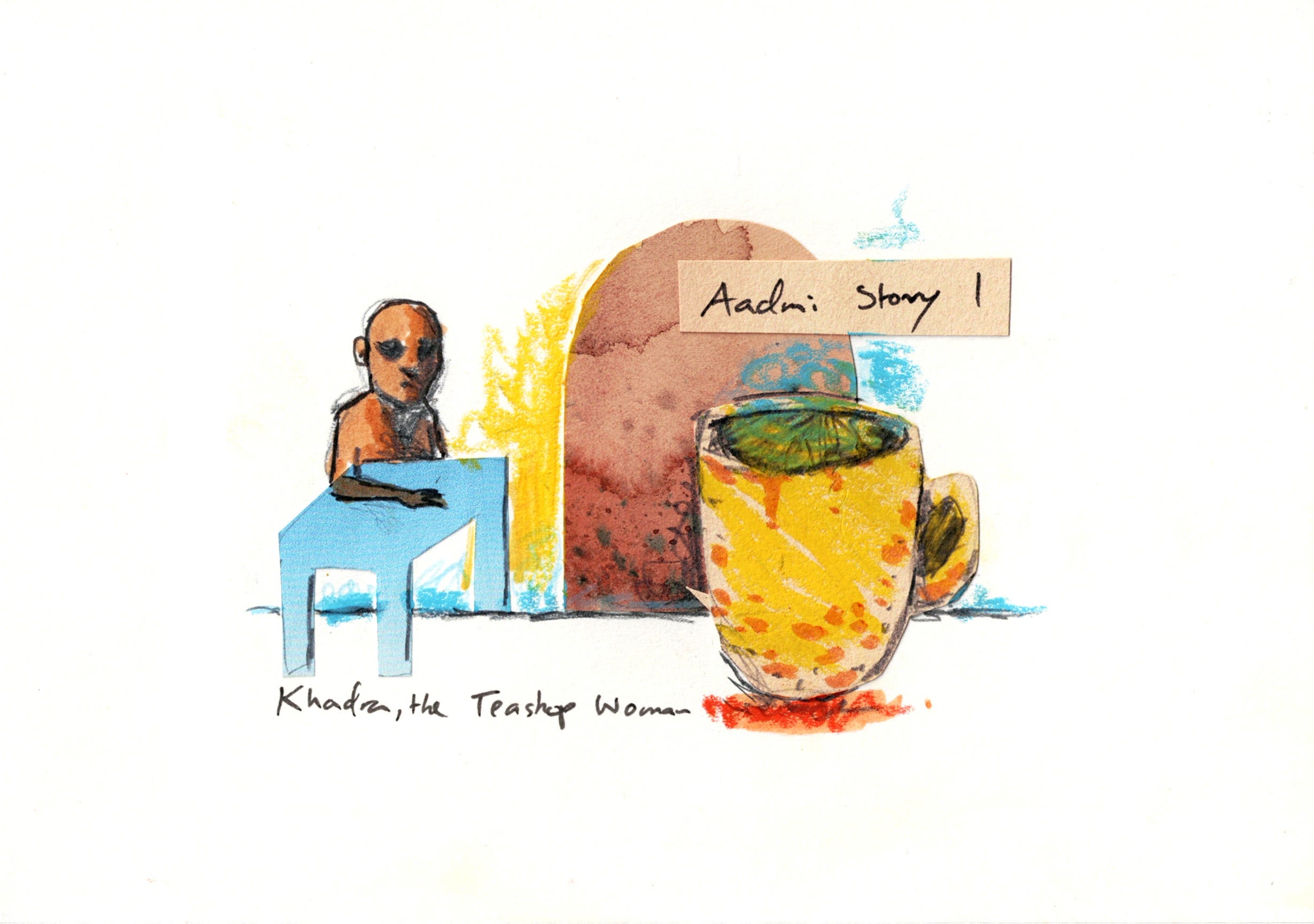
Khadra wakes at 4 a.m. every day. She boils water on a small clay stove. She adds cardamom, cinnamon, and too much sugar. Her teashop is an iron sheet, with plastic tables and few plastic chairs.
Her first customer comes at dawn. An old man with a limp – bakoorad. He drinks three black tea cups in a row. He never pays.
Khadra tells: “He was my father’s friend before the war. You don’t charge memory.”

She has a chipped yellow cup, color fading. She only gives it to people who are sad. She says the chip holds the sadness so the person can leave with less.
Khadra lost her husband in the war. She wants to buy a second table with blue color. So two sad people can sit at once and share stories that lighten their shoulders.
She is not a war widow. She is a woman who makes really good tea, value memories and care for people who are sad.
Aadmi means human
This is a series of short stories by journalist Wilo Abdulle about ordinary Somali people – and about what it means to be human.
When the world looks at Somalia, it often sees only war, famine, pirates, clan killings, statelessness, displacement. Those things exist. But they are not the whole truth. They are not even most of the truth.
That version was written by the hunters.
War does not turn people into something else. It forces them to live ordinary lives in extraordinary circumstances. They still eat. Still teach. Still hope. Still sing songs for murdered leaders from other countries. The hunters’ stories never tell you that.
This is the lion’s story.
Inta libaaxu wax qorista ka
baranayo, sheeko kasta waxaa
sheegan doona ugaarsadeha.

Until the lion learns how to write,
every story will glorify the hunter.
Read the next Aadmi story:

Gad Worlds vision och mission är att mänskliggöra dem som har avhumaniserats i medierna. Det här är en viktig del av det arbetet. Berättelserna om människorna bakom alla etiketter och statistik.
För att motverka snabbheten och copypaste i dagens medielandskap har dessa berättelser illustrerats – för hand.
Dessa korta berättelser gör vi i kombination med större på plats-reportage från Somalia. Riktig journalistik. Som den är menad att vara. Vi hoppas att du uppskattar berättandet!
Efter allt arbete och medföljande utmattning behöver jag själv denna kopp! Önskar att jag en dag kan besöka Khadra.