



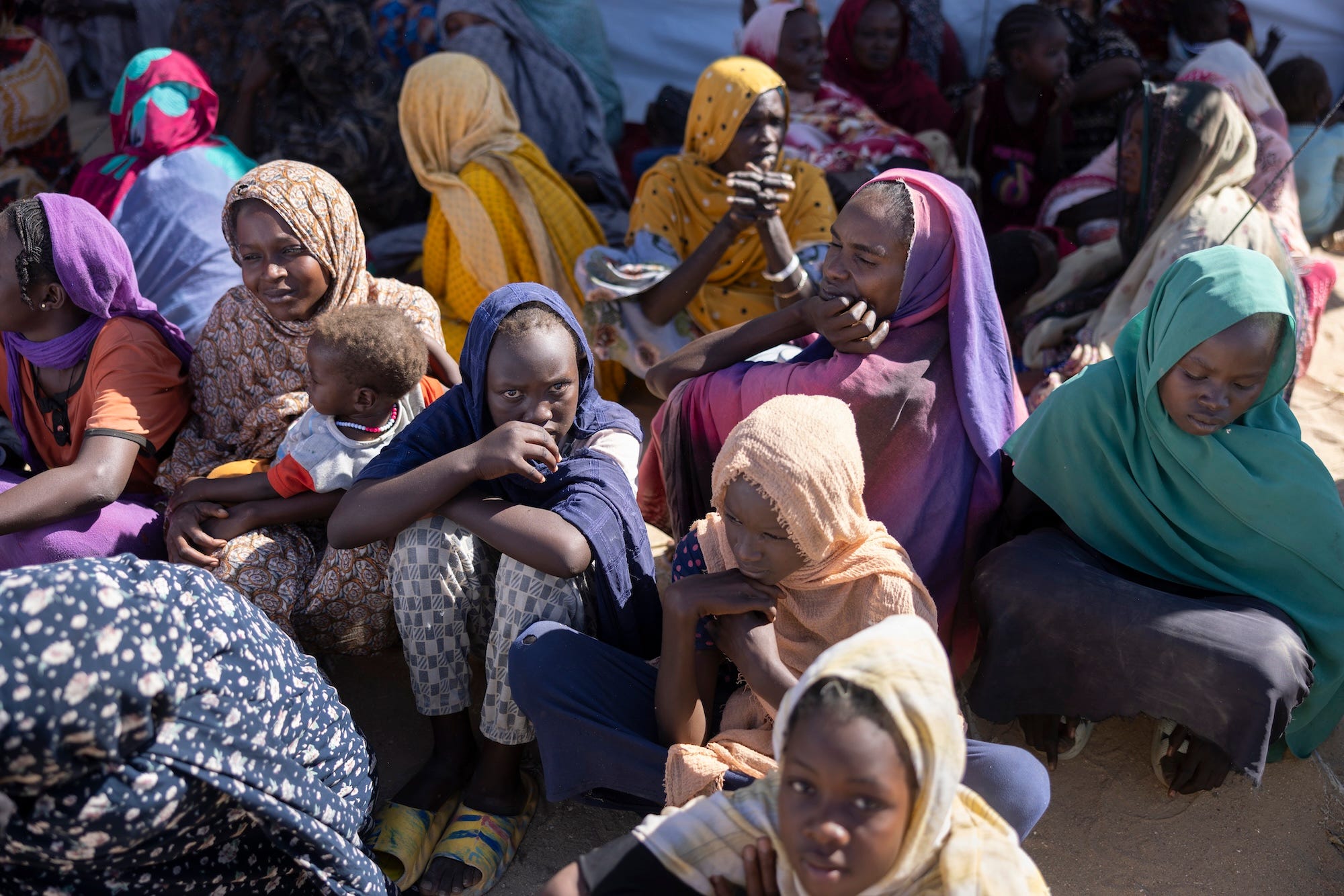
Thirty-year-old Sueba Abdulrahman says the men who seized her told her: "You are a woman, and we can do whatever we want with you." And so they did. A few days later, when they were finished with her, she began to walk. She walked away from the city of al-Fashir in Darfur, Sudan. Away from the burning houses. The armed men. The piles of corpses. She walked through the desert on foot for two weeks.
Now she has crossed the border into Chad, becoming yet another of the 1.2 million Sudanese who have fled to the neighbouring country. The sand is still on her – in her dress, in her scalp, in the folds of her skin.
Most Sudanese who make it this far carry a story of rape. When Sueba speaks about what happened to her, she smiles. Not because it is easy. But because the soul chooses a smile to keep from breaking.
At night, it all returns. The sounds. The smells. The weight.
