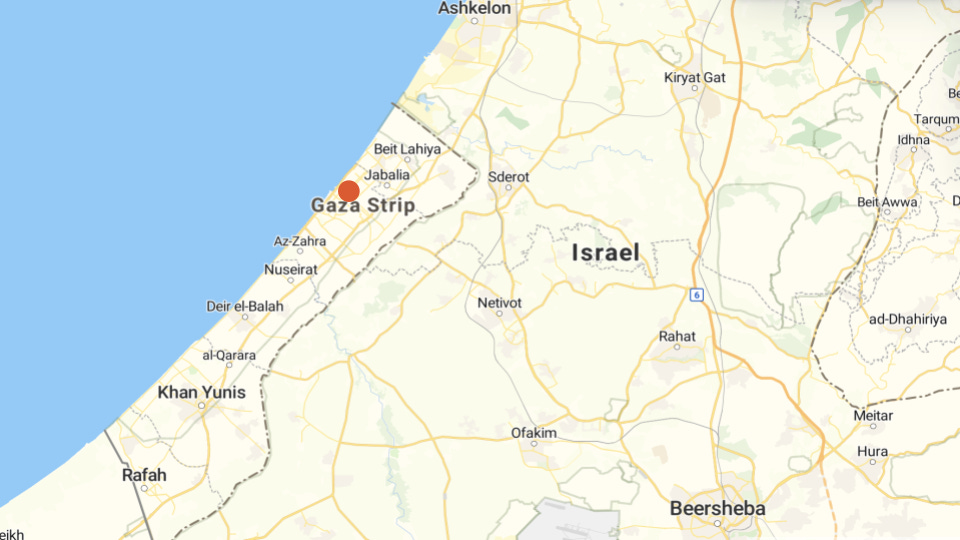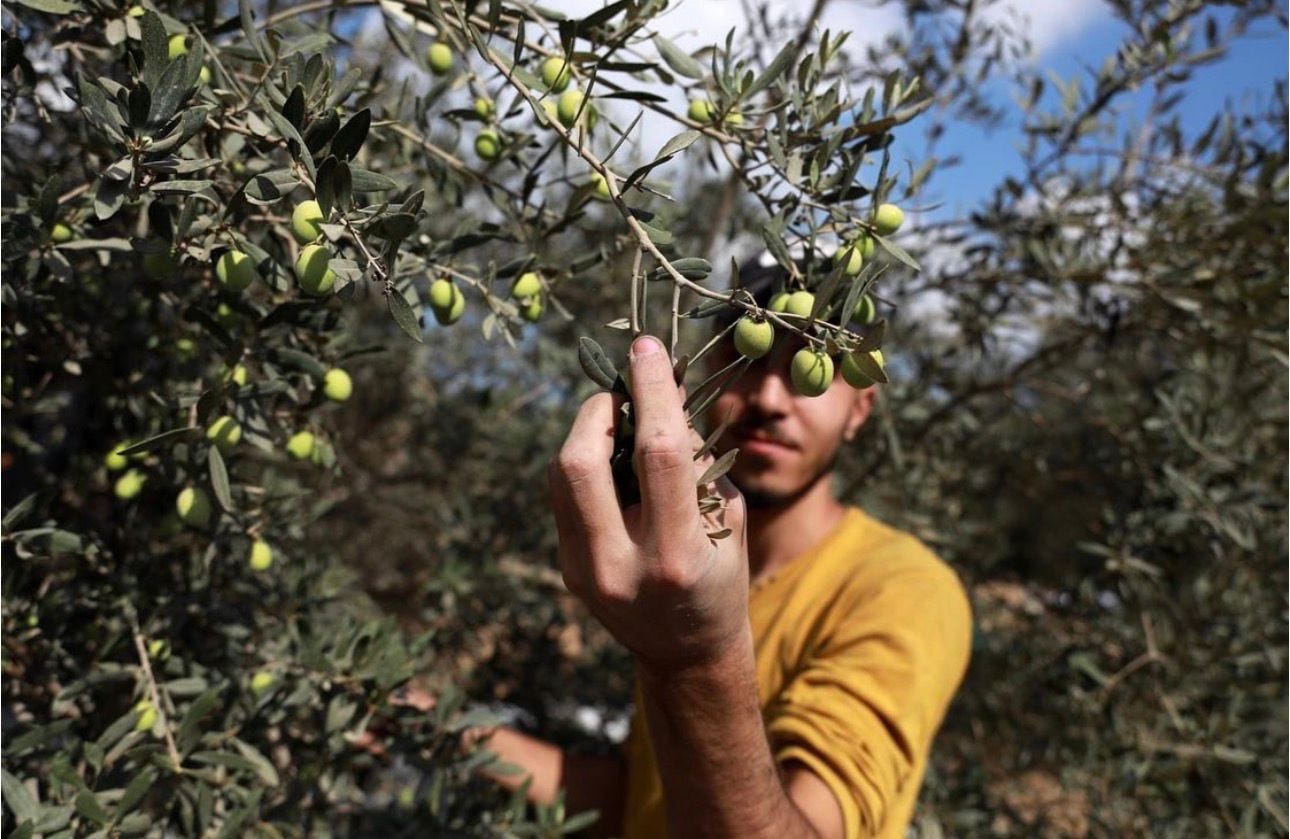
When September arrived, the season began where our hearts met before our hands did – it was time for the olive harvest. In our bayara (orchard and farm), the whole family gathered. And when we Gazans say family, we mean everyone: children, siblings, nieces and nephews, parents, in-laws, uncles, cousins …
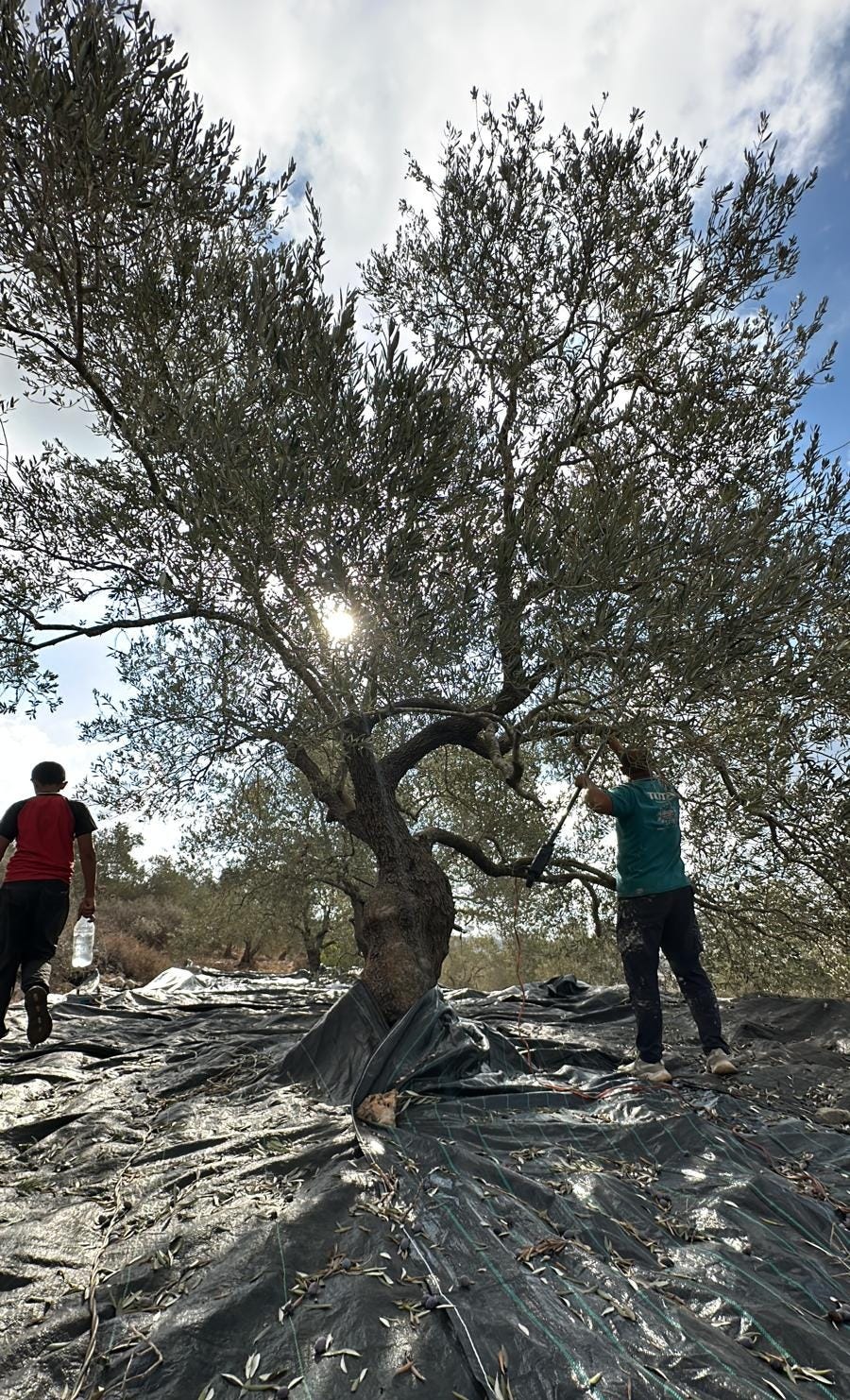
We were some thirty souls, young and old, spreading colourful cloths on the ground beneath the silver-green trees to begin picking, a blessing in an atmosphere filled with laughter and joyful smiles.
Everyone had their part. The short ones tended the small trees, while the tall climbed into the great, swaying canopies with poles to reach the fruit hanging highest, under the roof of the sky.
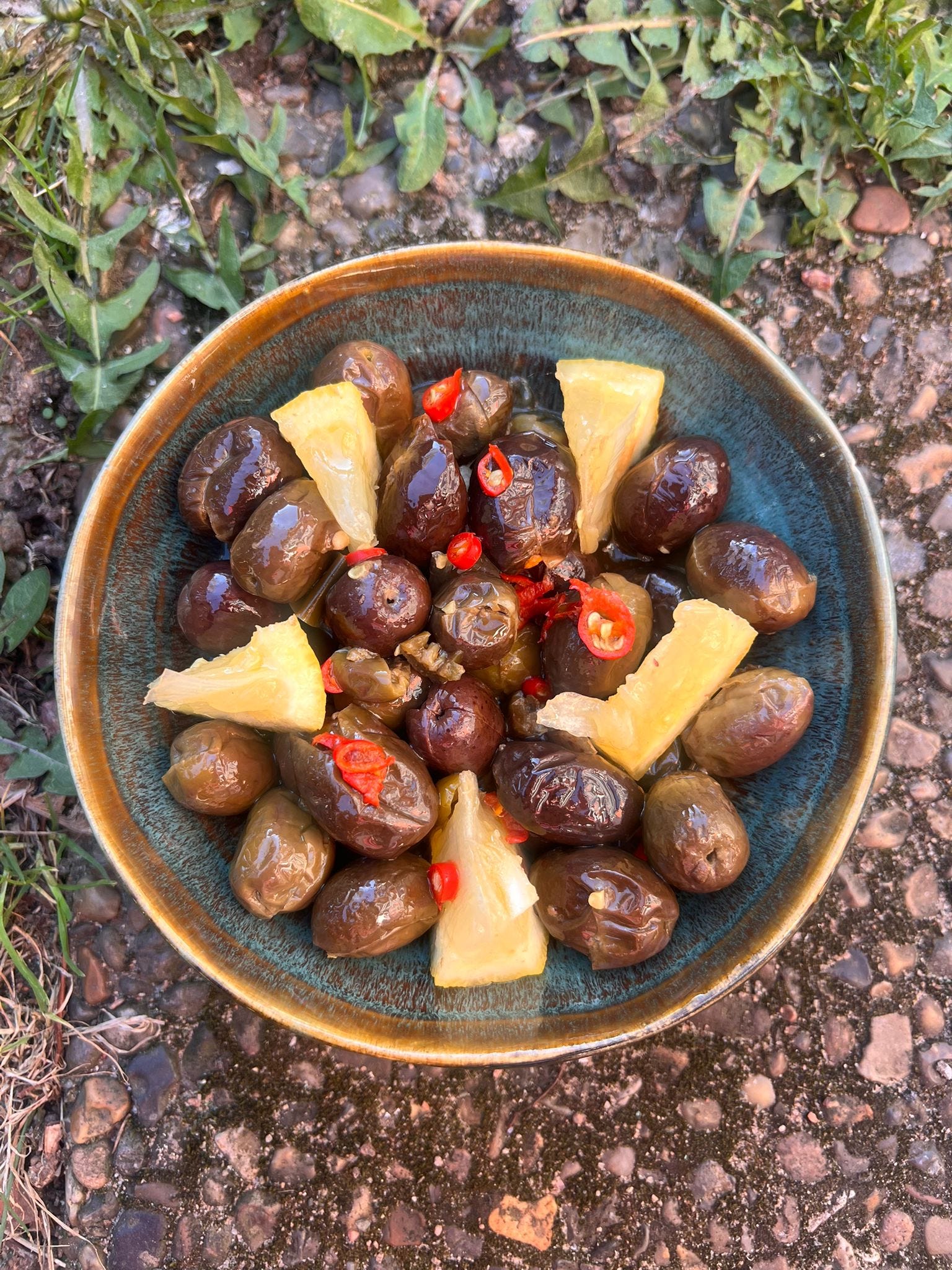
These moments were filled with anticipation. We wanted those olives on the table the moment they were picked, and we didn’t wait – we all sat on the ground right where we had harvested, hunting for smooth stones to gently crush the olives in a spontaneous tradition we call zaitun jarjir (literally, crushed olives).
In a flash, we mixed our zaitun jarjir with lemon slices, salt, a splash of vinegar, and hot red Gaza chilli. It was a pickle ready to be eaten that same day, when we were too impatient to wait the long weeks that regular curing requires.
During those harvest days, we would light an open fire and brew tea, letting it steep with sage in a pot brought from home, served in proper tea glasses, and pick fresh oranges for a break.
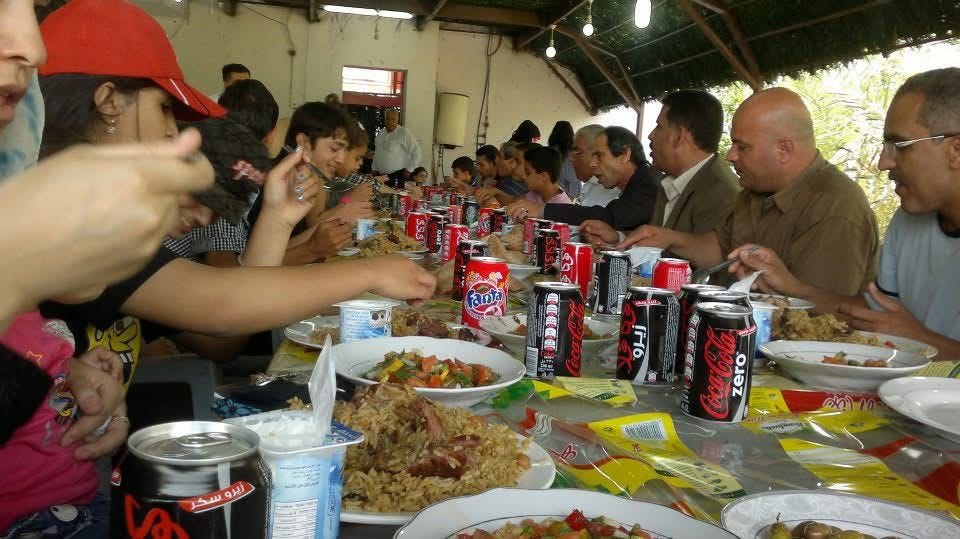
At the end of the day, we returned from the groves to find that the grandmothers had prepared a wonderful meal as a reward for our labour. A true feast for us all.
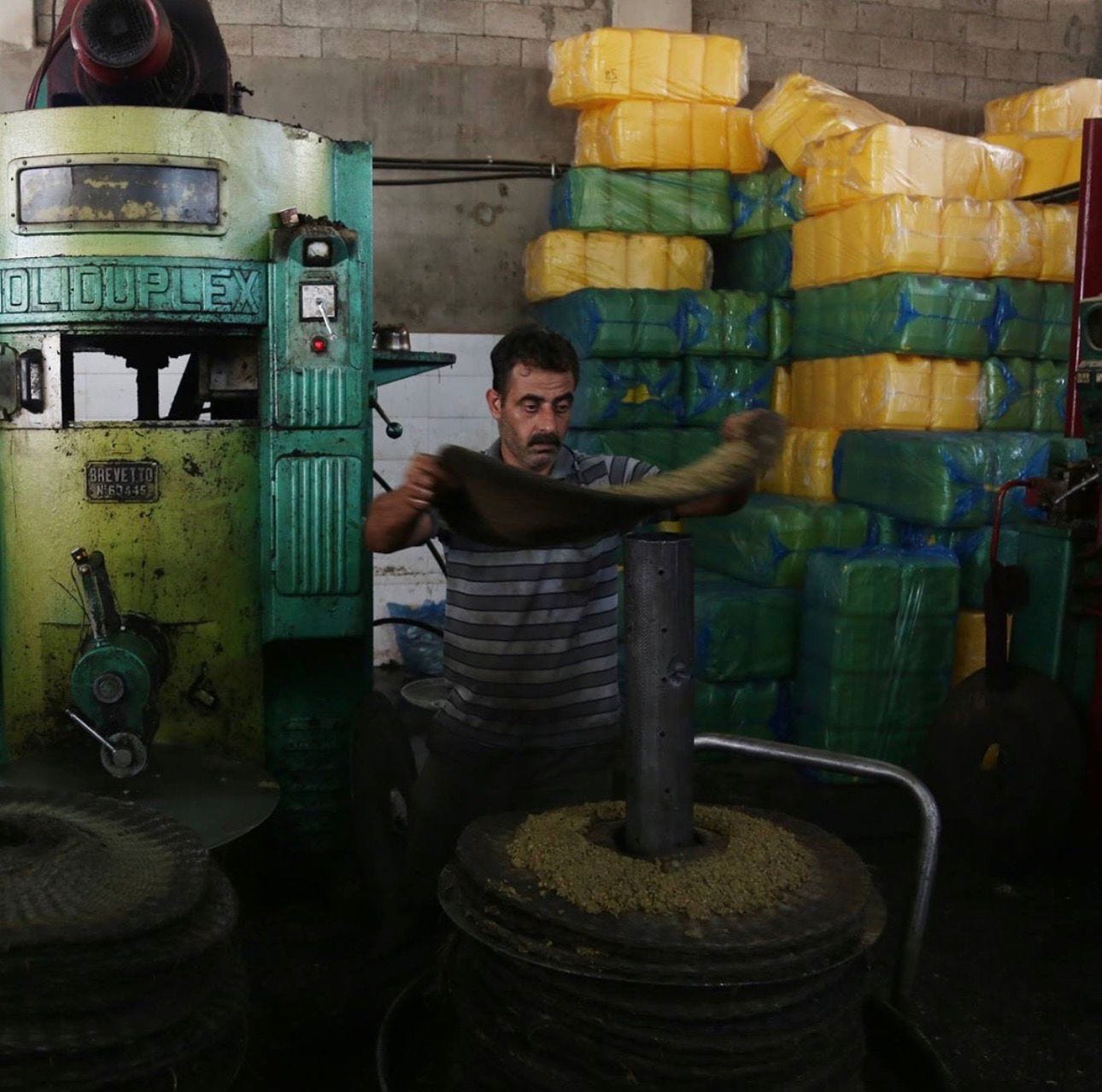
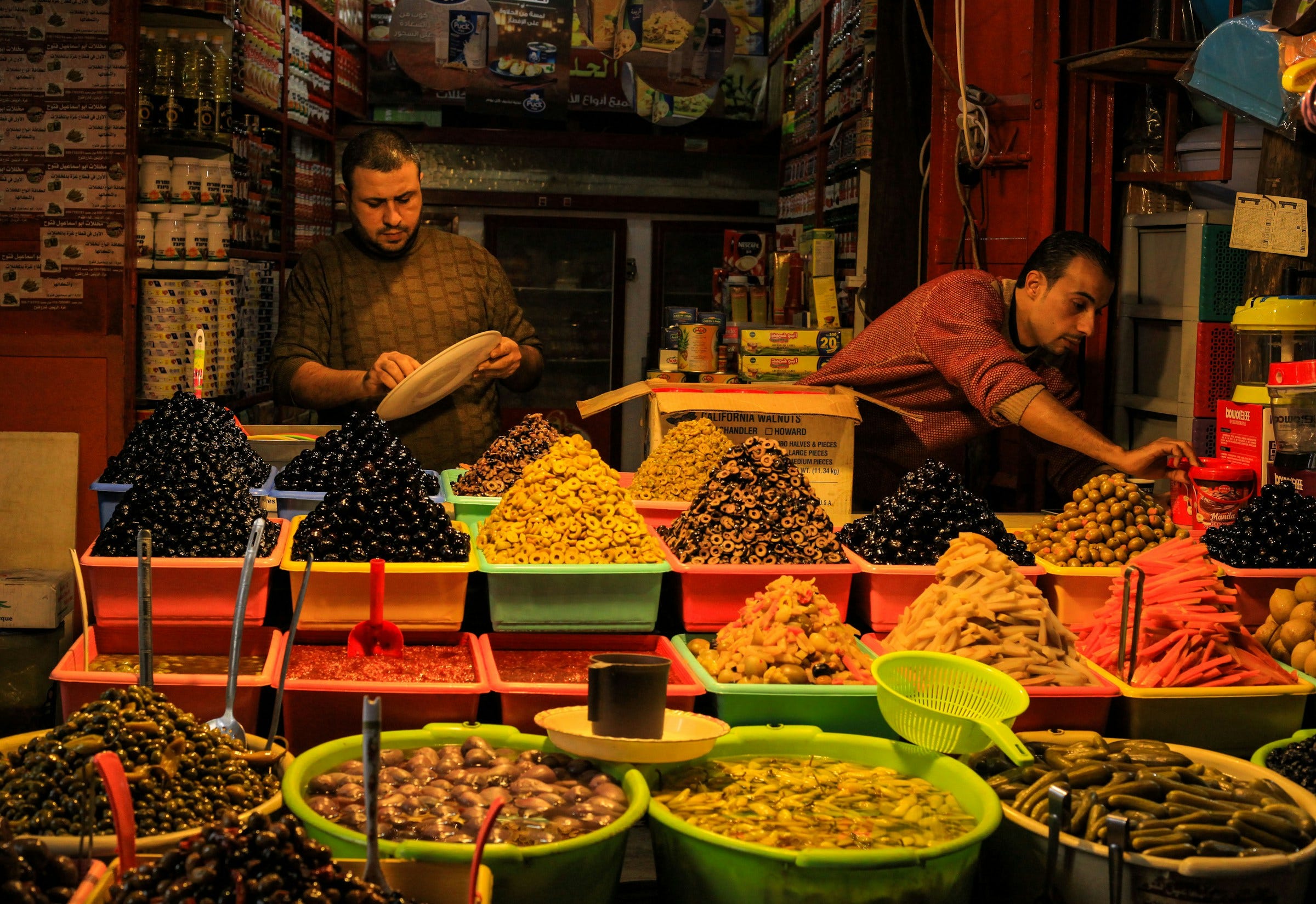
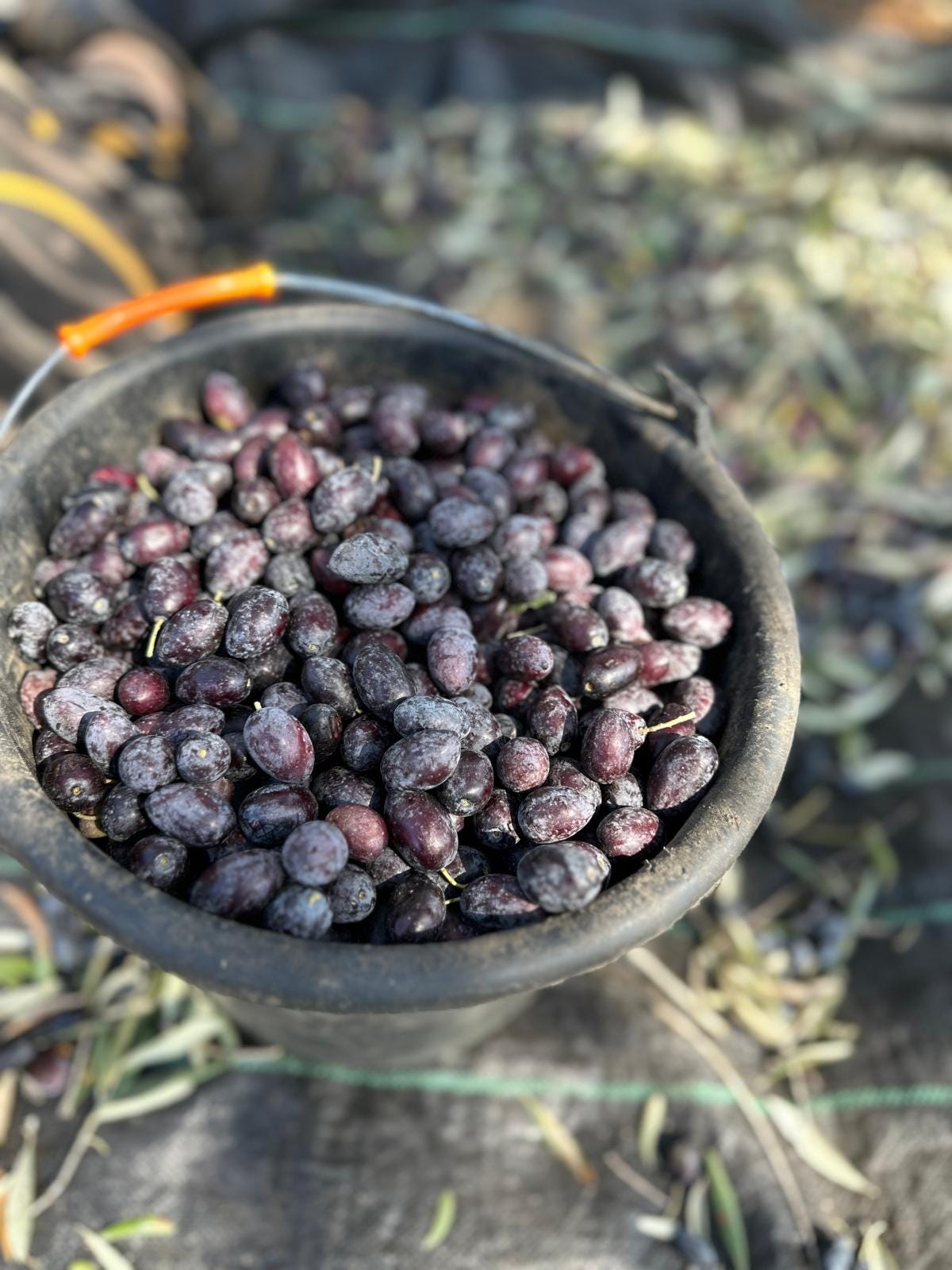
The harvest was meticulously sorted: the black olives that are my children’s favorite for the table, the green ones for pickling, and the rest for the sacred journey to the olive mill. People stood there in long queues, filled with joy. They chatted proudly about their harvest, their olive varieties, and the quality, comparing them to previous years. No one noticed the time – it felt like a communal picnic.
In that moment at the mill, when the first fresh oil emerged, we carefully observed the tradition of drinking a small cup of it straight away, to feel its warmth and the fruit of the earth coursing through our veins.
At the peak of the season, the national dish, musakhan, reigned over our tables – a ritual meal we prepared together. It captures the country’s history in a single mouthful: warm khubz al-taboon (clay oven bread), thick and uneven with a crisp crust, soft and pillowy inside to soak up the golden olive oil, covered in sautéed onions and a generous dusting of royal sumac.

The warm scent from our furn al-taboon (clay oven) drifted across the entire street. There was also the aroma of qurs zaatar (round olive oil breads filled with wild thyme) and qallayat bandora (tomato pan) with garlic and chilli … Everything drenched in olive oil. In Palestine, we don’t eat oil just for sustenance, but to draw strength from the land and the resilience of the trees.
Today, my family has been displaced and scattered in every direction. My uncle, the head of our family, has passed away, and with him, parts of our souls died too. He was the symbol of justice, he distributed everything – from hazelnuts and eggs to meat and olive oil – with precision and love.
Our bayara, which once teemed with life, has been crushed by occupation tanks. They drove over the olive trees we grew up with, leaving behind a devastation that words cannot describe.
Since the start of the genocide, the harvest season has ground to a halt. Lacking fuel, people have been forced to hack down the remaining branches for firewood, to cook and survive.
No eager hands come to pick the fruit anymore. Only a few pale trees remain in Gaza – those that managed to escape both the tanks and the fires of the hungry.
This devastation is part of a broader “green genocide”. According to the Palestinian news agency Wafa, approximately two million olive trees in Gaza have been destroyed since 7 October 2023.
The attacks on our trees are not random, whether in Gaza or the West Bank. These trees are the backbone of our economy, accounting for 14 per cent of all agricultural income.
While they attempt to uproot our proof of the right to the land (on the West Bank, continuous cultivation has long served as evidence of land use under Ottoman legal traditions that still influence land rights, and destroying olive trees or preventing farmers from reaching their land is often described as a way to render the soil “unexploited” and easier to seize) the Al-Badawi olive tree outside Bethlehem remains, proud and alive, estimated to be between 3,000 and 5,500 years old.
It is one of the oldest olive trees in the world. The name comes from the legend of Sheikh Al-Badawi, who, according to the story, used to rest beneath it. It is guarded by the local resident Salah Abu Ali, who has been looking after it every day for decades.
When the branches of the olive trees are sawn off, the roots live on beneath the soil, just as our memories live within us, ready to send out new shoots. This is why the settlers burn the trees, so they may never grow again.
They are trying to steal our hope as well.
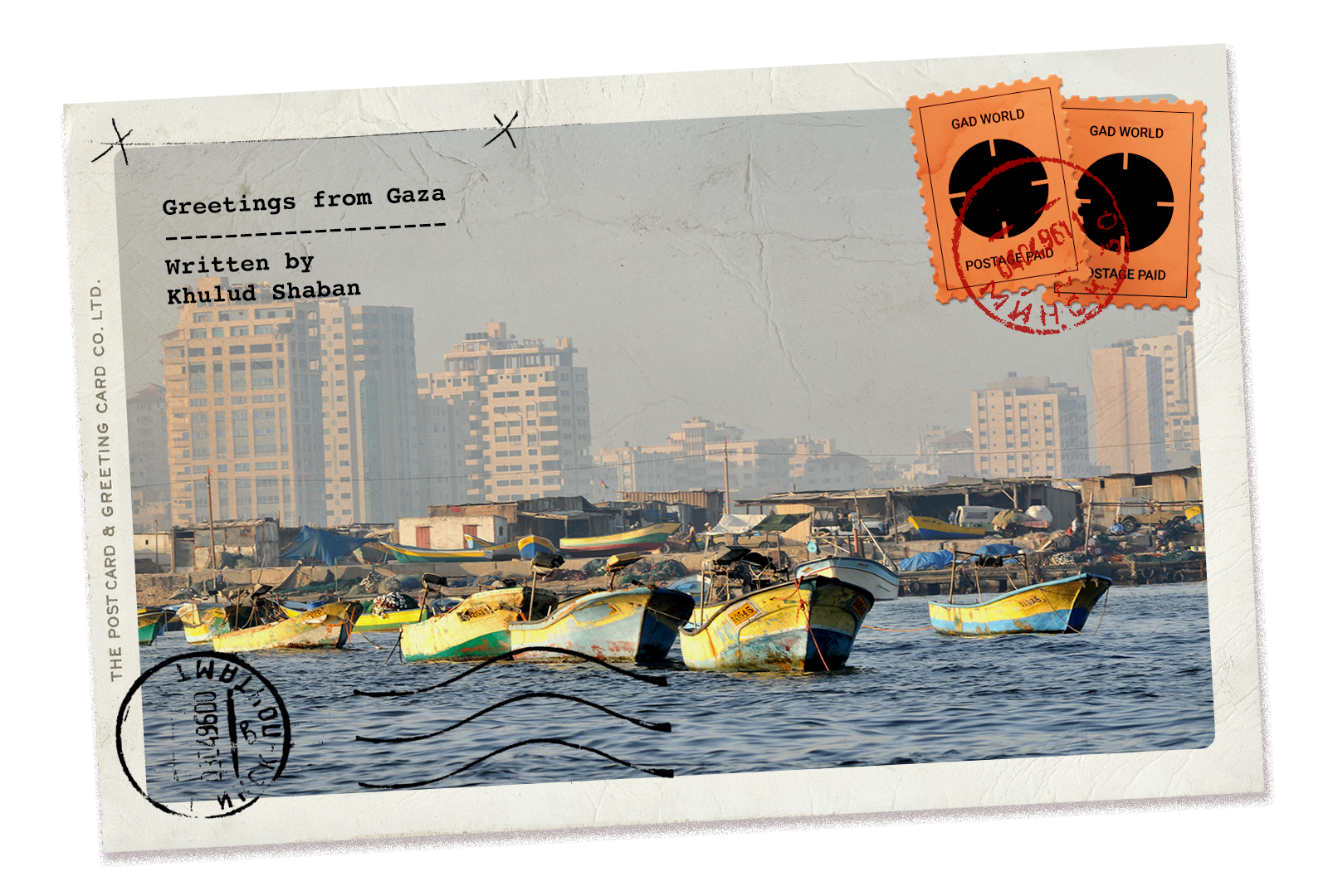
Postcards from Gaza
Khulud Shaban is a Palestinian journalist, born in Gaza in 1980, writing from exile.
Life. This series of personal stories is about how people once lived here – about the everyday life and the places that carried them. The culture, the food, the laughter, and everything they loved. A society forced to suffer and die. Survivors who remember what was with love and pain.
Death. The Hamas-led attack on Israel on October 7, 2023, killed 1,195 people, including 815 civilians and 36 children, according to AFP. Since then, Israel has killed over 72,587 people in Gaza and injured over 172,381, according to Gaza health authorities.
Children. Over 65,000 children have been killed or injured, over 56,000 have lost one or both parents, and between 3,000 and 4,000 have undergone one or more amputations, according to UNICEF.
Displaced. Approximately 90 percent of Gaza’s population has been forced to flee, many of them repeatedly, according to the UN.
Infrastructure. Large parts of Gaza’s housing, hospitals, schools, culture, crops, and historical and religious sites have been damaged or destroyed, according to the UN.