


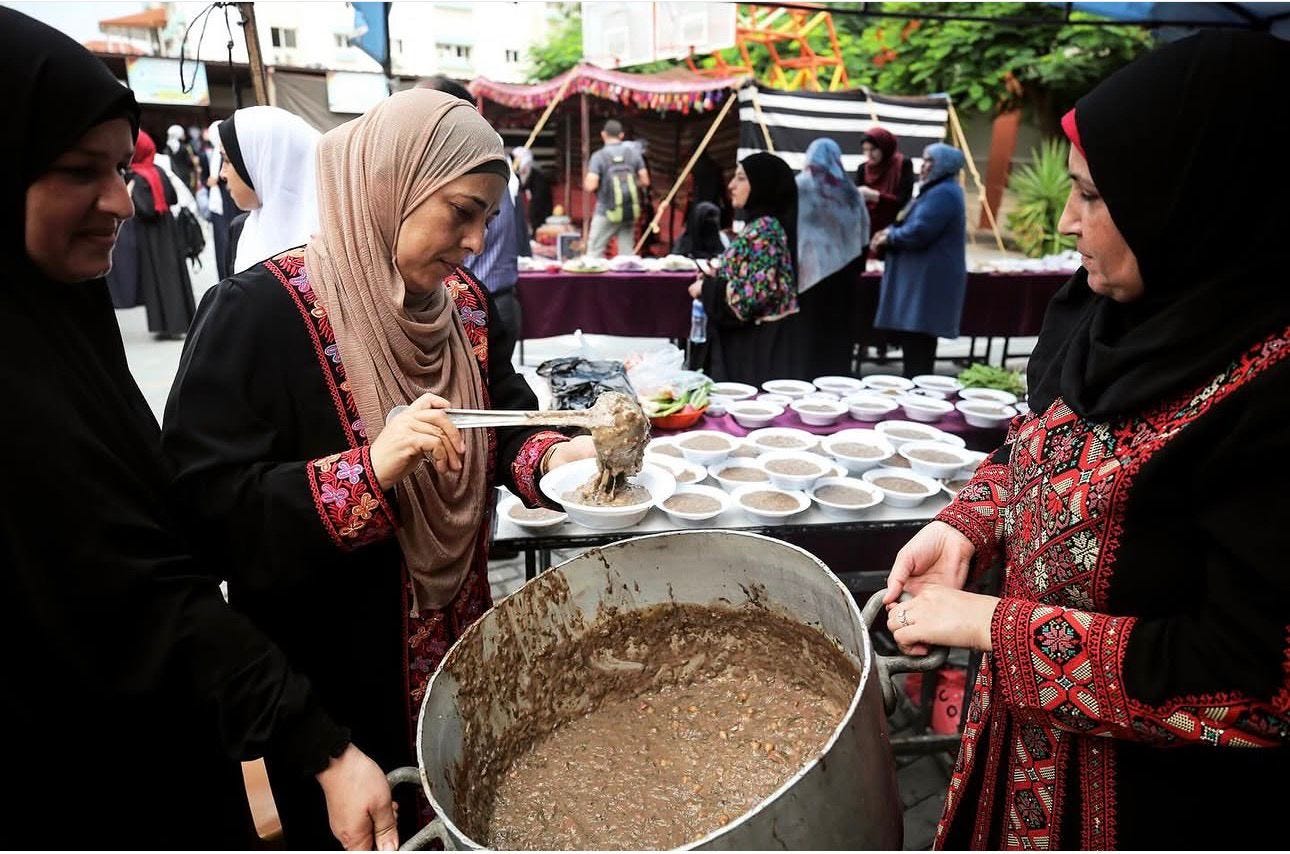
In Gaza, we do not ask how much hope we have left. We ask: “When will we cook sumaqia?” It is not just a dish. It is a proclamation of joy and an act of resistance.
This sumaqia, which we regard as Gaza’s very identity, a national treasure that can never be forged, has withstood the occupation’s every attempt at theft. The dish’s complex ingredients and the slow patience required to prepare it have made it a guardian of our cultural heritage.
It can only be made by one who has kneaded their hands into the soil of this land and breathed the scent of its sea.
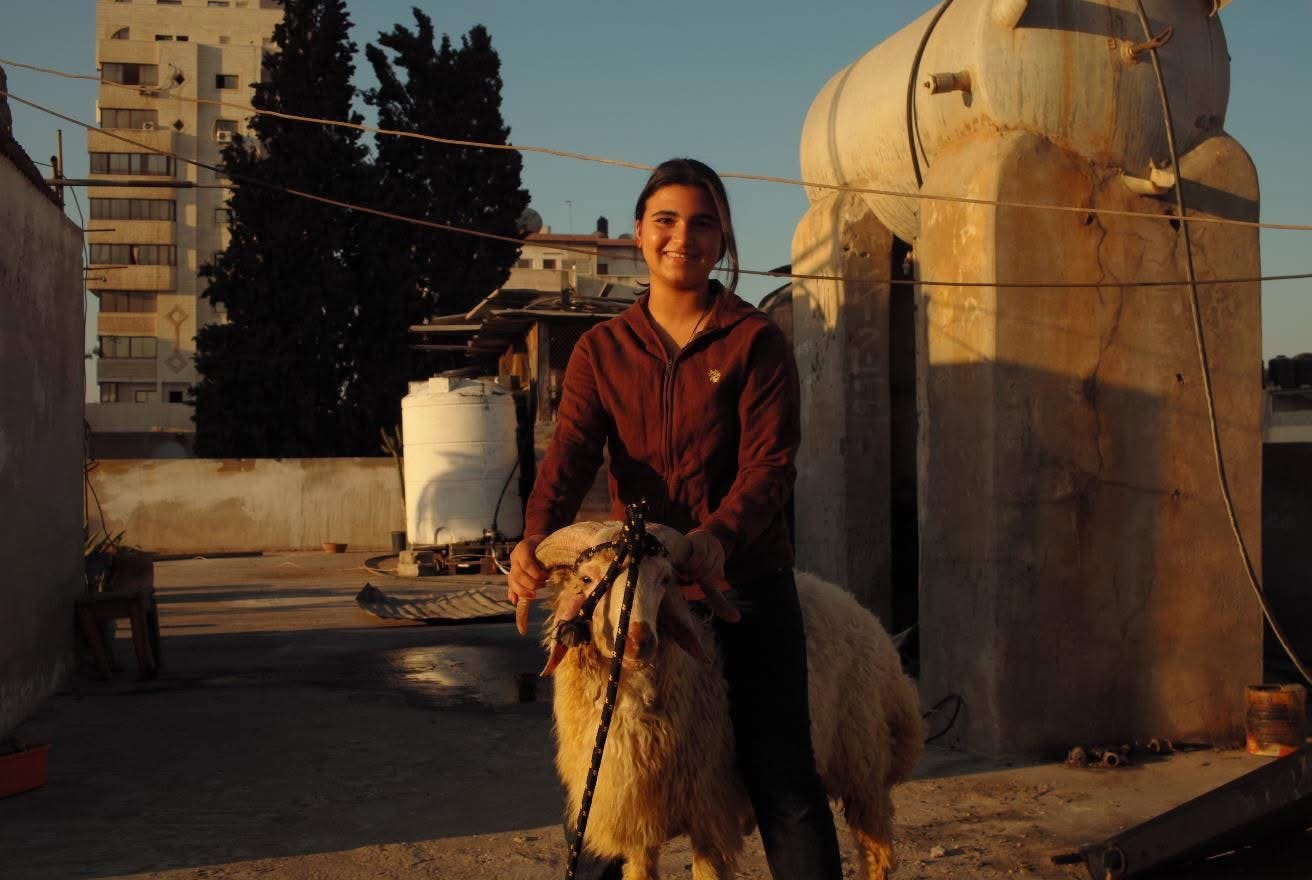
Today, as I strive to summon that scent amid the rubble and dust, I remember how sumaqia was the natural centrepiece of the “henna nights”, those evenings that precede our weddings and fill our squares with love.
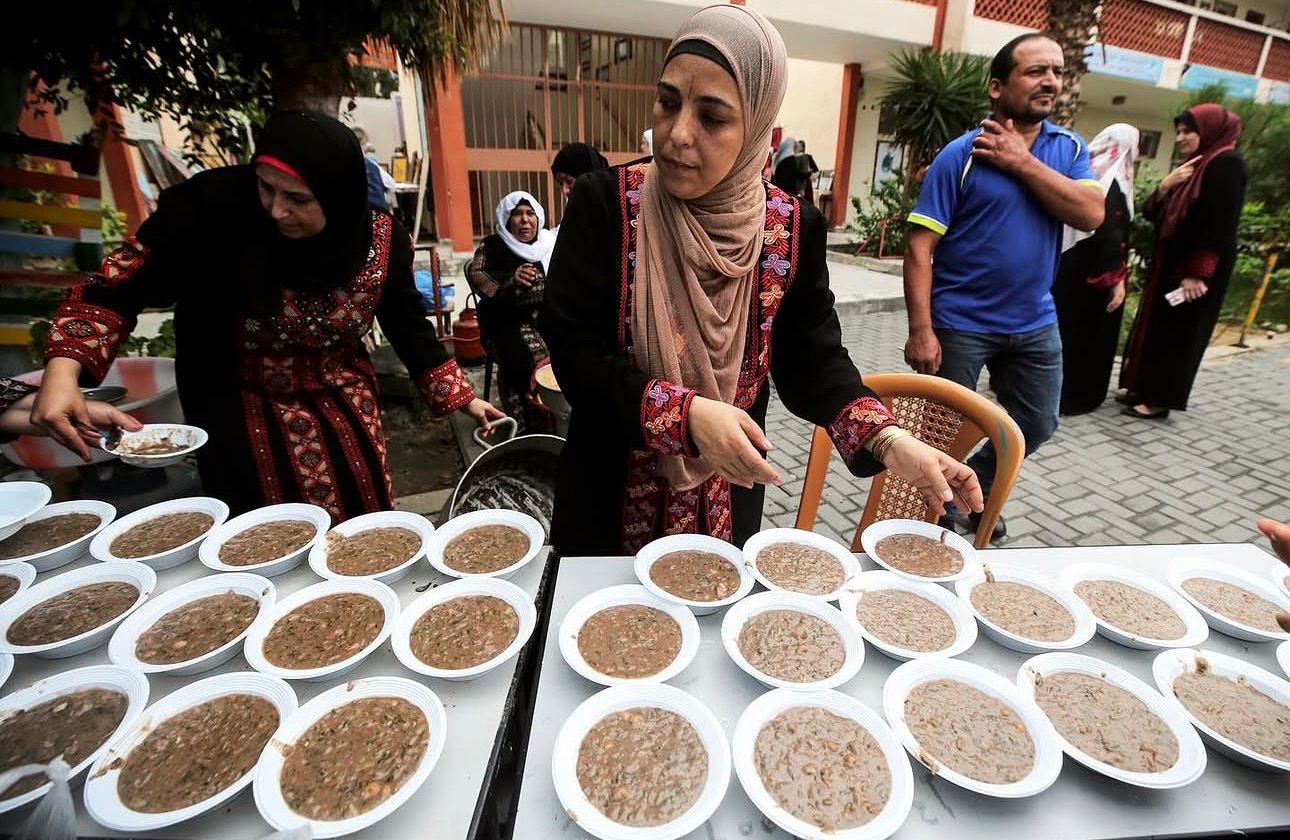
At my own wedding, at my sisters’, and at the celebrations of my cousins and neighbours, the squares thundered with hundreds of plates.
After hours of dabke dancing that made the ground tremble, and joyful songs that touched the sky, everyone, men and women alike, sat down in warm circles to eat “provisions of love”.
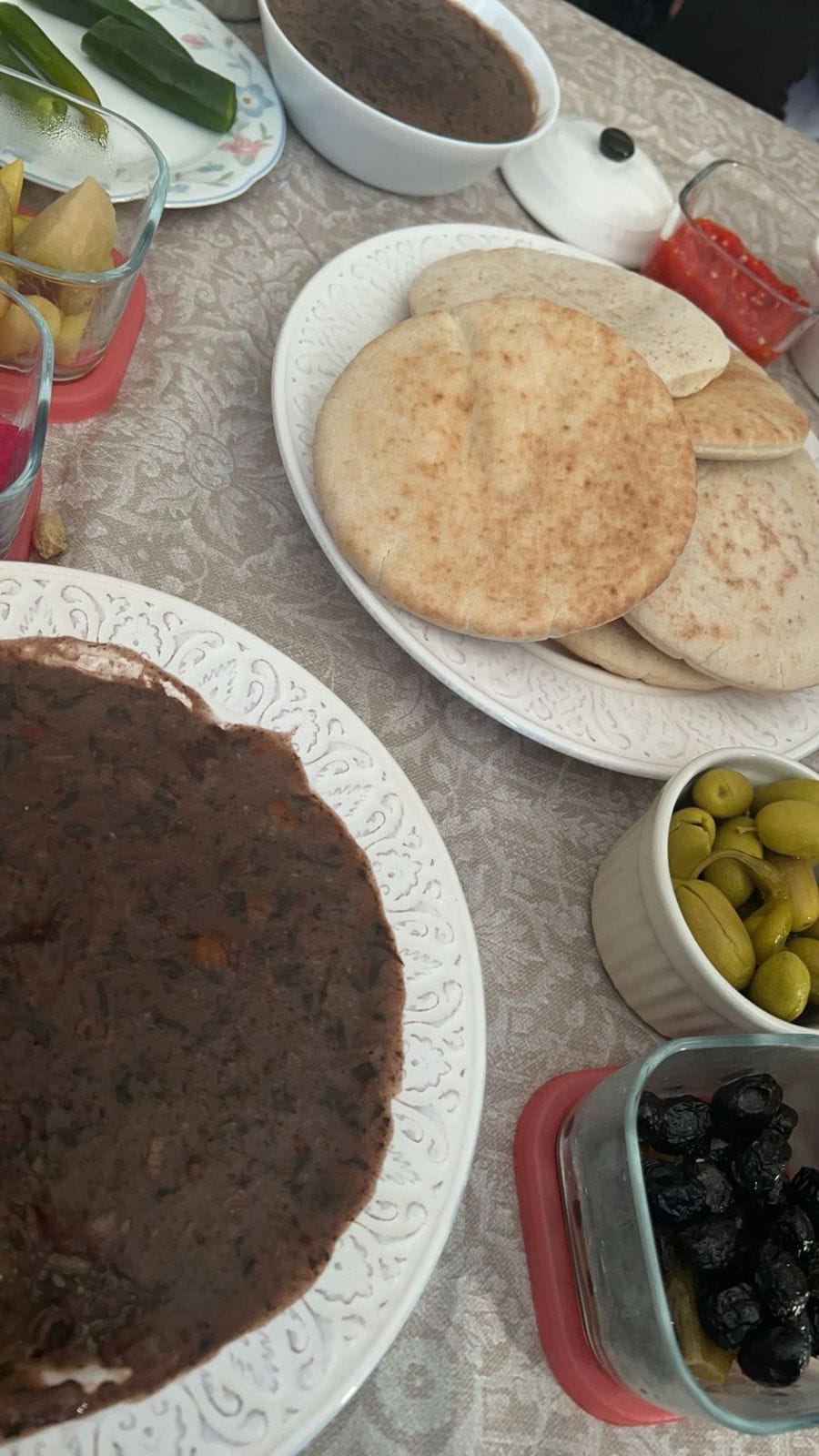
Served with pickled vegetables and freshly baked bread, sumaqia was the most beautiful reward for all who had come to share our song, the moment when all exhaustion melted away with the first bite.

My kitchen was the arena where the tensions of identity between native Gazans and those displaced from Jaffa were resolved in the most delicious of ways. My mother-in-law, a true Gazan, believed that a sumaqia which did not burn the tongue was no sumaqia at all. My mother, who came from Jaffa, preferred calm and balance.
With a “MasterChef’s” touch, I brought the two schools together. I balanced the chilli and measured the sumac, the chard, and the meat with the scales of the heart, until I became the family’s foremost authority.
No one dared lift the lid of a pot without my blessing.
And my father, his stories were the very spice of life!
He would sneak into the kitchen, as if he were plotting a great secret. He would taste a spoonful, glance around to make sure my mother wasn’t watching, and whisper softly: “My daughter, your cooking tastes a thousand times better than your mother’s … but for God’s sake, don’t tell her!”
Those words were my true medal. Before long, neither my father, nor my mother-in-law, nor my mother would dream of making sumaqia without calling me to ask for “the secret of the recipe”.
Sumaqia is the dish of “shoulders pressed close together”, and it demands absolute precision. It cannot succeed without one hand chopping the chard, another sorting the sumac, and a third crushing the garlic.
The greatest secret lies in cutting the meat into perfectly equal pieces, as if they were even stones laid with love, then distributing them fairly across hundreds of plates so that each guest receives their share of the blessing. It is a quiet calling that gathers aunts and grandchildren, a spontaneous feast that brings order to the chaos of life.
Today, with ingredients scarce and loved ones scattered, some in flight, others lost as martyrs, we miss the togetherness more than the food itself.
Yet despite everything, we protect our history through memory. The occupation, which has sought to divide us, has failed to understand that a people united by a single bite of sumaqia is a people that cannot be defeated.
One day we will return to lay our tables in the squares, to light the fires beneath our great pots, and to laugh again as we share plates filled with meat and blessing. We will show the world that Gaza’s table is never broken, and that the community baptised in the scent of sumac can never be torn apart.
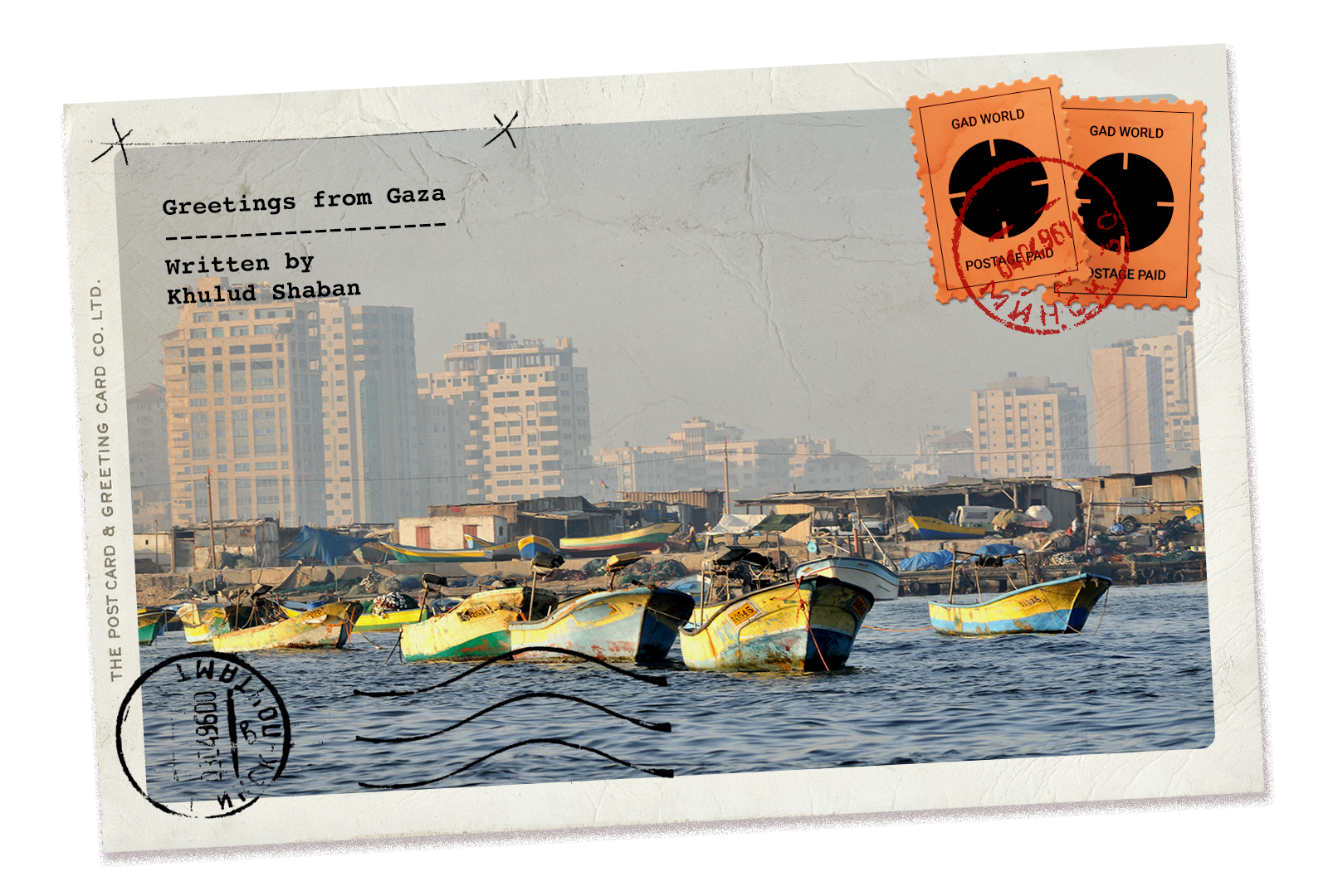
Postcards from Gaza
Khulud Shaban is a Palestinian journalist, born in Gaza in 1980, writing from exile.
Life. This series of personal stories is about how people once lived here – about the everyday life and the places that carried them. The culture, the food, the laughter, and everything they loved. A society forced to suffer and die. Survivors who remember what was with love and pain.
Death. The Hamas-led attack on Israel on October 7, 2023, killed 1,195 people, including 815 civilians and 36 children, according to AFP. Since then, Israel has killed over 72,587 people in Gaza and injured over 172,381, according to Gaza health authorities.
Children. Over 65,000 children have been killed or injured, over 56,000 have lost one or both parents, and between 3,000 and 4,000 have undergone one or more amputations, according to UNICEF.
Displaced. Approximately 90 percent of Gaza’s population has been forced to flee, many of them repeatedly, according to the UN.
Infrastructure. Large parts of Gaza’s housing, hospitals, schools, culture, crops, and historical and religious sites have been damaged or destroyed, according to the UN.
Read the next postcard:
