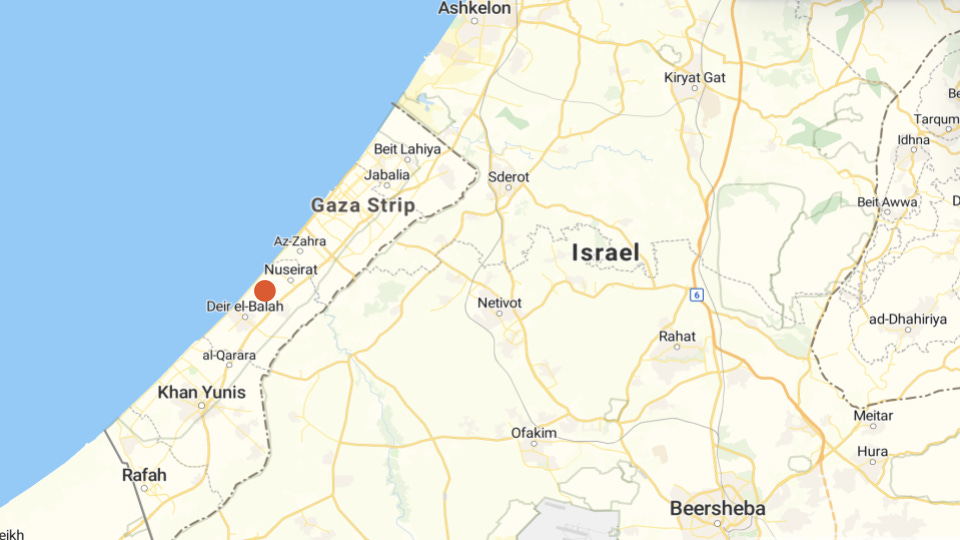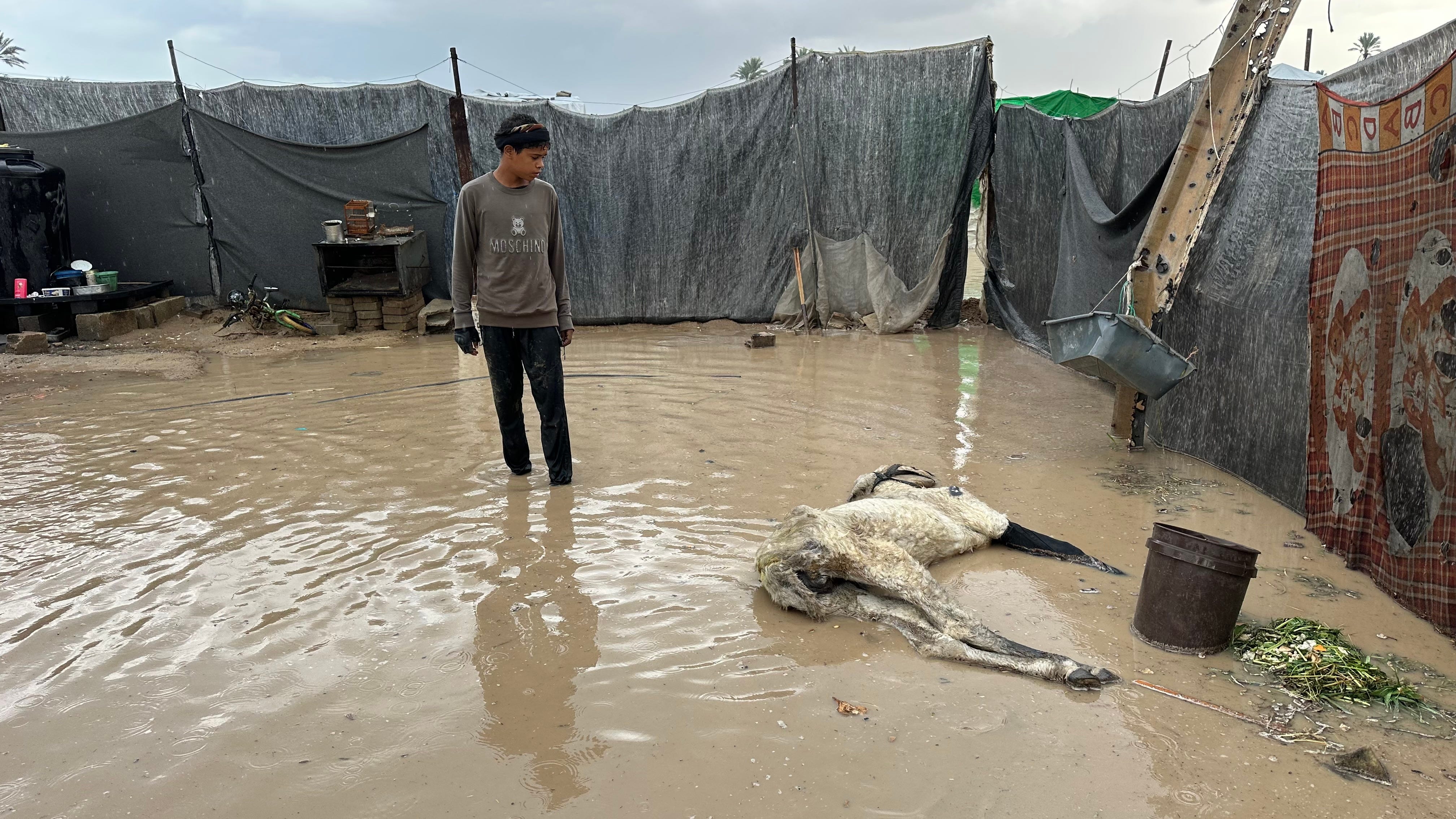
People of the tents, I write to you from my exile. I write to you, you who live in conditions that mountains could not endure. I write to you because I want to send you love to brace your tent pegs, the ones that have failed to shake the world’s conscience.
I want to send you the walls of my home that protect me, while you are exposed under the fragile cloth of the tents and the grace of the sky. I want to send you the food that I eat from beautiful plates, while your stomachs are empty.
I want to send you the lemonade I drink from freshly washed glasses, while your drops of water make your children weaker. I want to send you my Nabulsi soap and my medicine that I can get at the pharmacy, while you are dirty and dying slowly before the silence of the world. I want to send you my brushes and my finest paper, while you search for cardboard to draw on.
In Gaza, we lived together in a vast prison under a suffocating blockade, yet our city surged with life.
We found our freedom in the small things we loved: singing in the square in the middle of the night, buying crispy falafel and kunafa, filling canvases with colour to postpone our breakdowns, lying on the hot stones of the bathhouse, scattering nuts over fresh fish and giving our souls dignity.
We had our breathing spaces and our refuges.
But now…!
In my exile, I live a waking nightmare, scrolling and staring at every image of the dead on Instagram and Facebook, desperate to ensure your faces are not among them. If you do not answer the phone, I linger extra long over every photo.
The anxiety in my chest is a weight that keeps me from sleep, but your anxiety is a daily struggle to survive on the edge of death.
And in the midst of this, you overwhelm my heart by asking me: “Have you eaten, Khulud? Have you had something to drink? Have you slept well?”
As if you were the safe ones, and I the stricken.
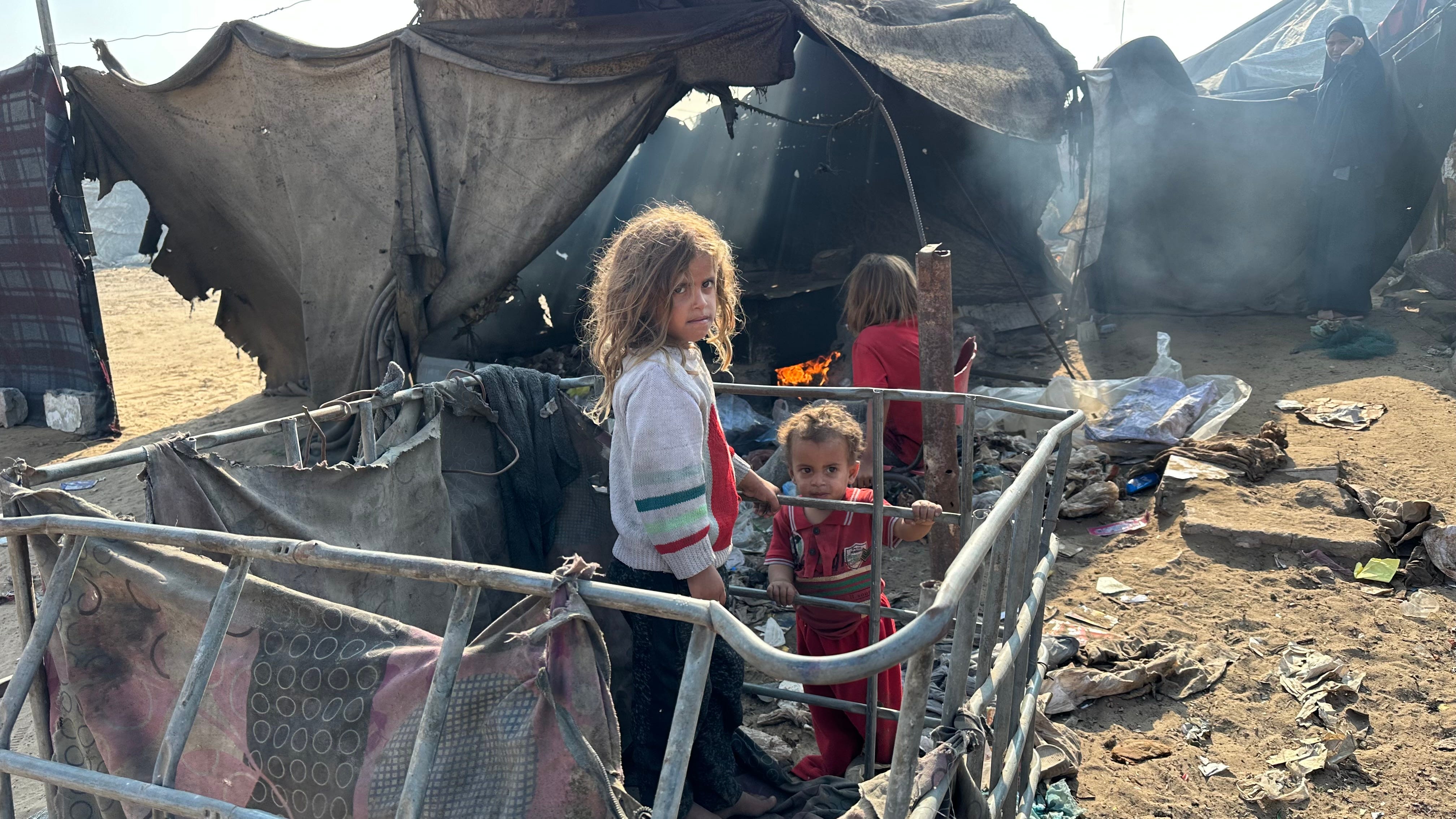
People of the tents, when the houses fell upon you, you planted your roots in the sand and tore an impossible beauty from the heart of nothingness. Around the pale tents, you transform death’s backyard into miniature gardens, where you plant mint and basil to let the scent of greenery perfume the air polluted by ash and lead.
You share your wretched food with strangers and gather the shards of your souls with the sound of your laughter at sunset, while the shadows of the death-boats lurk out at sea.
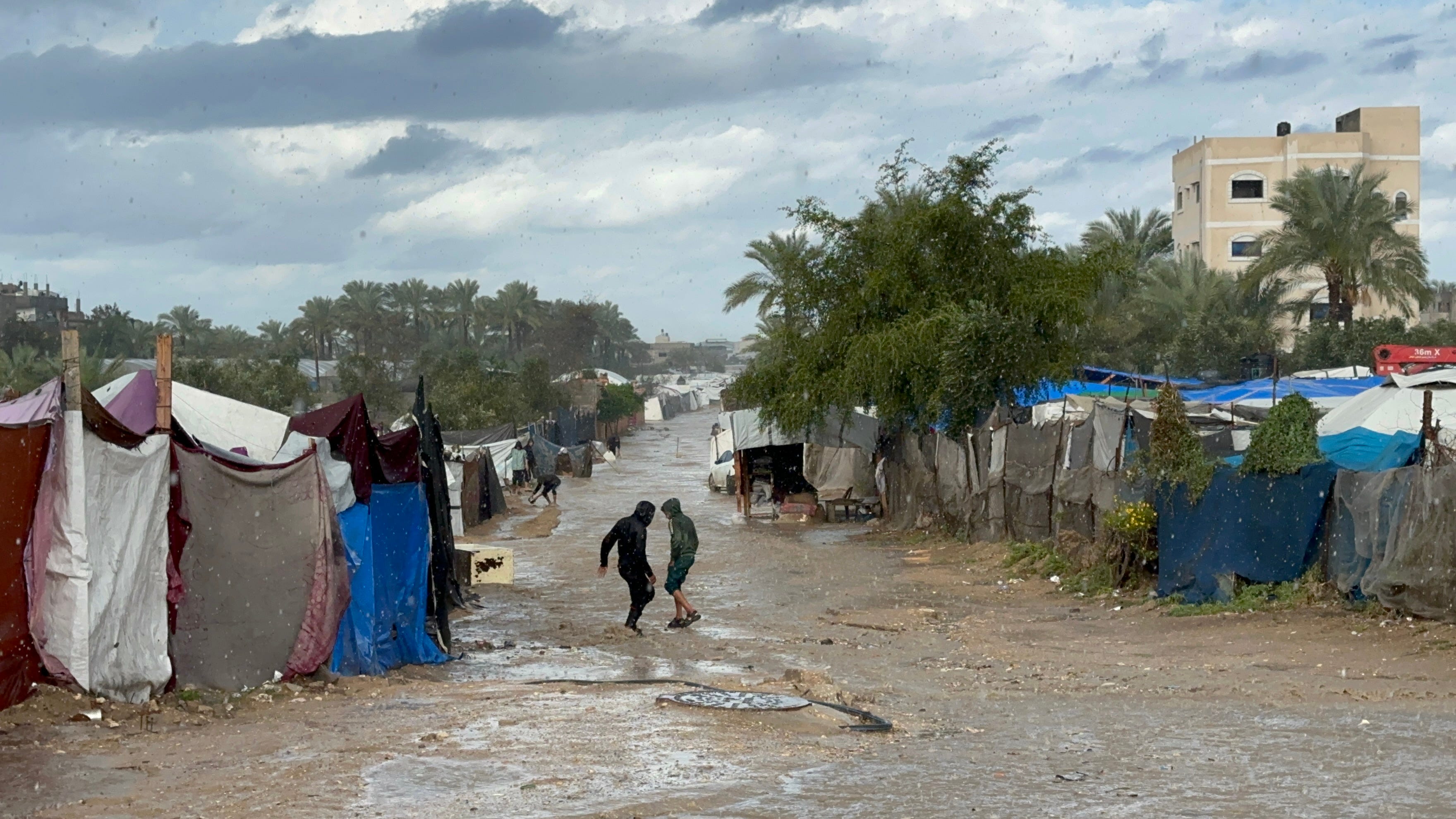
Winter drowned you in muddy pools, and as summer arrives, it transforms your plastic tents into suffocating ovens. Skin rashes and infectious diseases itch and wear away at the bodies of your children and the amputees.
But your life did not stop, for every day a new child is born from the womb of the tent. A bloody miracle without anaesthesia or sterilisation. The newborn arrives under inhuman conditions and is received like a hero who has won the battle of existence.
The zaghrouta (cries of joy) rise from the neighbouring tents to drown out the bombers. You share a few dates and celebrate simple birthdays, with candles lit on pieces of dry bread.
Art’s “windows” have been charred, Omar’s lute has fallen, and the minarets of the historic Al-Omari and Al-Basha Palace mosques have fallen silent. But your tents are today our history. They are our art and the truest of homes.
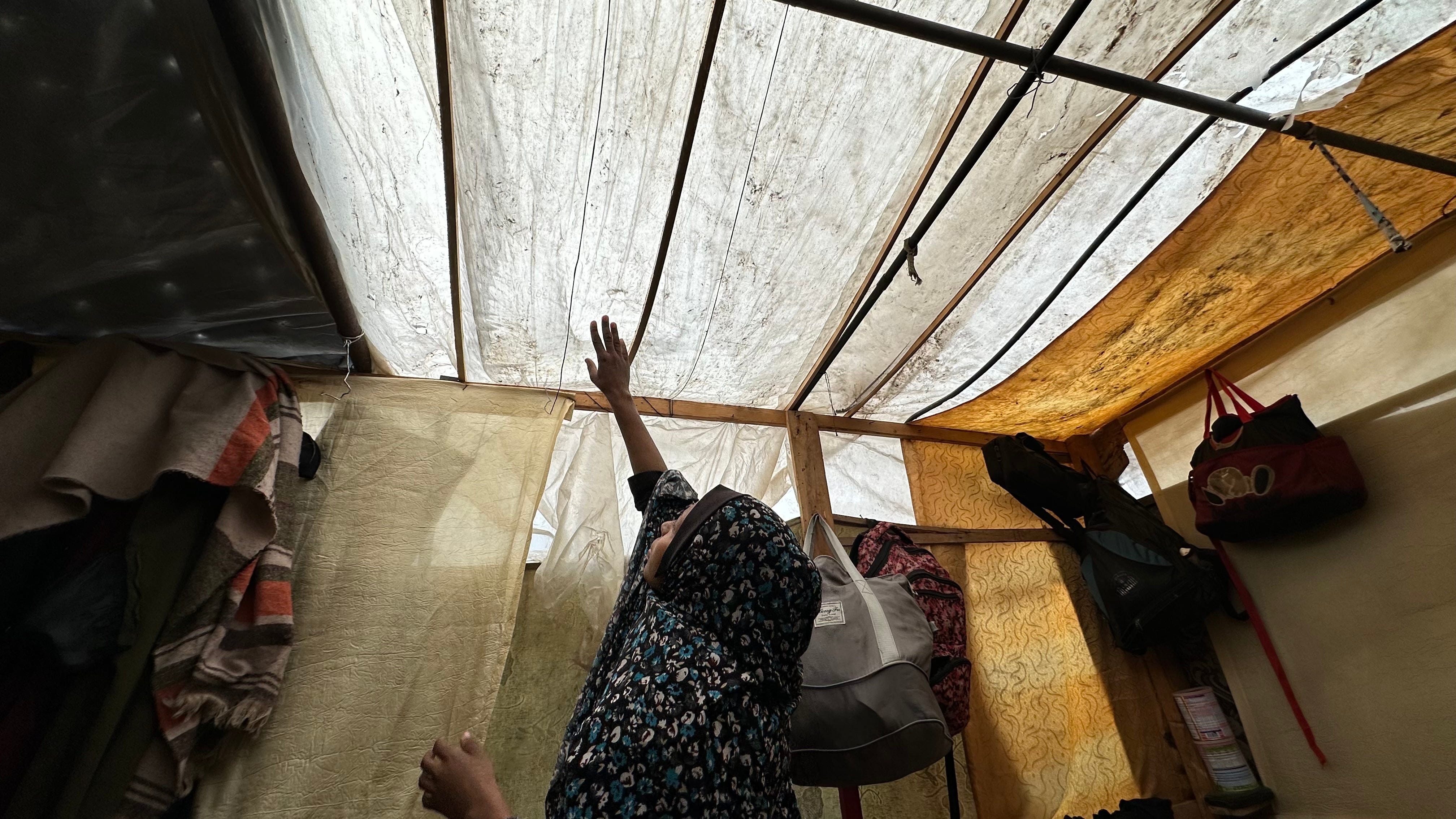
Here lives Ramzi Halawa, my fellow journalist who once overflowed with order and passion. Before the genocide, you had your family and your house by the shore. When the war broke out, you managed to send your wife and your three daughters to Egypt. Now you live in a tattered tent with your mother, your brother, your brother’s wife, their small child, and your injured neighbours.
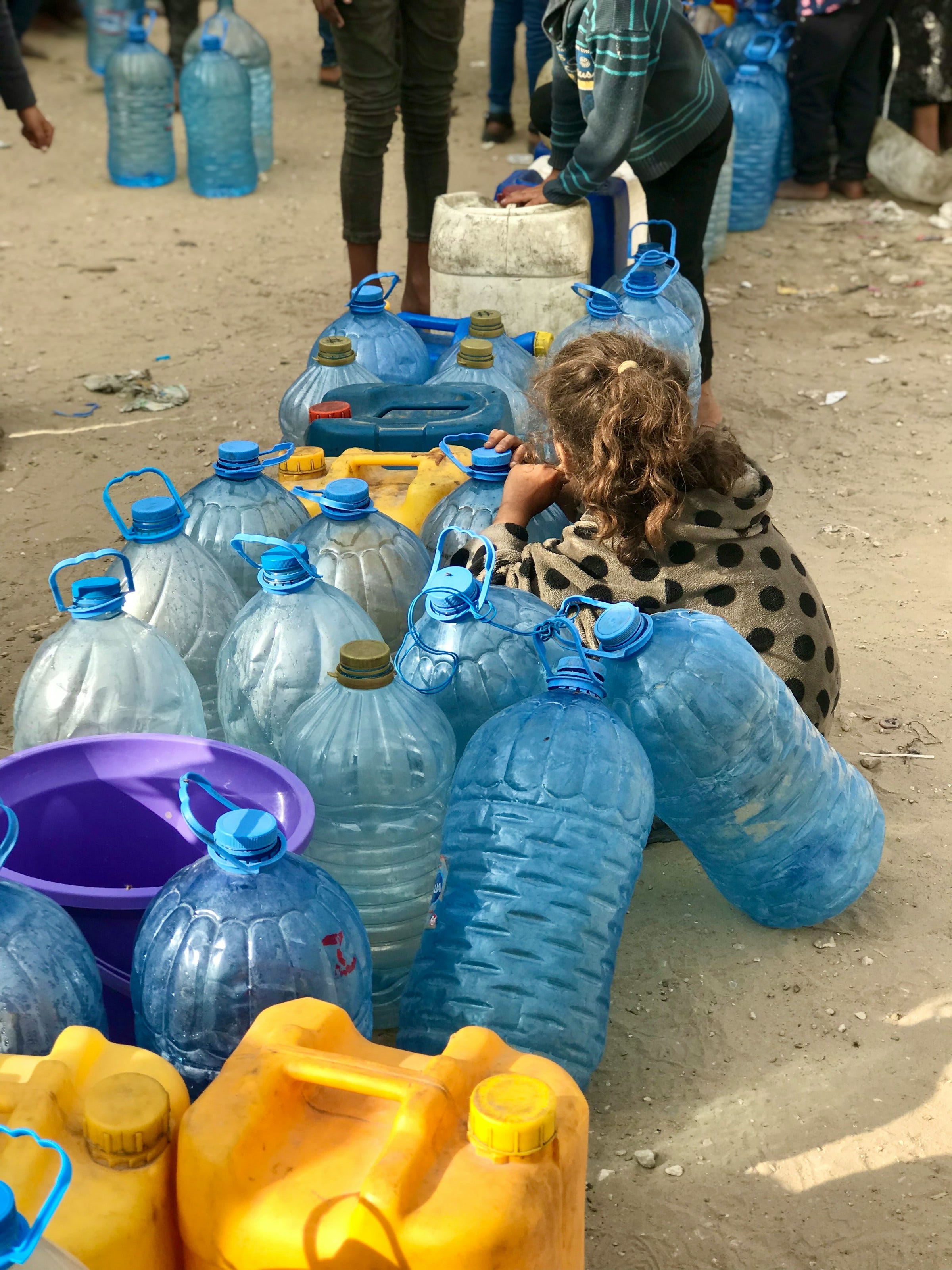
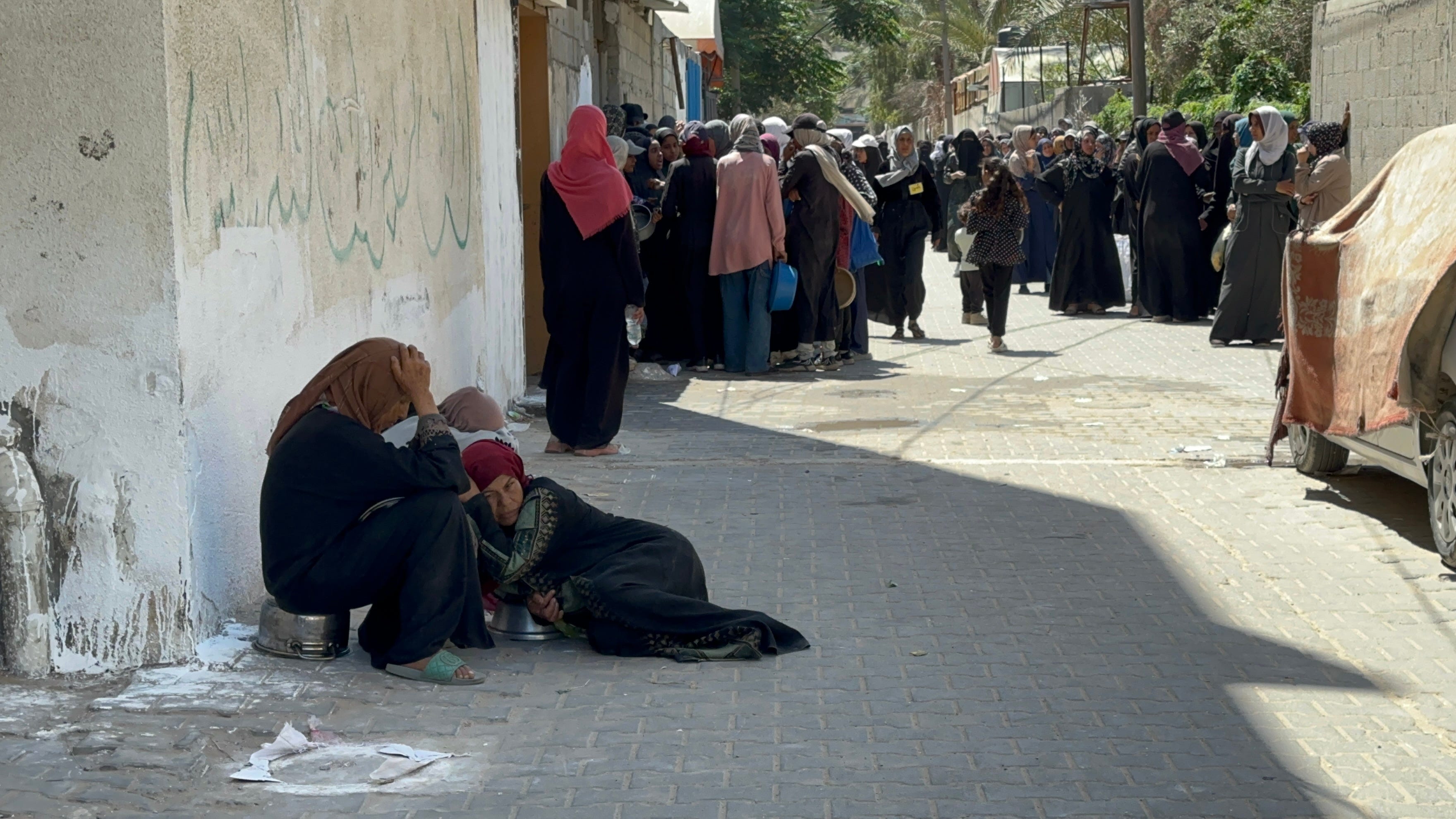
You tell me that your life consists of endless queues. You stand exhausted in the water queue before dawn, to fill canisters with what is undrinkable. Then you move to the bread queue, to get a few pieces for astronomical sums. Then comes the wait to charge your phone.
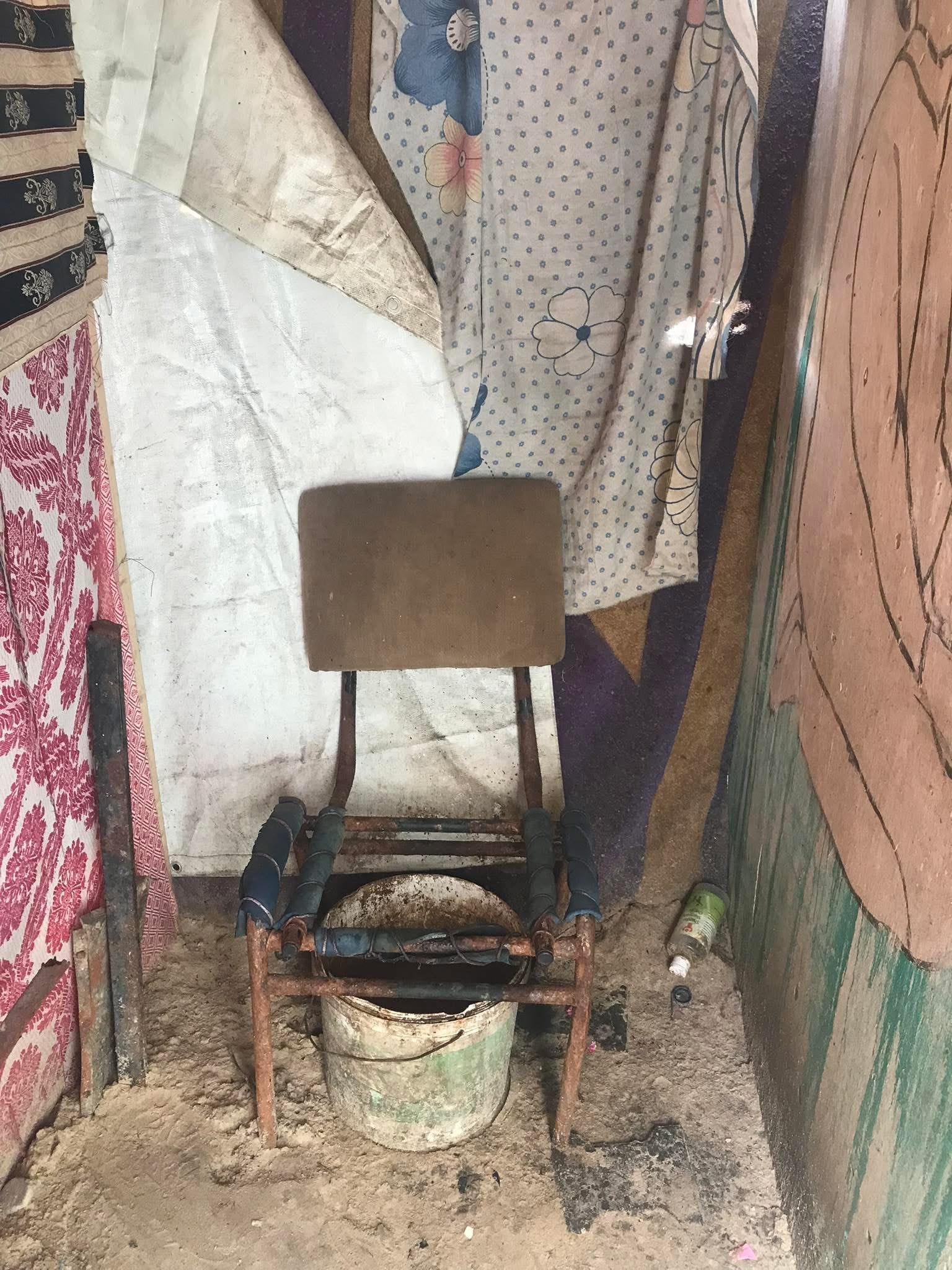
Even the toilet and the shower have queues, and they make you think twice before eating or drinking, to avoid the filth of the place and the humiliation that comes with the wait.
Ramiz, you tell me about the insects and the rats with whom you share a bed, and about the constant buzzing of the drones that live inside your head and corrode your nerves. About the bombs that fall and the stench from the mass graves.
You people of the tents queue for everything, except for death, to which you are given priority.
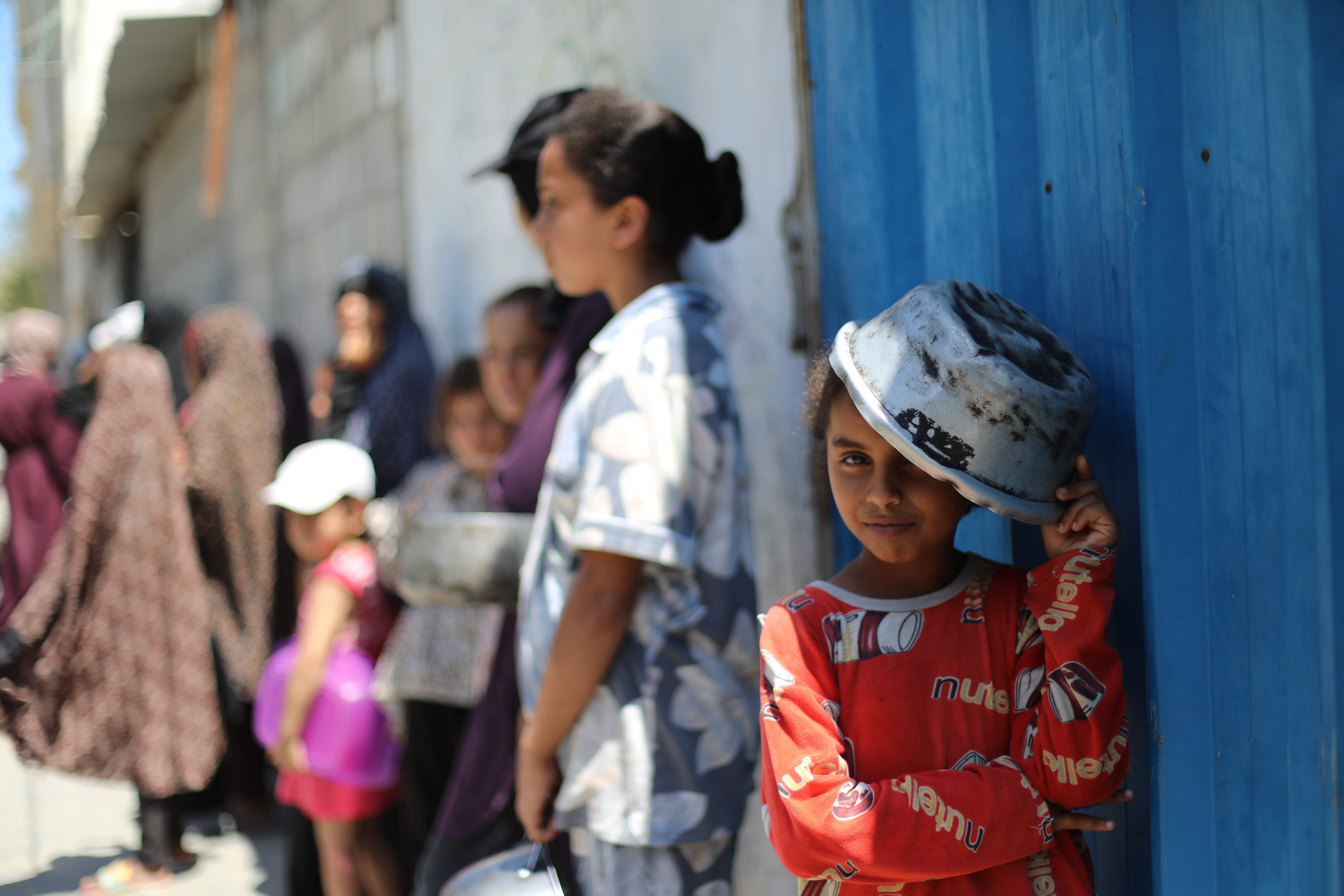
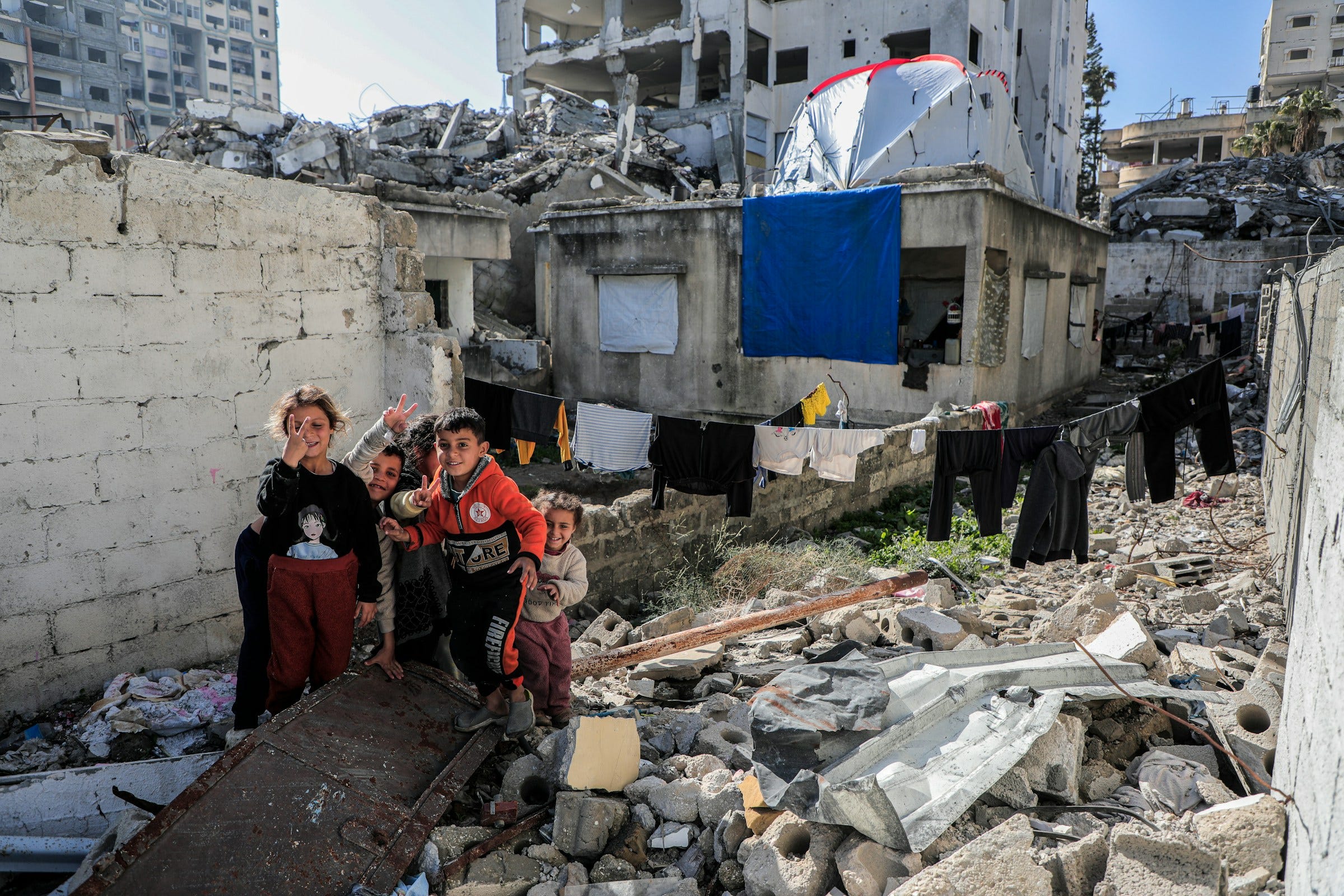
Under the pressure of necessity, your genius has exploded into innovation. You have converted bicycle wheels into manual motors to power washing machines. The children have turned tragedy into a playground, sliding with smiles atop the smooth mounds of rubble. Fathers watch for migratory birds to secure a meal for them – a scene proving that the will to live is stronger than the engineering of genocide.
In the ruins, you young people gather to play melodies – sometimes mournful, sometimes rebellious – on instruments that have been salvaged and repaired. Even marriages have not ceased. You, the brides and grooms, are celebrated among the people of the tents as you declare your love for one another and begin to build a future, even as the eye of death watches you.
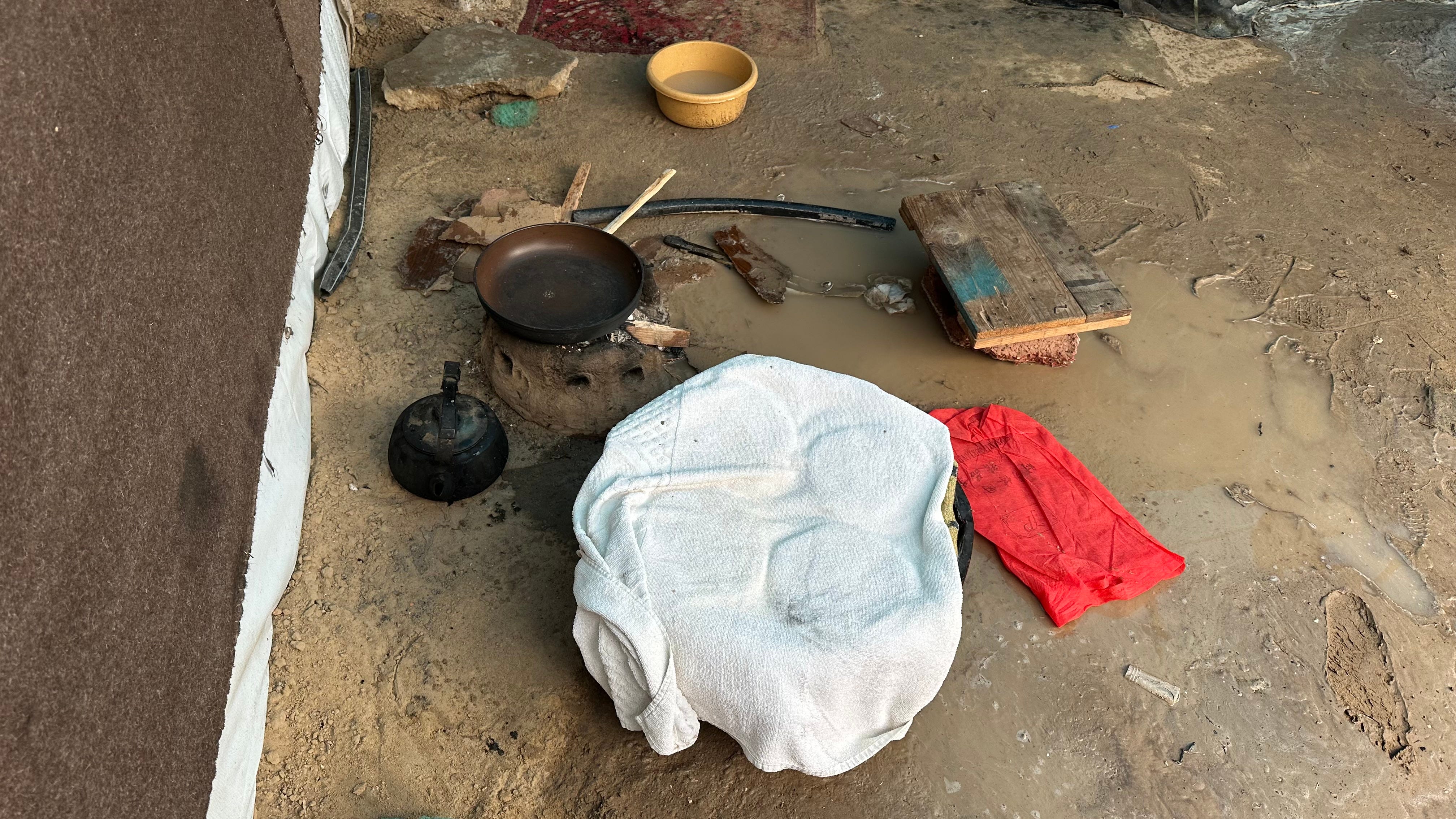
Womanhood is violated every day. Amani Abu Nada, you tell me about the misery. Of how your body has become an extra burden, stripped of all privacy. How you search for a corner just to comb your hair for a minute, and how you use old rags when you have your period. A shower has become a rare luxury, occurring once every two weeks.

Hadeel Dawla, you tell me about your flight, and about the day you lost your nine-year-old daughter, Tassal, when a missile struck your home. You were left with your six-month-old baby, enduring the bitterness of loss and displacement. You slept together on half a sofa in a seated position, crowded among over 80 others. You were ashamed to bring out the small amount of food you had in front of the hungry, because you did not have enough to share.
People of the tents, I write to you so that your voices may be heard in the shells of the sea.
People of the tents, I write to you so that your worn-out shoes may become the bright tracks that guide us through the darkness of this world.
People of the tents, weighed in conscience, you are the free beneath the canvas of the tents, while the rest of us are merely slaves in palaces of sand.
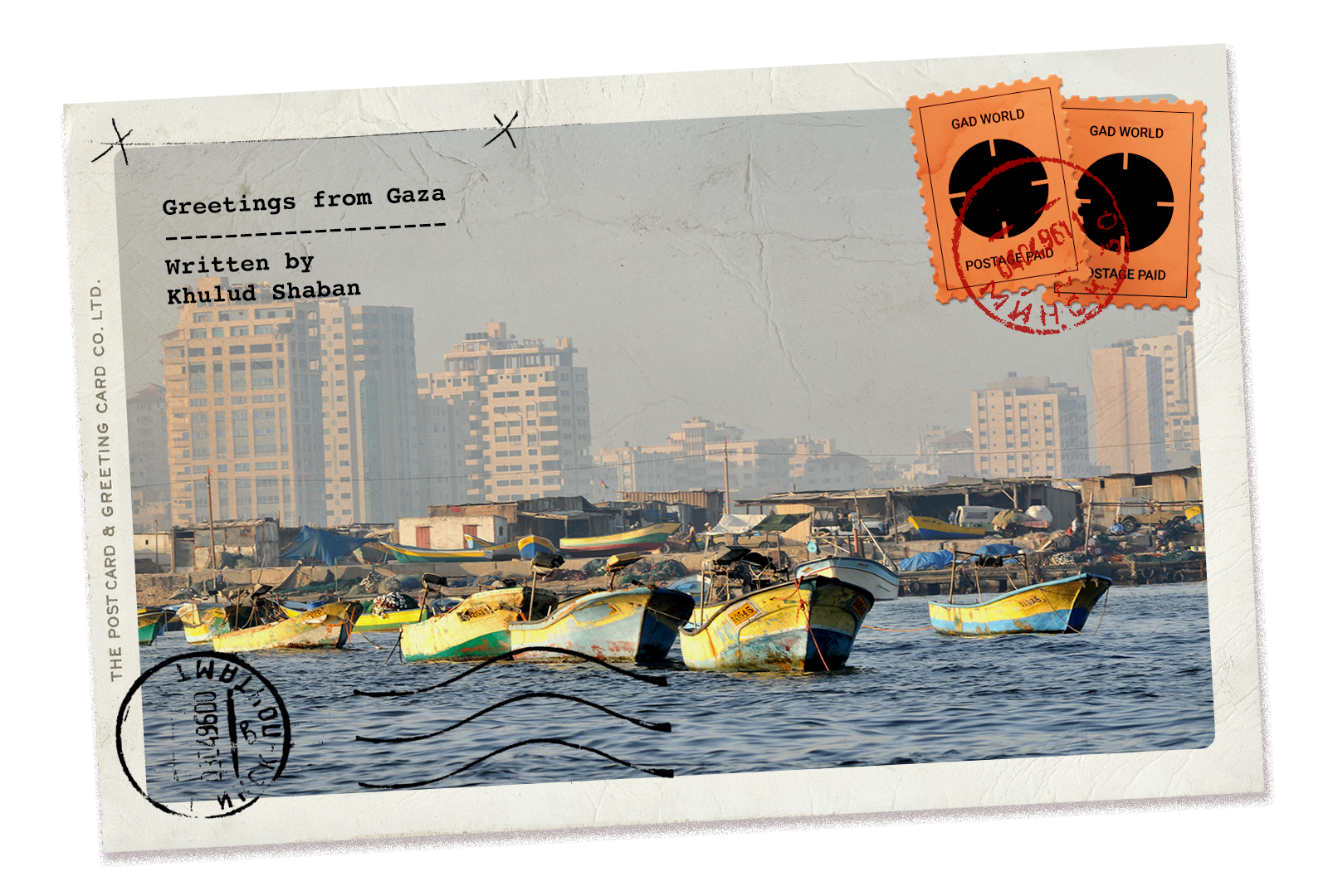
Postcards from Gaza
Khulud Shaban is a Palestinian journalist, born in Gaza in 1980, writing from exile.
Life. This series of personal stories is about how people once lived here – about the everyday life and the places that carried them. The culture, the food, the laughter, and everything they loved. A society forced to suffer and die. Survivors who remember what was with love and pain.
Death. The Hamas-led attack on Israel on October 7, 2023, killed 1,195 people, including 815 civilians and 36 children, according to AFP. Since then, Israel has killed over 72,587 people in Gaza and injured over 172,381, according to Gaza health authorities.
Children. Over 64,000 children have been killed or injured, over 56,000 have lost one or both parents, and between 3,000 and 4,000 have undergone one or more amputations, according to UNICEF.
Displaced. Approximately 90 percent of Gaza’s population has been forced to flee, many of them repeatedly, according to the UN.
Infrastructure. Large parts of Gaza’s housing, hospitals, schools, culture, crops, and historical and religious sites have been damaged or destroyed, according to the UN.