



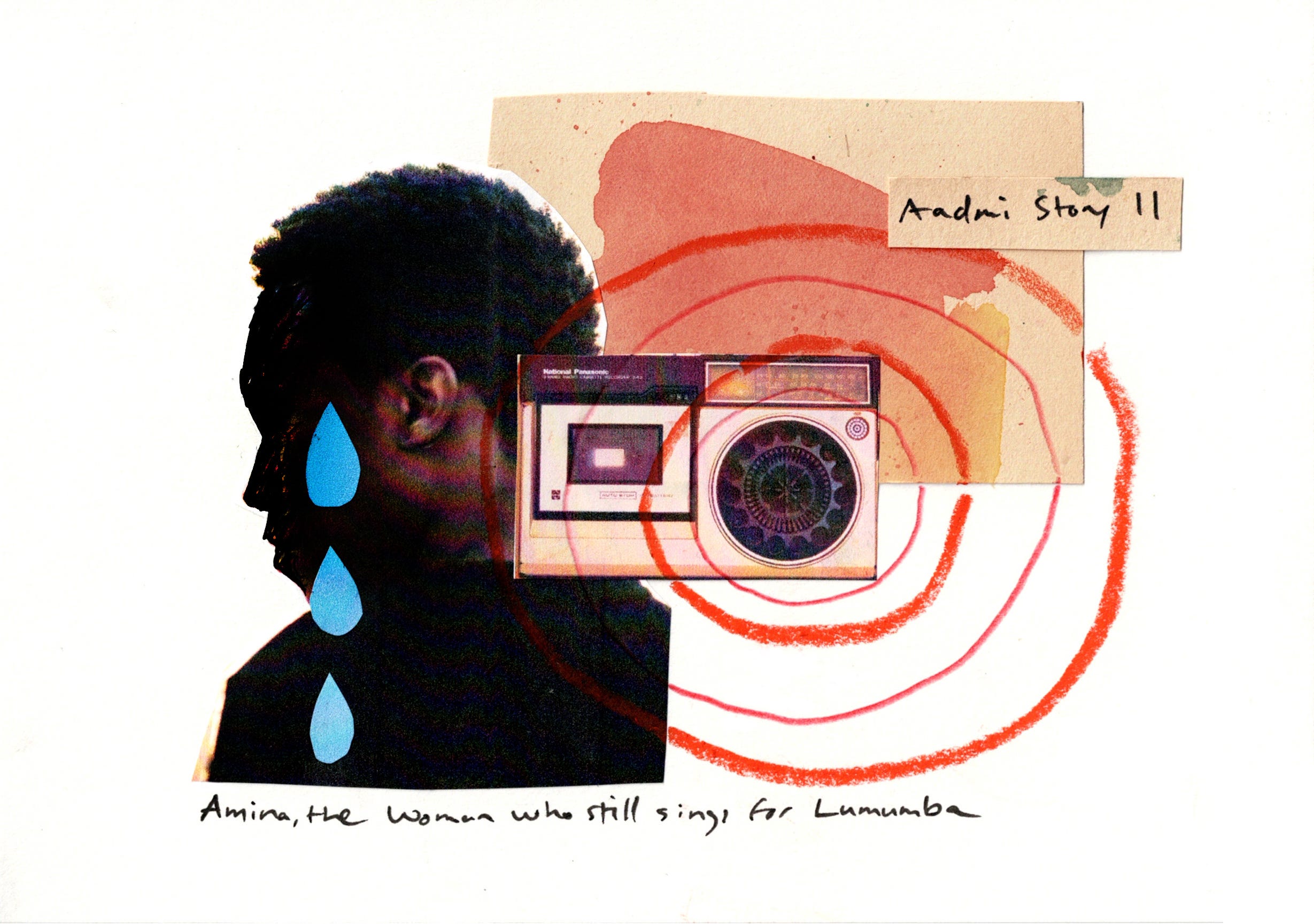
Born in 1949, Amina was just a teenager, twelve years old when Patrice Lumumba was assassinated in 1961. Now at age 77, she remembers the night her father, a member of the Somali Youth League, broke down and cried.
“My father had a small radio. There was no TV then. He listened to news. When it was announced that Lumumba of Congo was killed, my father did not speak for days. Then he played a song. A new song. Somali voices singing for a man they had never met”, she adds.
Amina still knows the words. She sings them to her grandchildren. They ask: “Who was Lumumba?”

She says: “A man who wanted Africans to own their own lands and resources. The colonisers – guumeystayaasha – killed him for that.”
This is intergenerational education. She does not explain further. She just sings the song.
She wants her grandchildren to learn the song. So it does not die with her.
Amina is not an elder in a war zone. She is a grandmother who keeps a murdered man’s memory alive through song.
Aadmi means human
This is a series of short stories by journalist Wilo Abdulle about ordinary Somali people – and about what it means to be human.
When the world looks at Somalia, it often sees only war, famine, pirates, clan killings, statelessness, displacement. Those things exist. But they are not the whole truth. They are not even most of the truth.
That version was written by the hunters.
War does not turn people into something else. It forces them to live ordinary lives in extraordinary circumstances. They still eat. Still teach. Still hope. Still sing songs for murdered leaders from other countries. The hunters’ stories never tell you that.
This is the lion’s story.
Inta libaaxu wax qorista ka
baranayo, sheeko kasta waxaa
sheegan doona ugaarsadeha.

Until the lion learns how to write,
every story will glorify the hunter.
Läs berättelsen bakom Aadmi Stories:
