


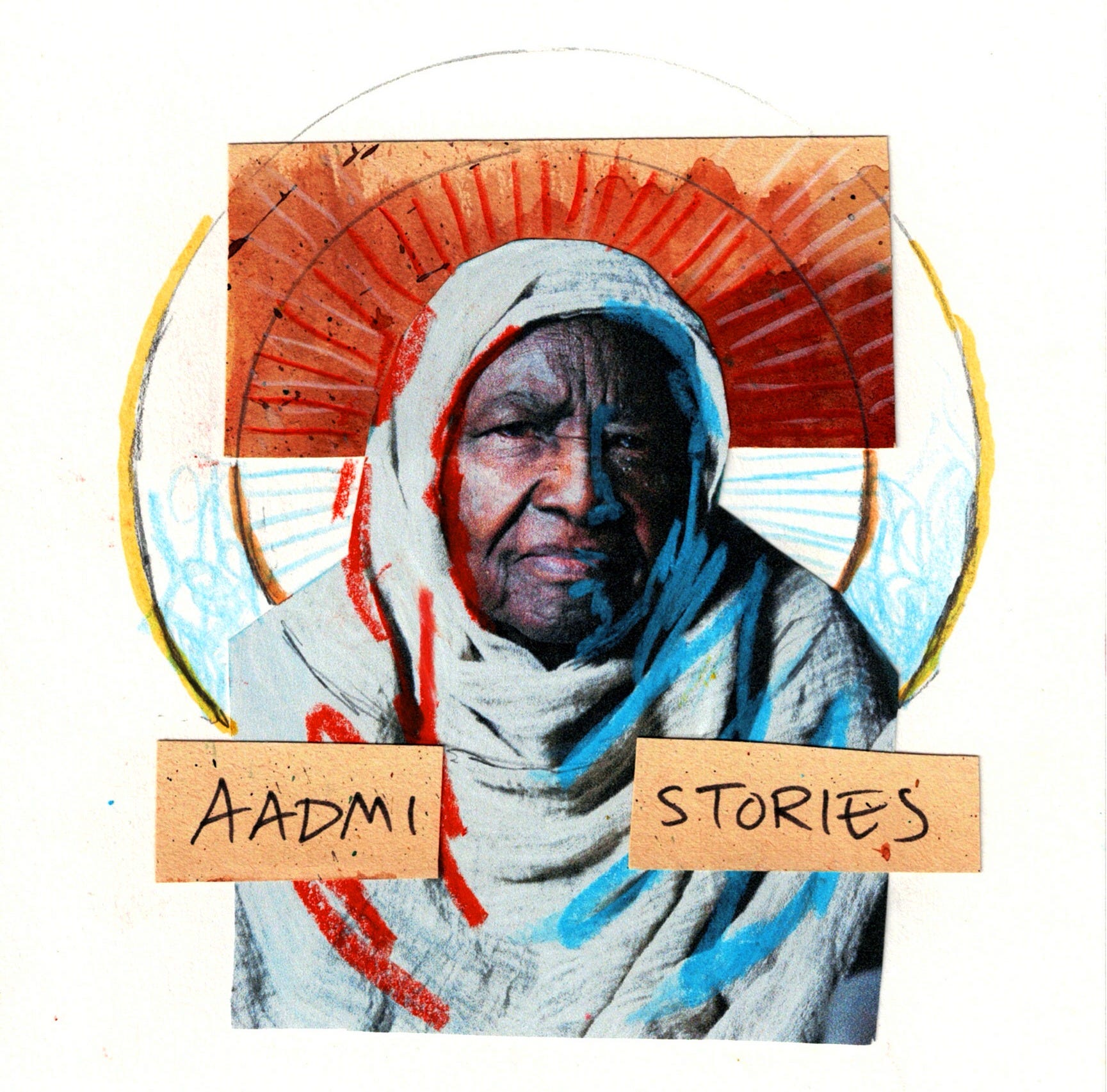
Gad World was created with a vision: to humanise those who have been dehumanised. Alongside our coverage of conflict, we want to tell stories of daily life – of ordinary people, their traditions and the places that carry them. From this idea, Gad World Postcard was born.
The Somali social worker and journalist Wilo Abdulle took the concept further. As she began gathering these accounts of daily life in Somalia, she gave them a name: Aadmi – stories of what it means to be human.
She does not portray a woman who lost her husband as a “war widow” – she portrays her as a woman who makes really good tea.
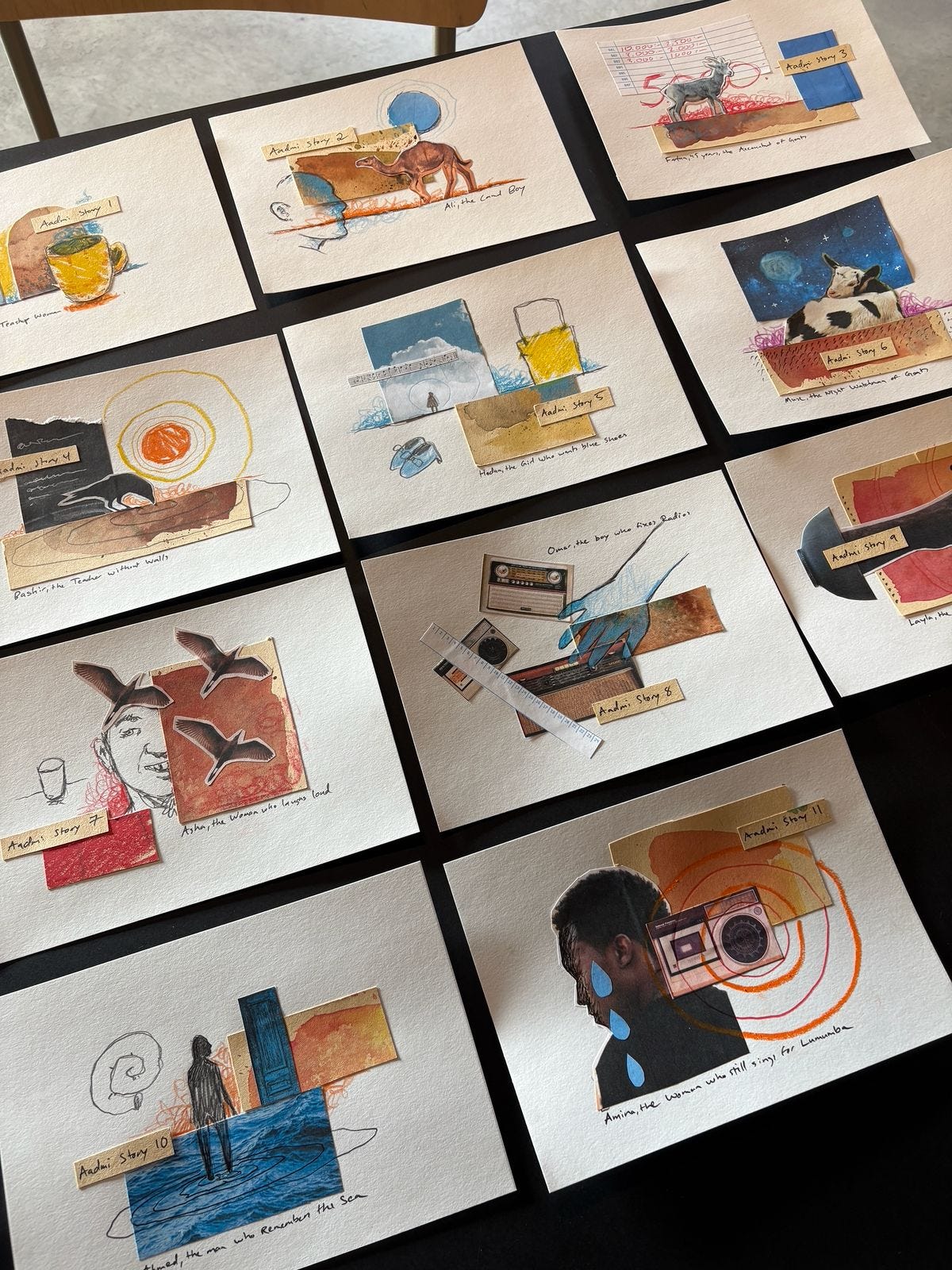
Jesper Holm – a designer, illustrator, and entrepreneur based in Uppsala, Sweden – created the illustrations for Wilo Abdulle’s stories. His process is story-driven, with the narrative dictating the visual direction.
“This means I am style-independent, choosing the medium that best serves the story,” he says. “This often leads me to learn something new with every project.”
When Jesper Holm first read the Aadmi Stories, he felt an immediate need to find something authentic, fragmentary and dreamlike.
“I wanted to capture a sense of memories, pieced together in the present,” he says.
He returned to his own past and to his family’s memories.
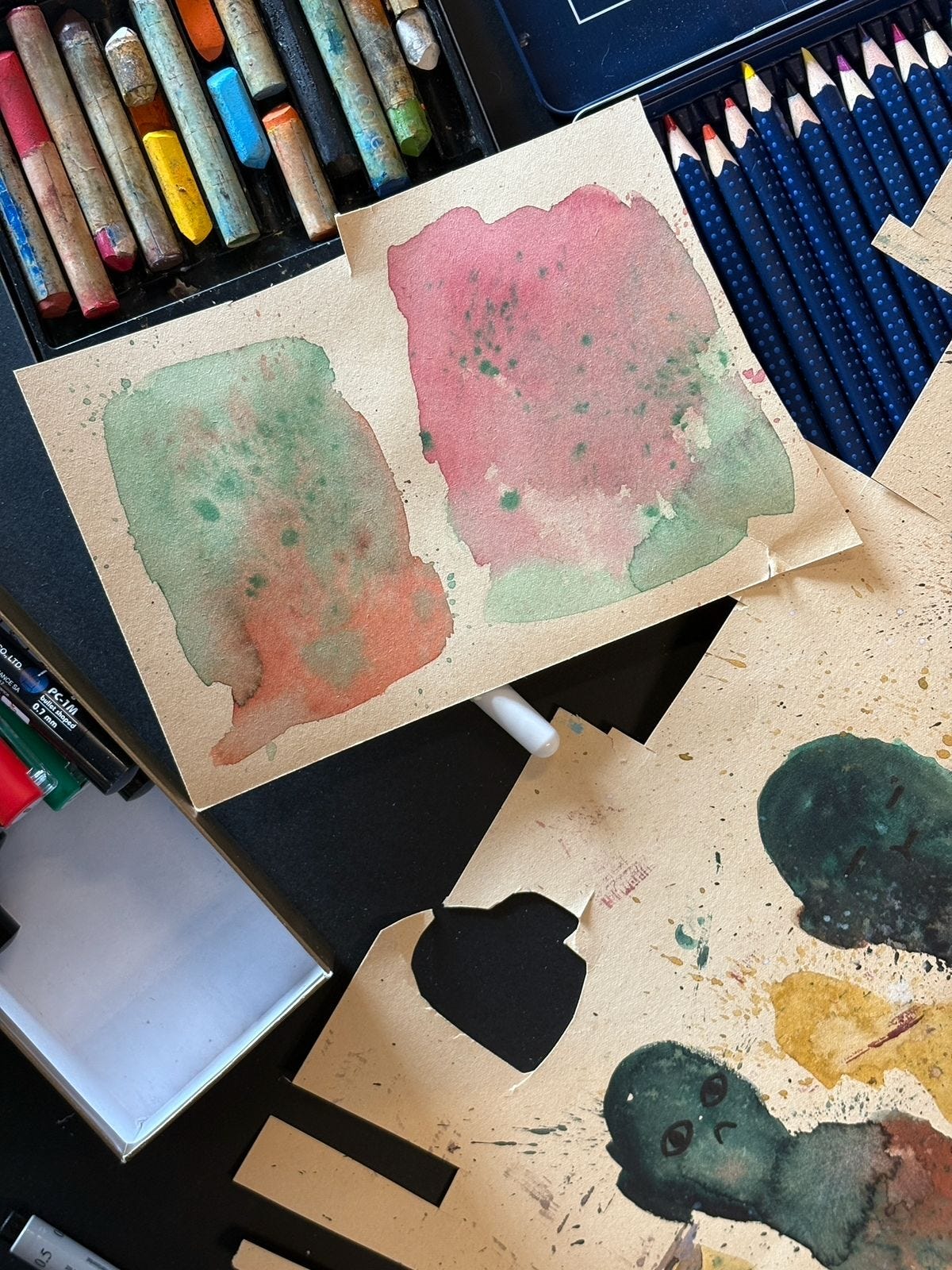
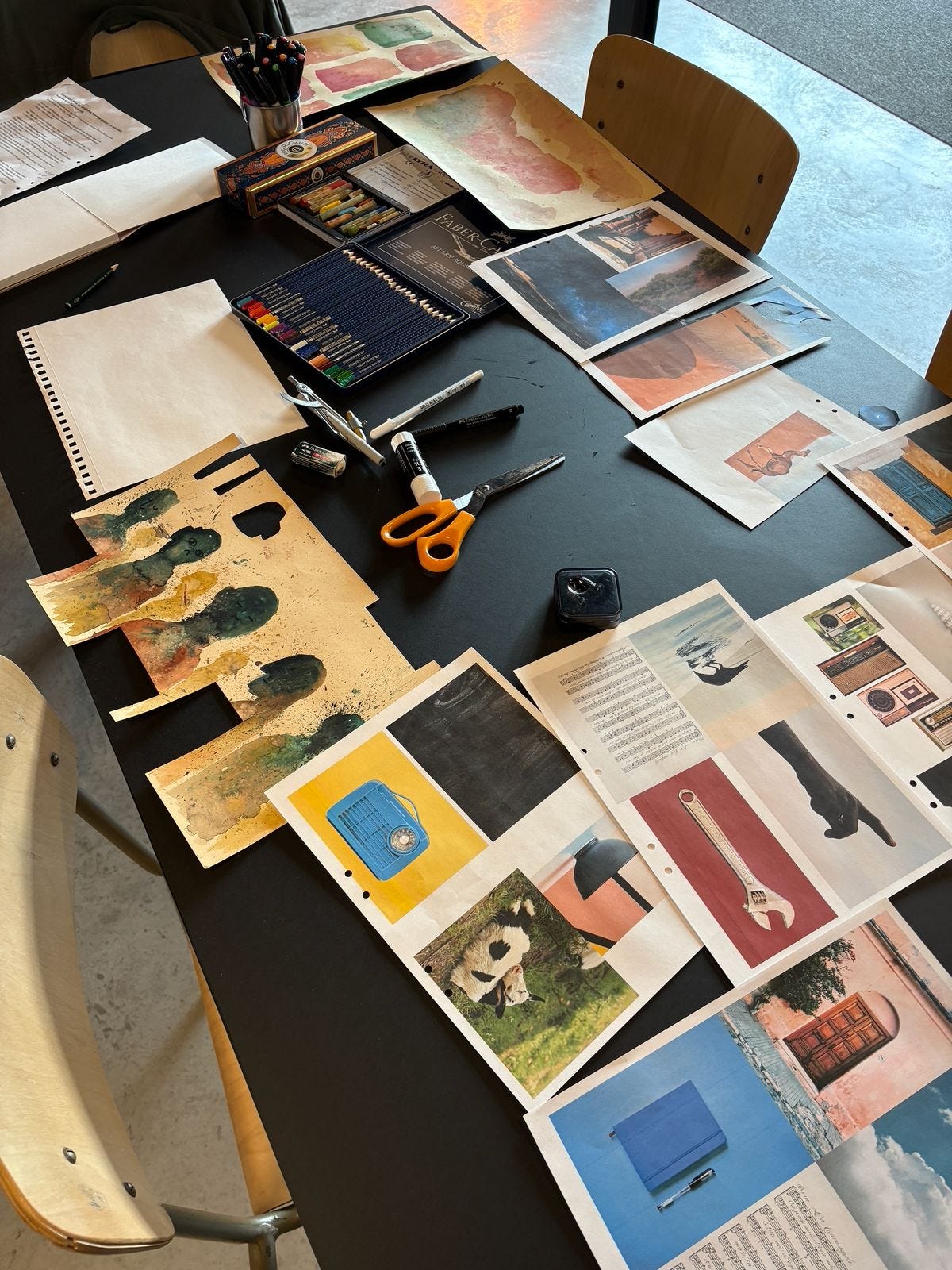
“Paper, nearly 50 years old, is gently brought to life with the watercolours of my childhood. Thick pastels, given to me by my mother’s best friend when I was young, create the effects. Small images from then and now bind the whole together.”
Designed book covers
Earlier in his career, Jesper Holm exhibited his art widely in galleries and art halls. Today, he works primarily on commission.
Among the projects closest to him are the children’s book Silvertass, the 365 Days of Art project, the game Kluring, and the publishing house Epok, which he co-founded and for which he designed all book covers.
Wilo Abdulle is moved by how Jesper Holm’s illustrations capture her stories with striking precision.
“The images speak so powerfully. They are so beautiful they give me chills.”
Both Jesper and Wilo return to the same idea: authenticity. To capture something real.
Wilo defines the word Aadmi in simple terms: Human being. A person. Not a statistic. Not a victim. Just human.

And Aadmi Stories: Short portraits of ordinary people. No war as identity. No pity. Just humans.
So what is her own story? And what has this project meant to her?
(At the end, she shares a note – something to carry with you as you read her stories.)
Wilo Abdulle is 59 years old and was born in central Somalia. In 1982, as the Cold War burned across the Horn of Africa, she became an internally displaced child and grew up in the capital Mogadishu.
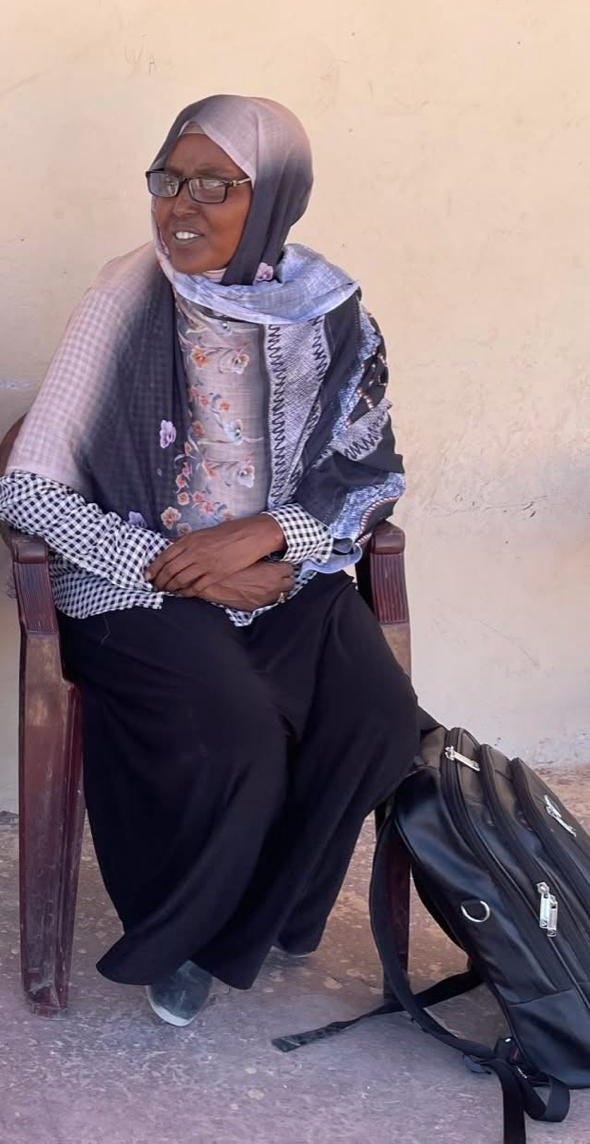
From early on, her life stretched between two worlds inside her homeland: half her family lived in the city, half were nomads.
“Every school holiday, I left the city walls, roads, and lights and became a nomad kid again – walking with the goats and sheep, helping my mother and siblings under a wide, open sky in Central Somalia towards the disputed border between Ethiopia and Somalia.”
Years later, just before Somalia shattered into civil war, she left for Sweden. She arrived as a refugee – an unaccompanied young girl, distressed but hopeful, carrying an entire world within her.
And just like that, she found herself caught between continents, Africa and Europe.
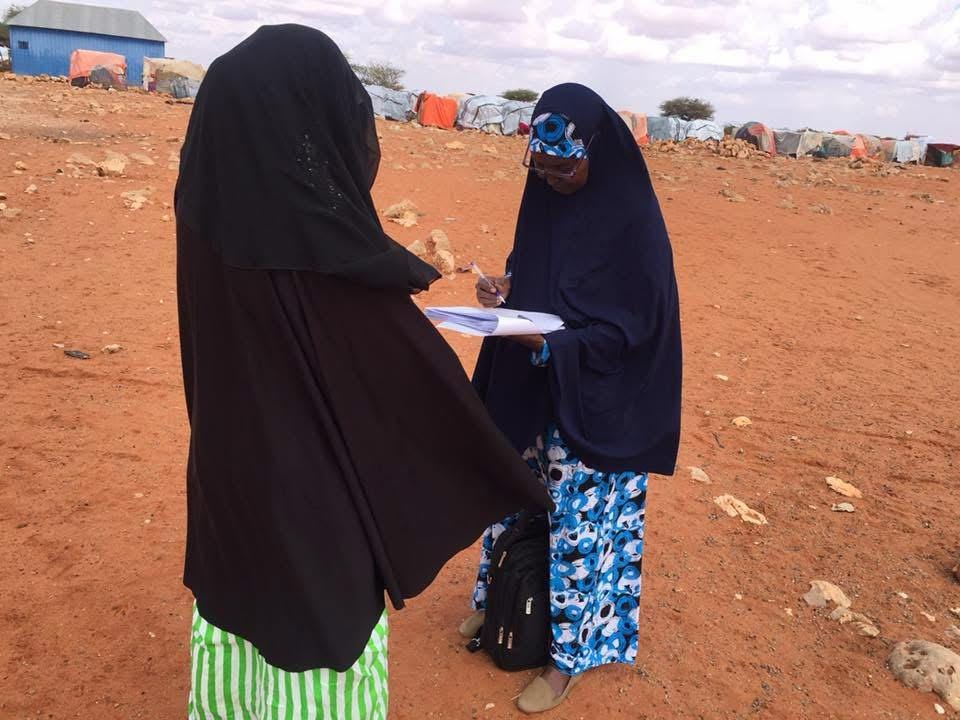
“Sweden is where I grew into adulthood, earned my university degrees, and found my calling as a social worker.”
“I worked alongside people in their hardest moments, and I learned – not as a theory but through what I saw again and again – that every human being holds an unbreakable core of capacity and agency, no matter what circumstances shroud them.”
Wilo later trained as a radio reporter and worked as a radio journalist for Swedish radio, SR International.
“My colleagues really appreciated my storytelling,” she recalls. “That’s where I came to love the simple, radical act of stepping back and letting people tell their own stories.”
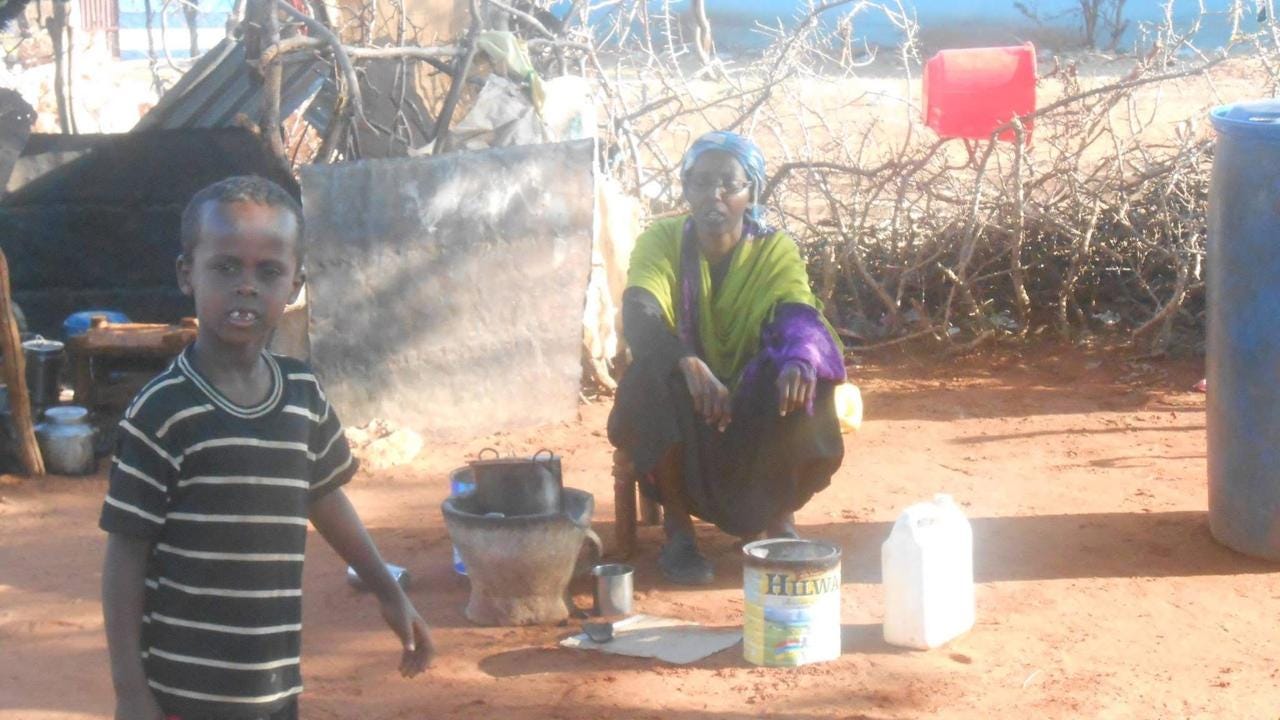
Then, unexpectedly, she left.
“That was the time I naturally felt the need to leave Sweden and go back to Somalia. There was no visible reason. I just went.”
For the past thirteen years, she has lived between Somalia and Kenya, back in the landscapes that raised her.
And then, it happened.
“One day, at home, a friend asked me to be part of a postcard project. The only guiding thought was simple: Humanise people who have been dehumanised.”

Wilo says it brought together everything she believed in and was skilled at: the social worker’s faith in people, the journalist’s ear for human truth.
The idea was to ask people to write postcards from countries at war – about culture, history, food, the everyday life that survives and what is meaningful for them to write on a postcard.
“I loved it instantly.”
Aadmi Stories
Aadmi is a word derived from the name Adam, the first human in the Abrahamic religions. While the word belongs to the Indo-Aryan languages, it is influenced by Arabic and Persian traditions, where the root connects earth and human – as in being created from the earth.
Hebrew. Adam (אדם). Means “human” and is directly linked to the word for earth, adamah.
Somali. Aadmi. Human being. A person. Not a statistic. Not a victim. Just human.
Hindi. Aadmi (आदमी / آدمی). In everyday speech often “man,” but in literature and poetry, it can mean “human” in a universal sense.
Urdu. Aadmi (آدمی). Shares its meaning with Hindi, with a rich poetic usage connected to the human soul.
Persian. Ādamī (آدمی). Used for “human”, but in literary contexts, it can carry a broader meaning of humanity and dignity (insāniyat).
Arabic. Ādamī (آدمي). Means “human” or “of the lineage of Adam.”
Bengali. Admi (আদমি). A loanword from Hindi and Urdu used in certain contexts for “human.”
When she started talking to people, explaining the project idea, she kept repeating the same phrases: human story, human life.
One day, she paused.
“That phrase – humanising people who have been dehumanised – echoed inside me,” she says. “What does it really mean to be human? To tell a story that restores someone’s humanity?”
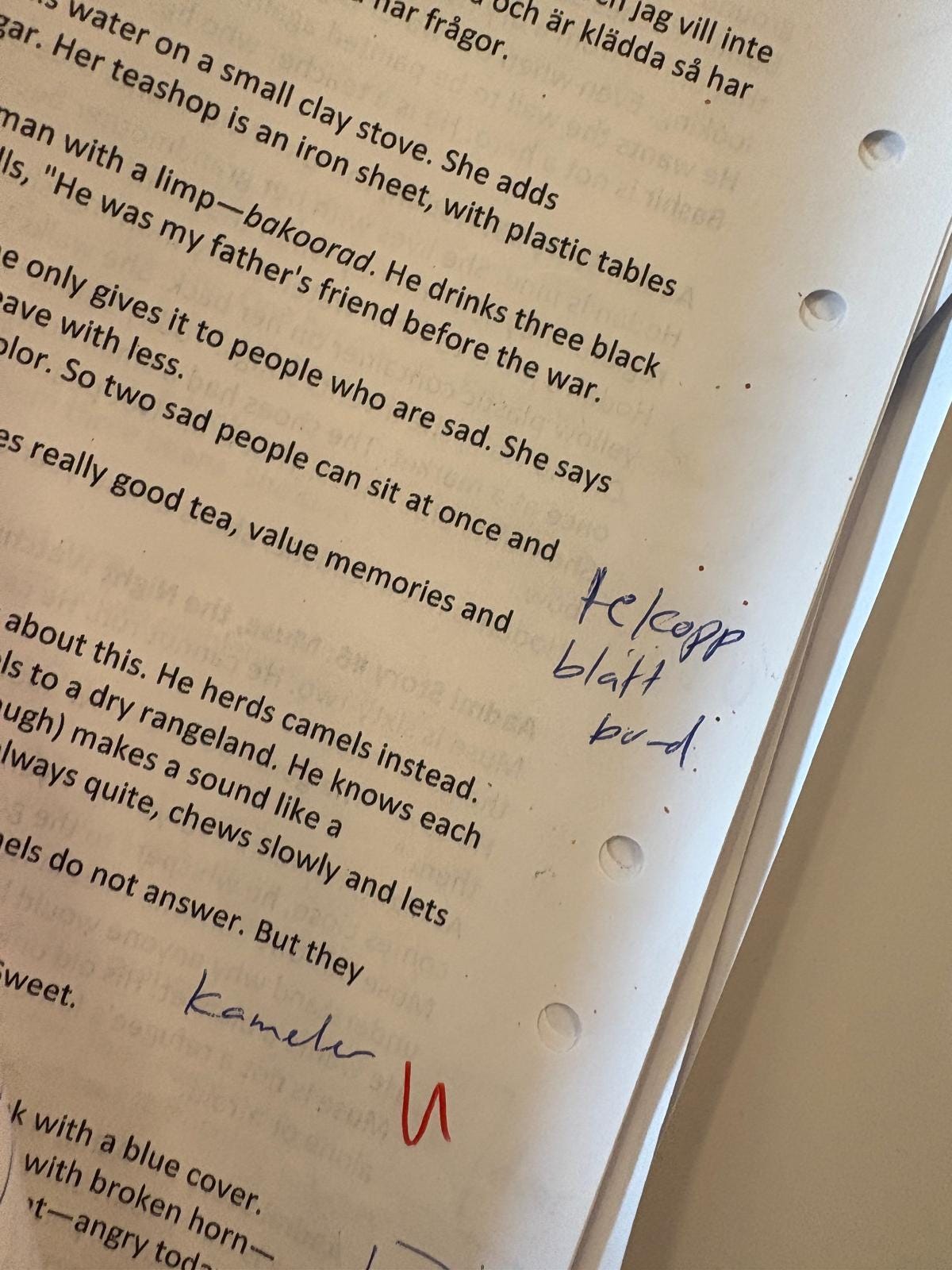
She sat with the question.
“And out of that stillness, the word came. Aadmi. It surfaced from the deepest part of me.
“Human being. Nothing more, nothing less.”
In that moment, the project felt fully born.
“These were not just helping people to write postcards or human stories. They were Aadmi Stories – simple, true, ordinary and sacred all at once.”
That is how the Aadmi Stories began.
She has been gathering them ever since.
Words from the Land
Dear reader,
These words appear in the Aadmi stories and Postcards. They are Somali. Here is a small guide.
Acacia. A thorn tree that provides shade in dry lands. Our classroom roof.
AK-47. A rifle. The father of the girl writing to you carries it on his right shoulder, even when he sleeps.
Anjera. A soft, spongy pancake made from yeasted flour. We eat it every morning with tea.
Axel. Shoulder. The father’s gun rests on his right axel.
Bariis isku karis. Rice with meat and spices. We eat it on Fridays, if we can find rice.
Dabayl. Wind. Nomads say the wind does not break the tree that bends.
Galgala. A mountain area in eastern Somalia, Puntland region. Stone and thorn and sky that never ends.
Galgudud. A region in central Somalia. For four years, drought has lived there.
Hees. A song. In 1961, Somalis sang a song for Patrice Lumumba.
Macawis. A patterned wrap skirt worn by Somali men. The teacher of the girl writing to you wears one.
Qur’an. The holy book of Islam. The teacher carries it wrapped in cloth.
Shah Somali. Tea with cardamom, cinnamon, and too much sugar.
Shalmad. A colorful wrap worn by Somali women. The mother of the girl writing to you wears one.
Xeedho. A gift basket with dates, meat and ghee. A neighbor gave us one when she had nothing.
Xooluhu. Livestock. The mother says livestock is a trust from God.
Read the first Aadmi Story:
