

Painting can calm anxiety and keep a breakdown at bay
In Gaza, art is used to mend what has been broken in the soul. Artist Rufaida Sehwail colors the ashes and asks herself if the human being can be reborn from the time that tries to annihilate her.

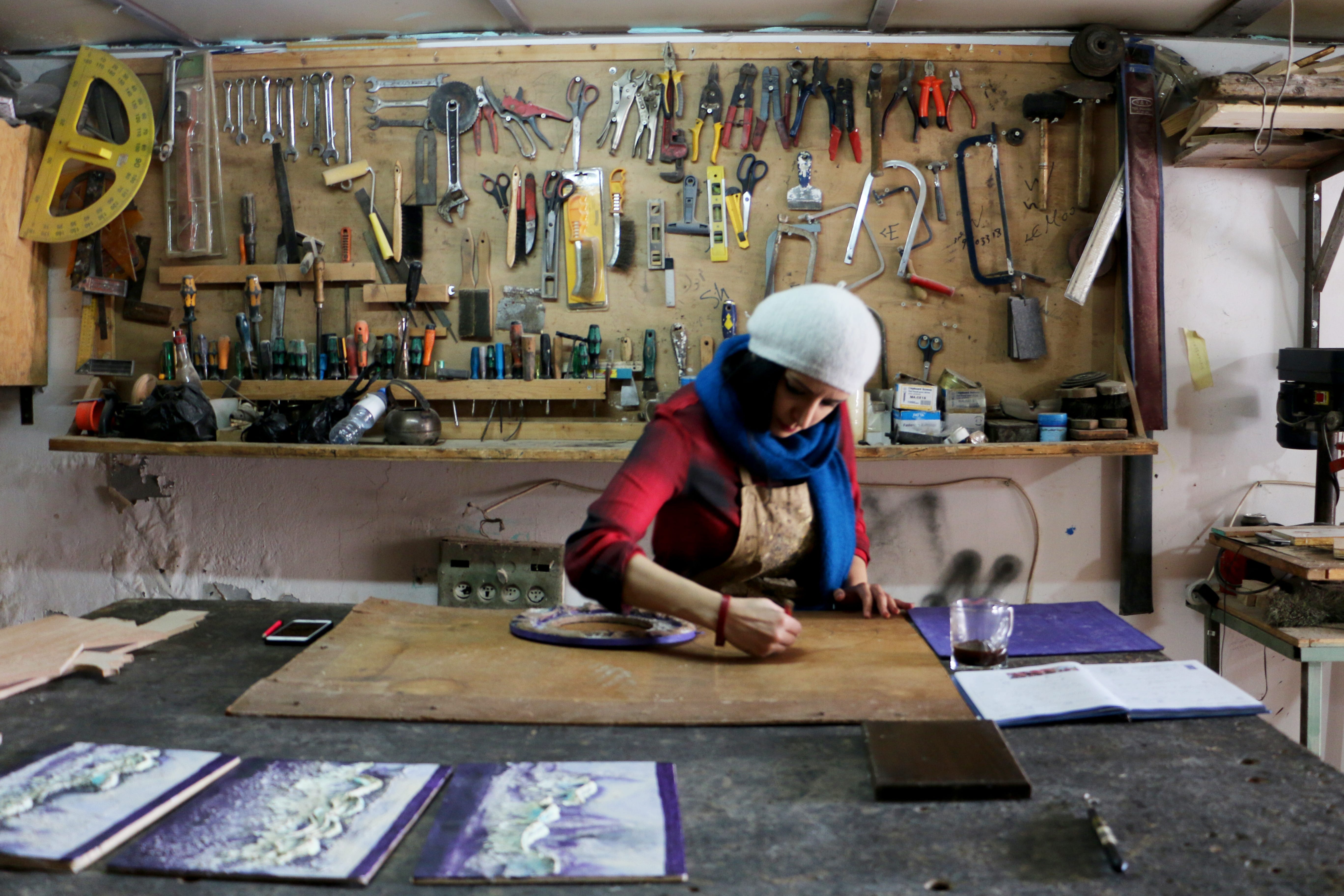
I am speaking with my art teacher, Basel El Maqousi. He has been displaced five times – from Khan Younis, Rafah, Deir al-Balah, Nuseirat, and Az-Zawaida. Through every ruin, he has carried his bag of paints. He saw children age prematurely, he tells, which challenged his humanity.
“Fragile bodies staring into the mouths of cannons, and small hands that have traded toys for gathering firewood and carrying water.”
Faced with this sight he decided to transform his tent into an “artist residency”.
“It isn’t a way to pass the time. It’s a roar for life against the most brutal of deaths. When a child’s body meets a missile that pulverises concrete, paint becomes our only tool to mend what has been broken inside.”
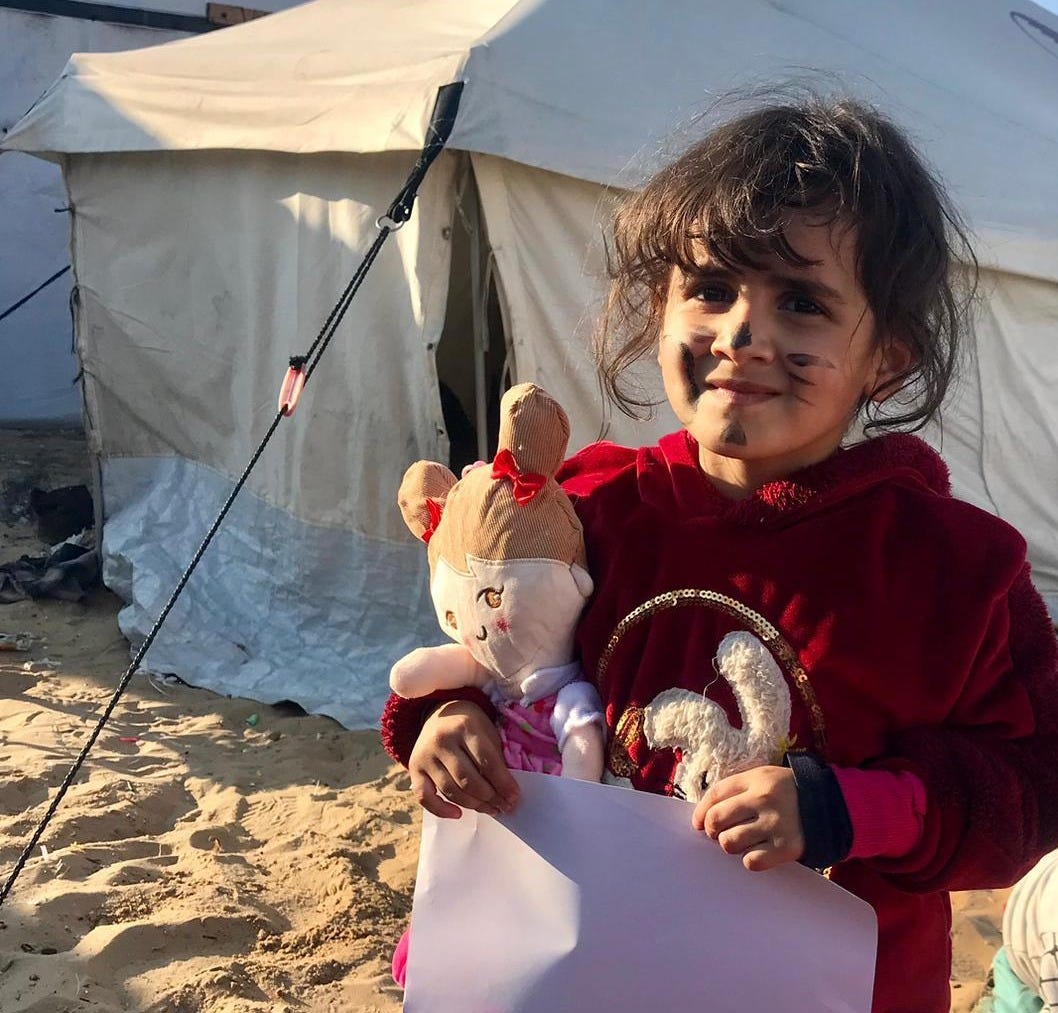
Today, he has a “little Shababeek” in the tent camp, where he runs workshops.
Before the genocide, he had a large Shababeek.
The story of the artist collective of the same name began in 2003, at the Al-Karawan café in Gaza City, a favourite spot for Gaza’s poets, writers, and artists.
At Al-Karawan, the artists Basel El Maqousi, Shareef Sarhan and Majed Shala dreamed of opening shababeek (windows) in the suffocating wall of the blockade, to be able to look out at the world and to let the world look in.
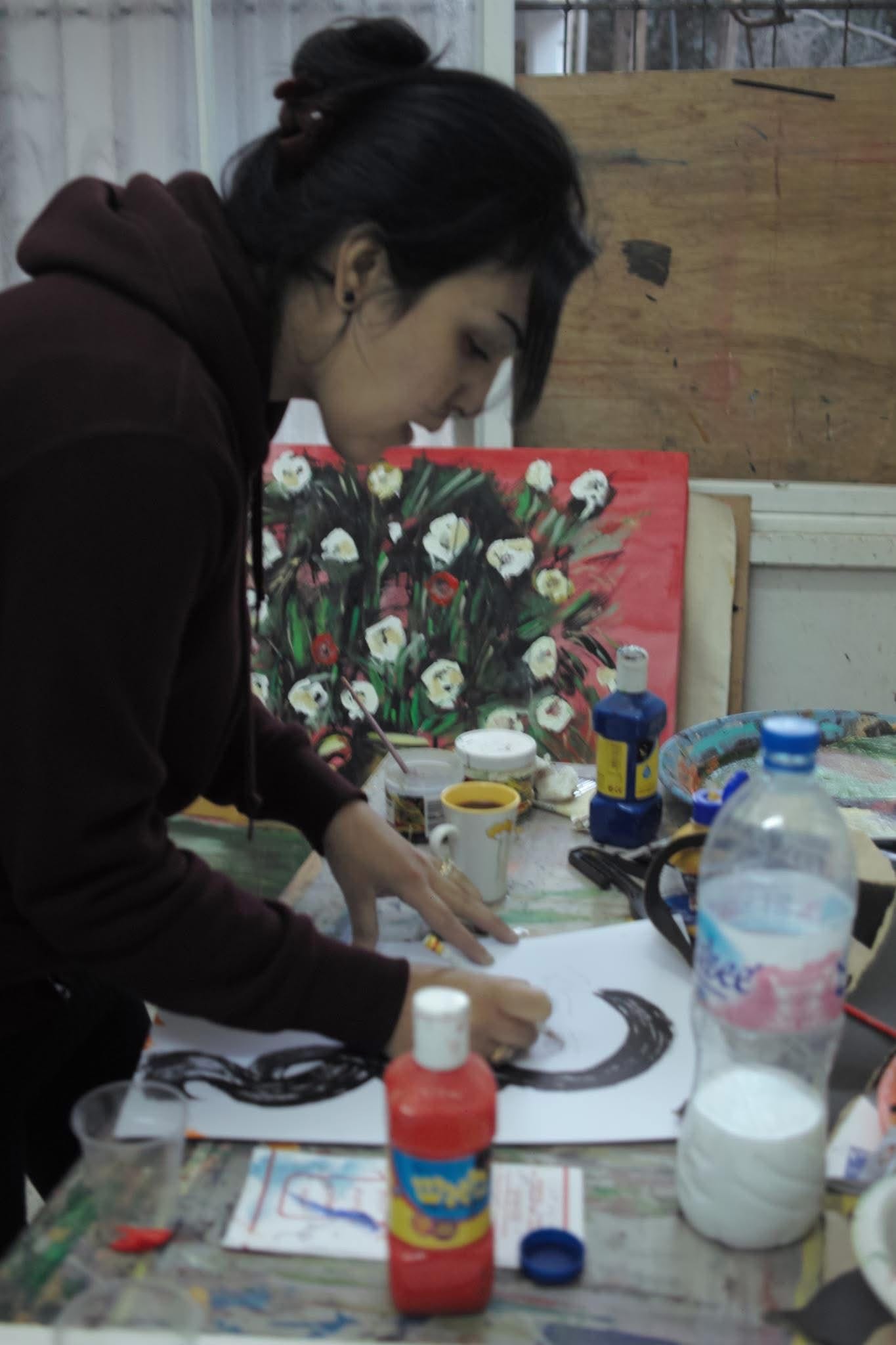
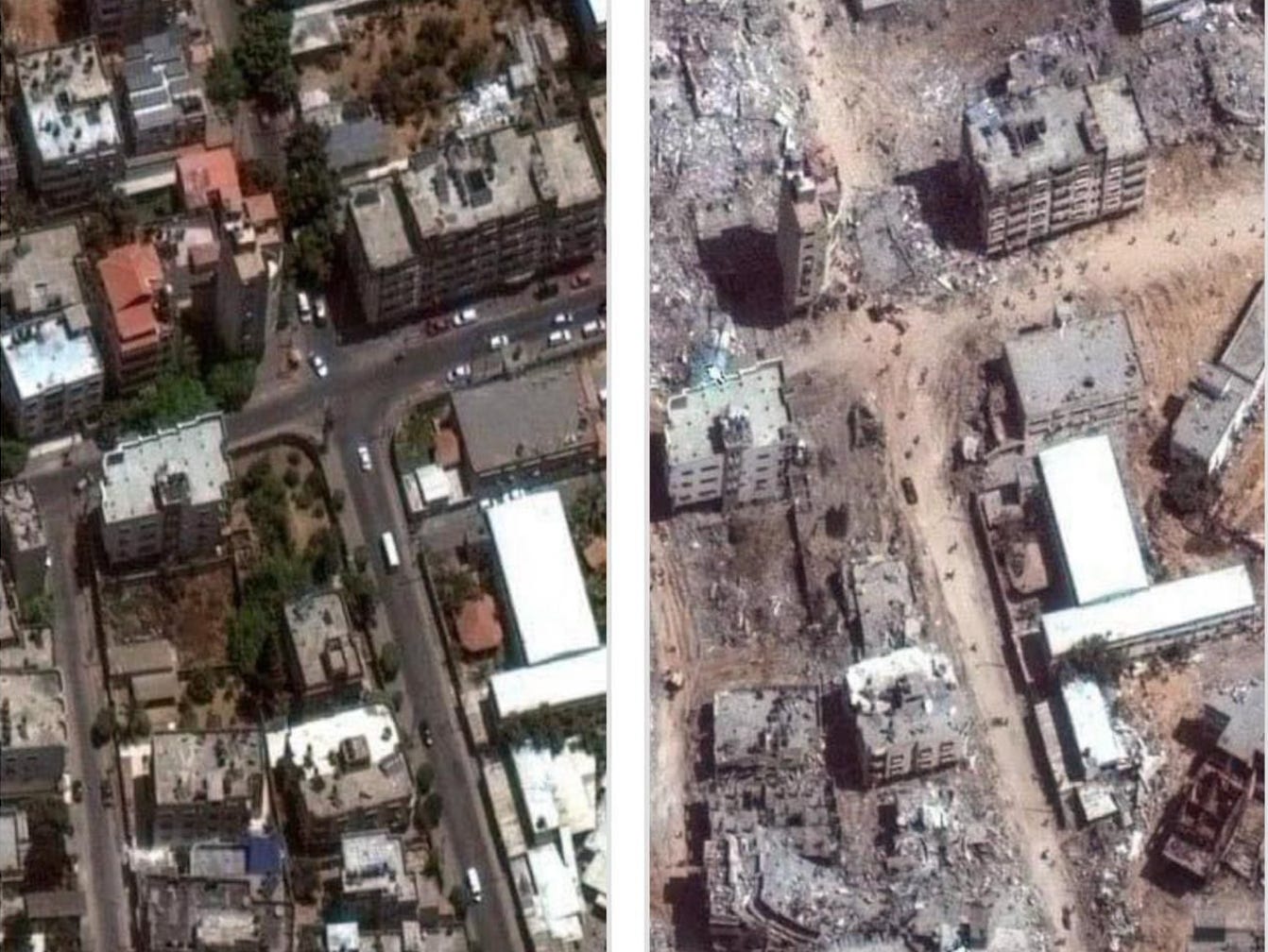
In 2009, they converted a house in Al-Rimal, located just metres from Al-Shifa Hospital, into the gallery Shababeek lil-Fann al-Mu’asir (Windows for Contemporary Art).
Here, our pain was transformed into a universal language. Basel taught us that through art, we can communicate with the world without an interpreter.
For me, Shababeek was more than just an art institution. It was my extended family – one that I have now lost.
The friends would gather here already in the morning. I can still taste the breakfast that Basel used to buy for us all. Crispy falafel, hummus, ful (fava beans swimming in olive oil, with peeled and finely chopped tomatoes, lemon and garlic) and twenty steaming, fresh loaves from the nearby Family Bakery for just two shekels.

We covered the stained, simple wooden table with newspapers and ate with our hands. Our faces met over tea scented with fresh mint as we shared bread and ideas before sharing colours.
Shababeek had a wonderful garden, filled with flowers and vines climbing over the entrance. Here, the oud sang to us while we created. I began with acrylic on paper. Then Basel showed me how to stretch canvas over wooden frames.
I fled here from the pressure, the horrors of the blockade, and the constant sounds of killing during the wars, to pour my anger and stress onto the white canvas.
My husband was always away, and I raised my three children Jumana, Ayha and Abood alone. At Shababeek, I regained my strength.
Under Basel’s patient guidance, I learned how a brush can tame anxiety and postpone a breakdown.
Shababeek lil-Fann al-Mu’asir became our “hospital for the soul”. When our thoughts were too many and life too narrow, we came here and tried to breathe out our identity, from our confined world through the windows to “the other” in the world outside.
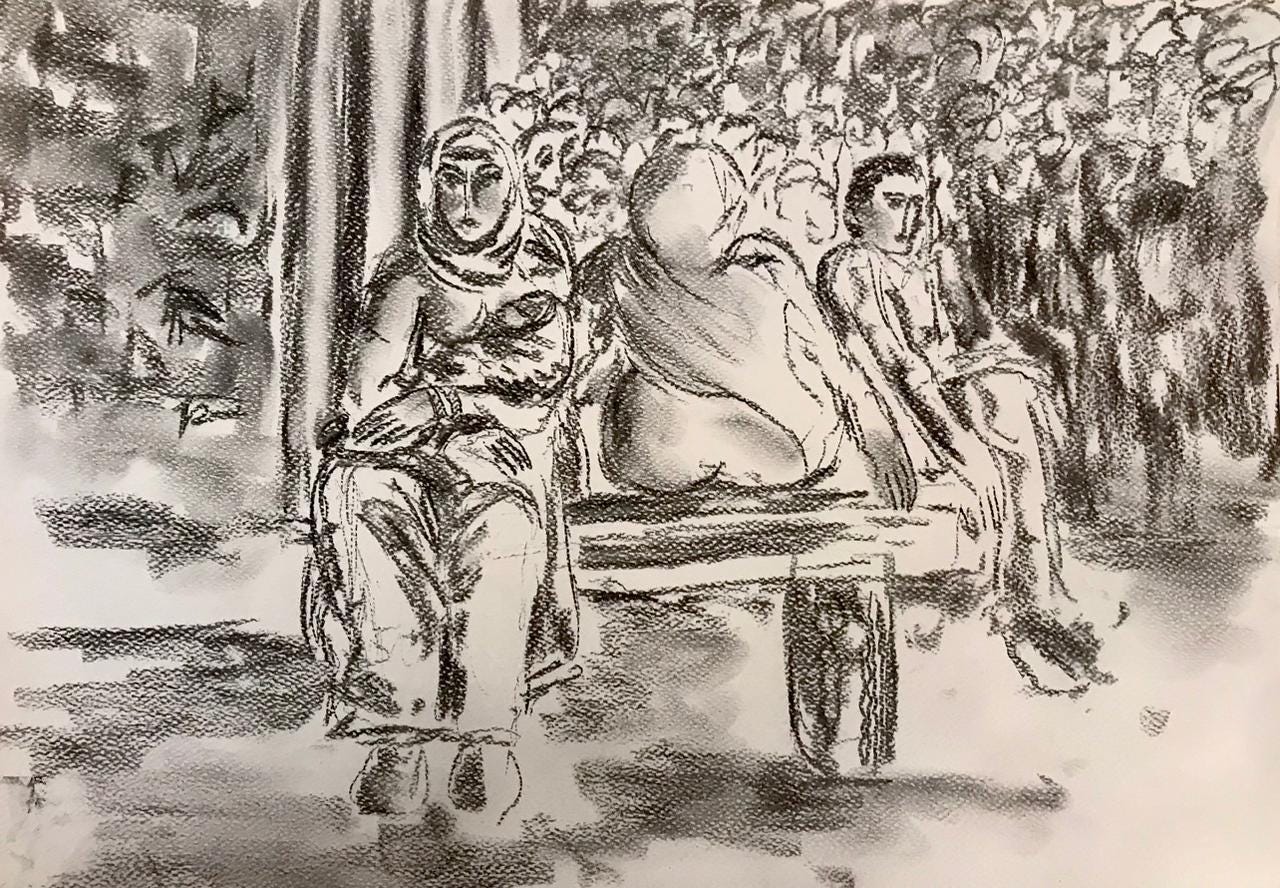
After every war, Shababeek became the place where the broken souls of mothers and children were mended.
My children also came for the psychological support projects. They mostly painted about the war because of the extensive destruction our home was subjected to.
Fear was constant. Our house stood opposite the old al-Saraya prison, built by the British to jail those who rose against them. It was later taken over by Hamas and struck 18 times by F-16s.
Shababeek hosted artist residencies, reminiscent of the art scene in Paris. Here, Gaza’s talents were nurtured, developing their aesthetics. It housed more than 20,000 paintings, photographs, and sculptures.
But … the windows were not allowed to stay open!
During the genocide, the Al-Shifa Hospital was subjected to brutal destruction and massacres by the occupation. In April 2024, the halls of Shababeek fell, and the art – born from years of tears – was turned to ash.
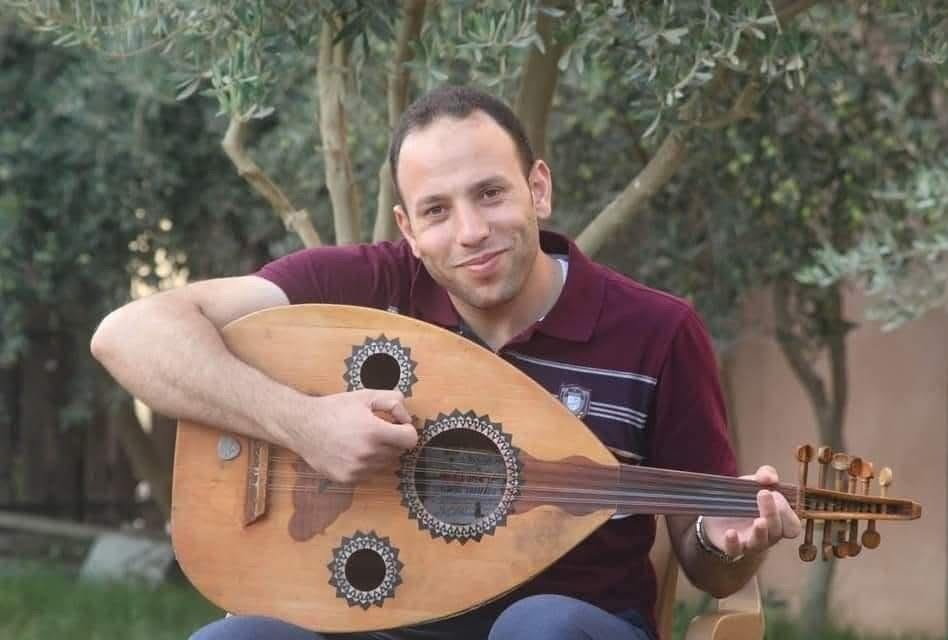
The greatest loss was the artists. 118 cultural workers were killed in Gaza in 2024 alone, according to the Palestinian Ministry of Culture.
This is a cultural genocide, as defined by Raphael Lemkin, targeting museums, galleries, art exhibitions, theatres, cinemas, music institutes, libraries, publishing houses, bookshops, newspapers, millennia-old buildings, and ancient cultural treasures such as traditional costumes and pottery.
An attempt to erase every testimony linked to this land.
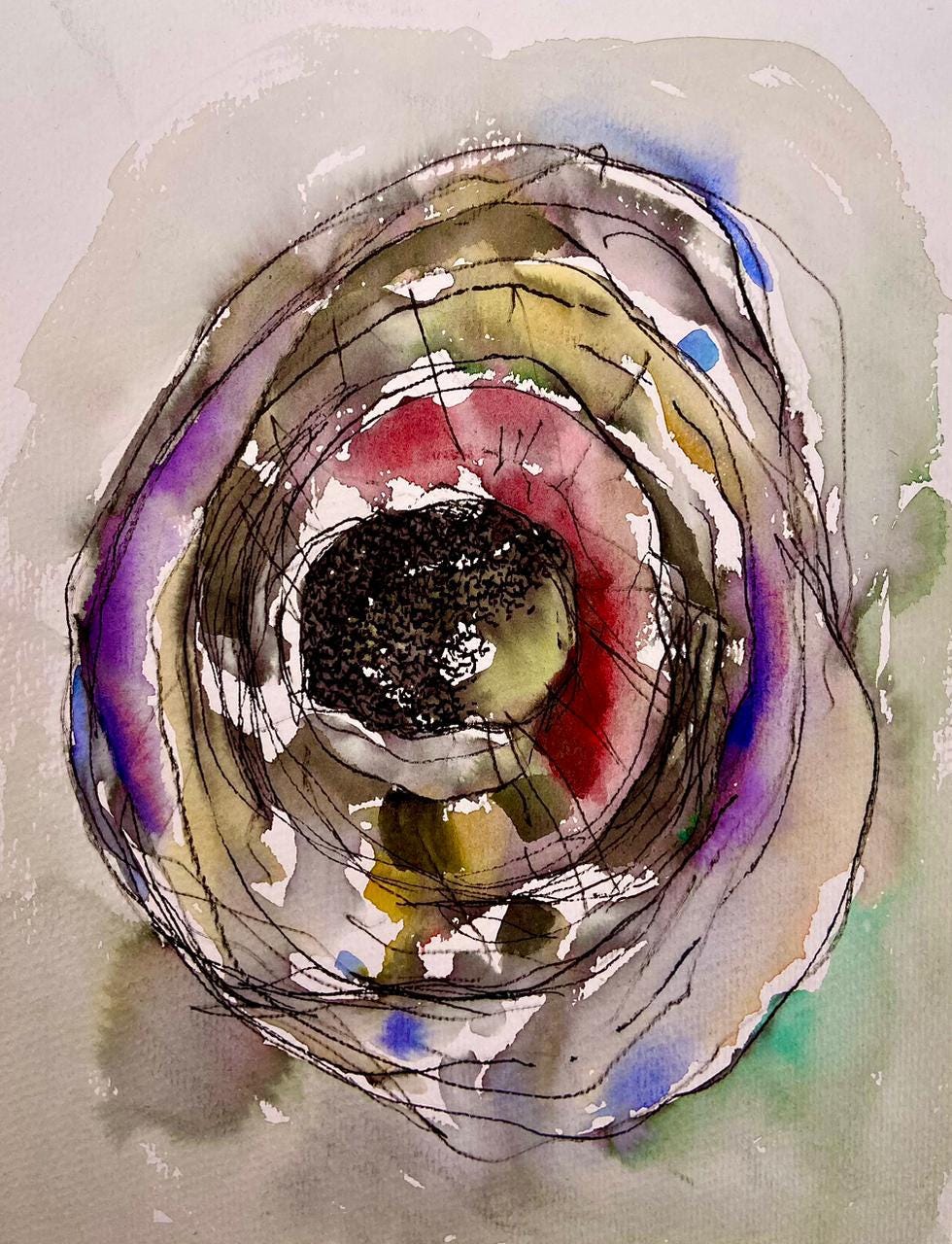
Today, nothing remains of the great Shababeek except a memory in digital space, a cold archive salvaged by its founder, Shareef Sarhan.
The warm life that once thrived there, the fingers that painted, the eyes that saw the beauty, and the green garden that gathered us for breakfast – it is all dead.
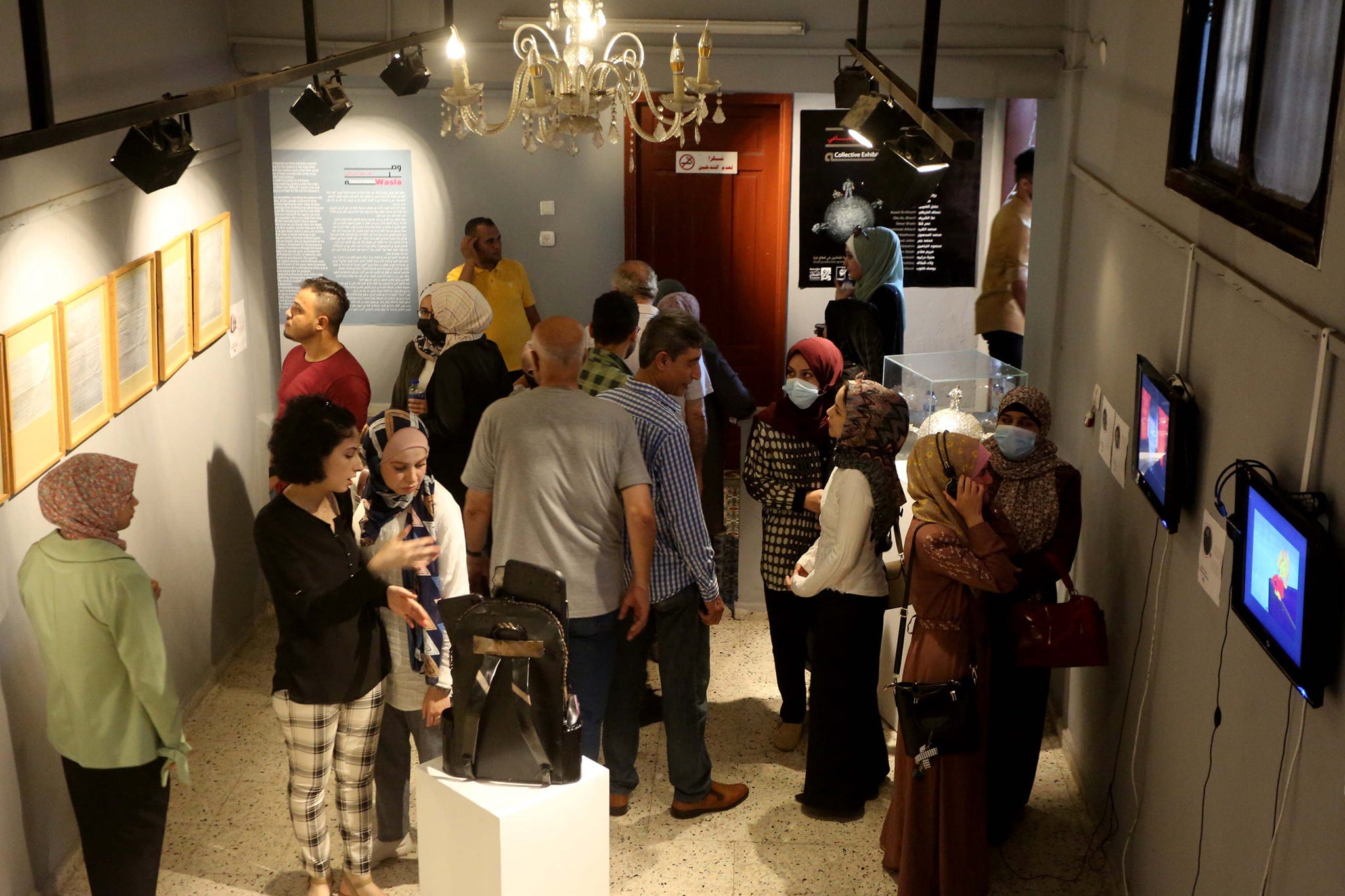
Now, a small Shababeek exists in Basel’s tent. He says the workshops for mothers and girls are the most painful of all.
“We draw our ruined homes, flowers, and the Palestinian flag. We weep together as we sketch our dreams. On the beach, we build houses of sand. The waves sweep them away, but we build them again, and again.”
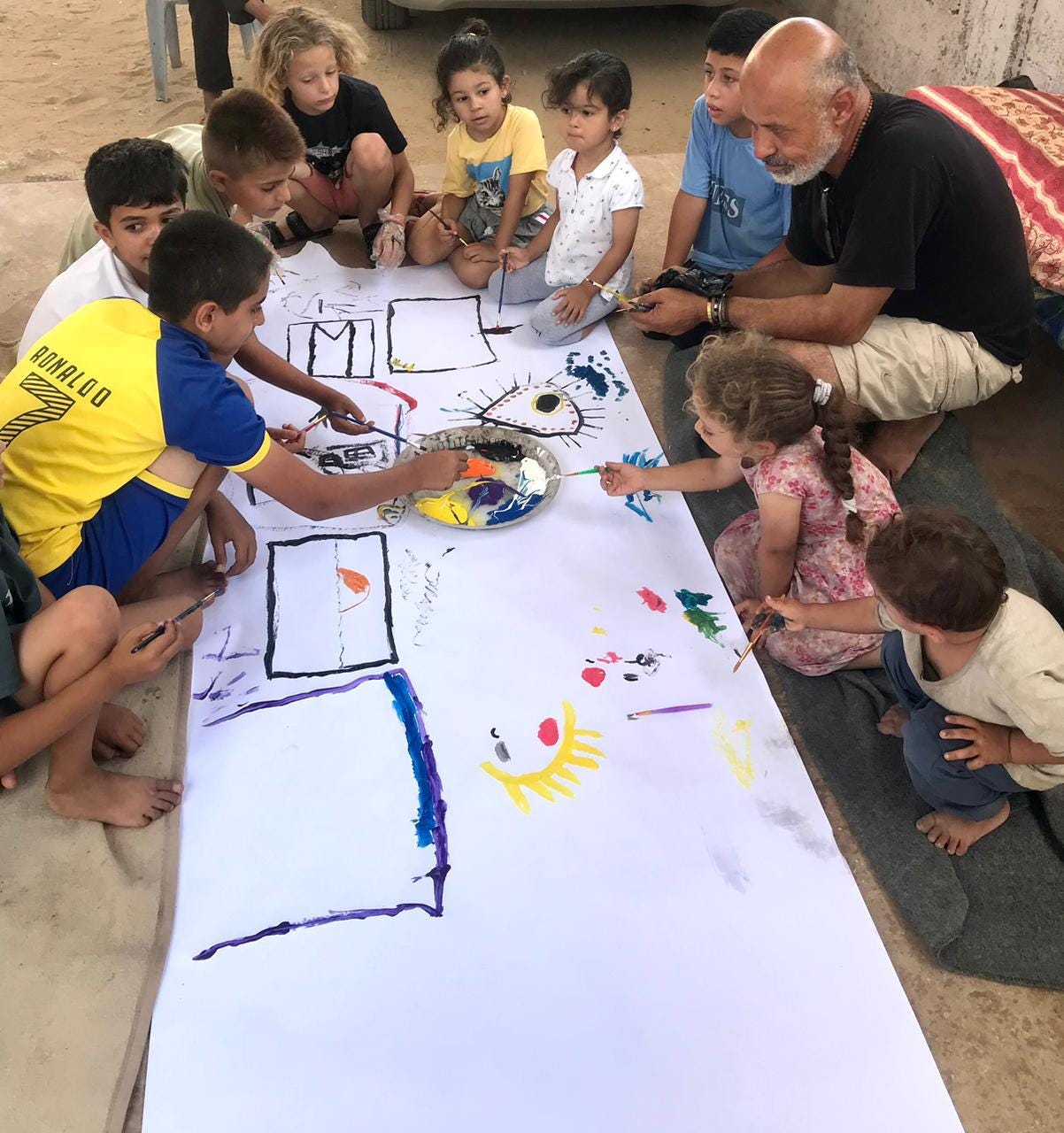
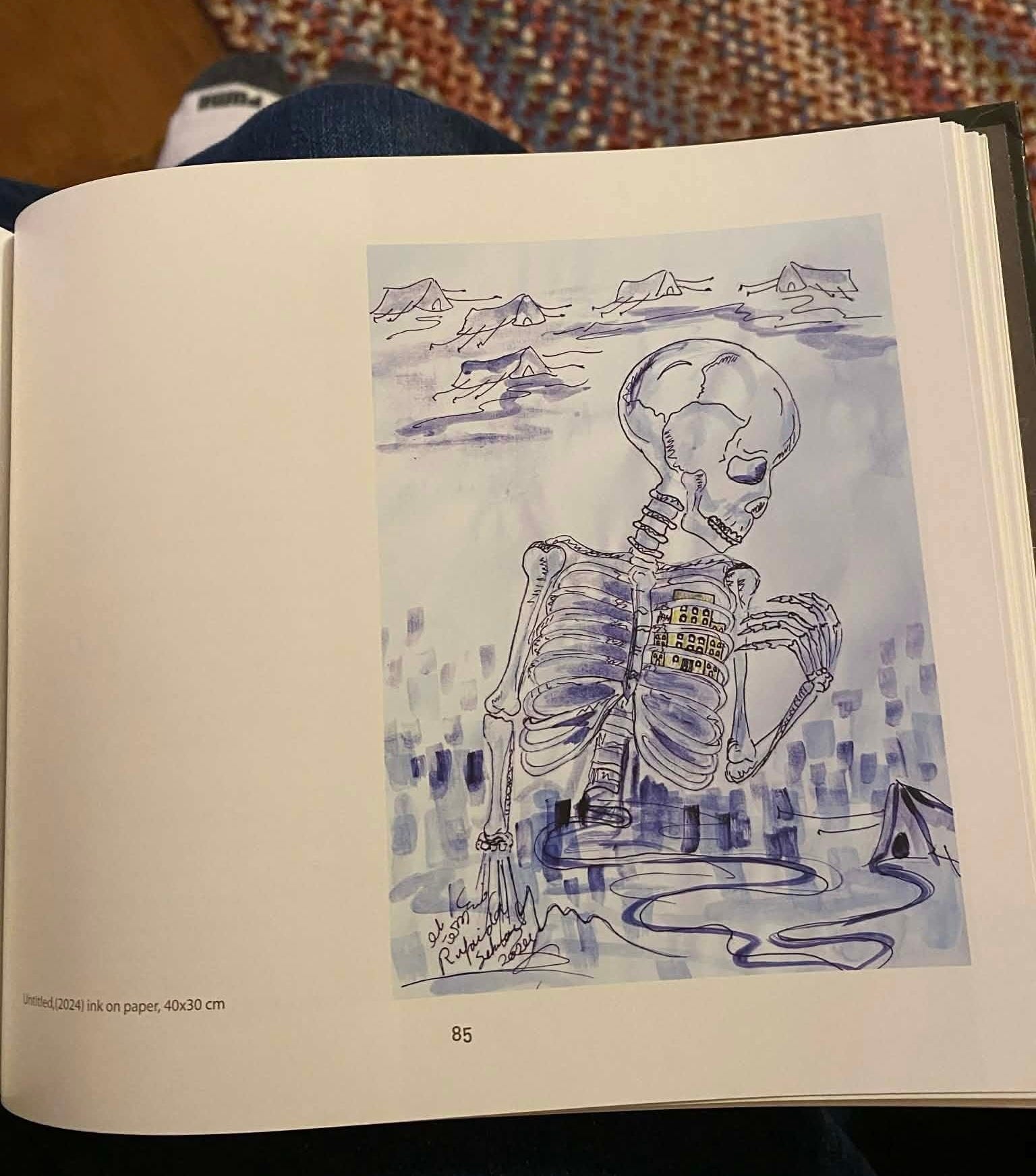
The artist Rufaida Sehwail also paints in a tent. In December 2023, she was due to open her fifth solo exhibition, titled Birth. But her home was bombed, and everything was turned to ash.
“I lost eighteen paintings, my entire studio, and my library of a thousand books,” she says.
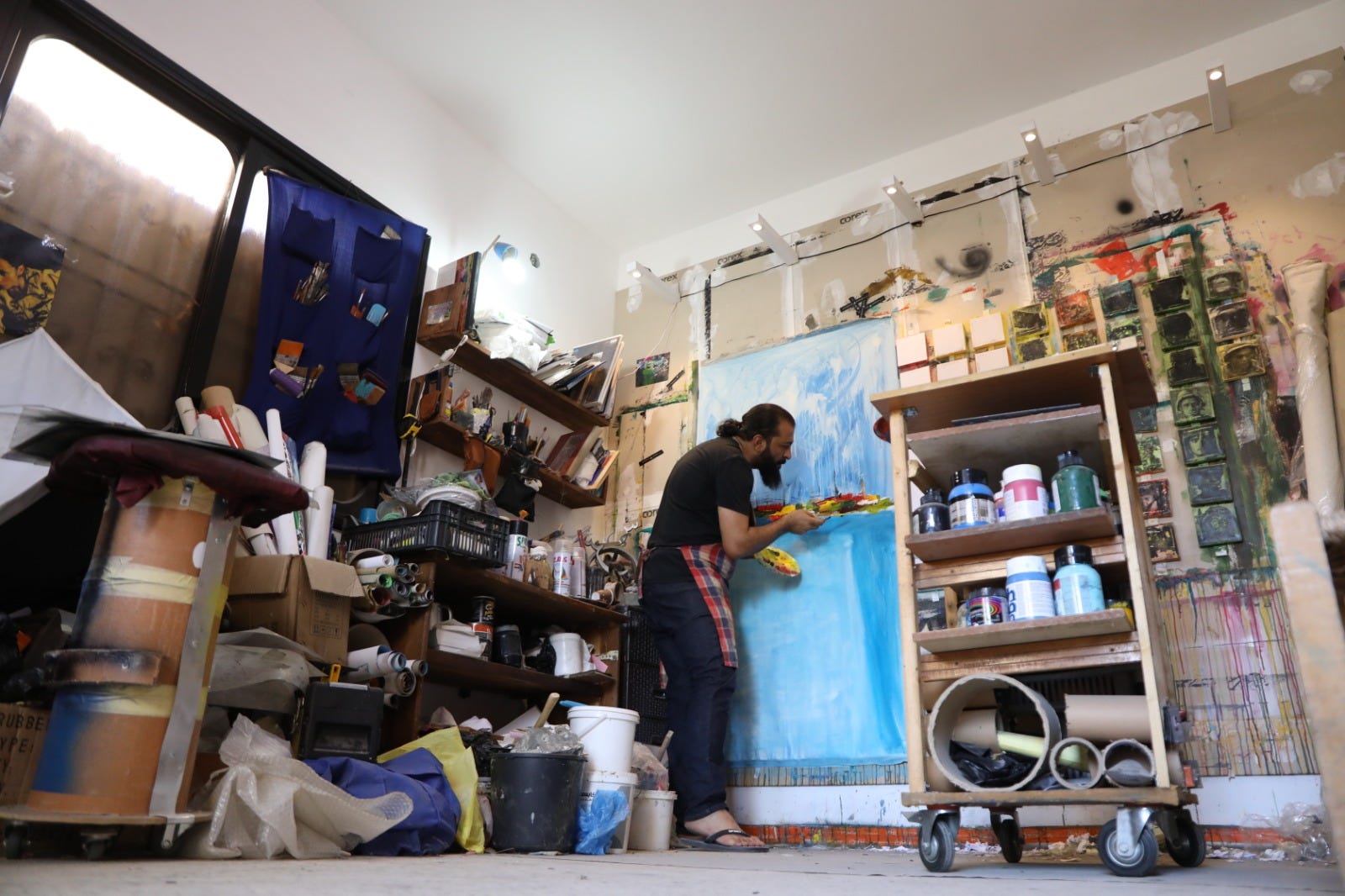
After a period of paralysing shock, she decided to rebel against the routine of death.
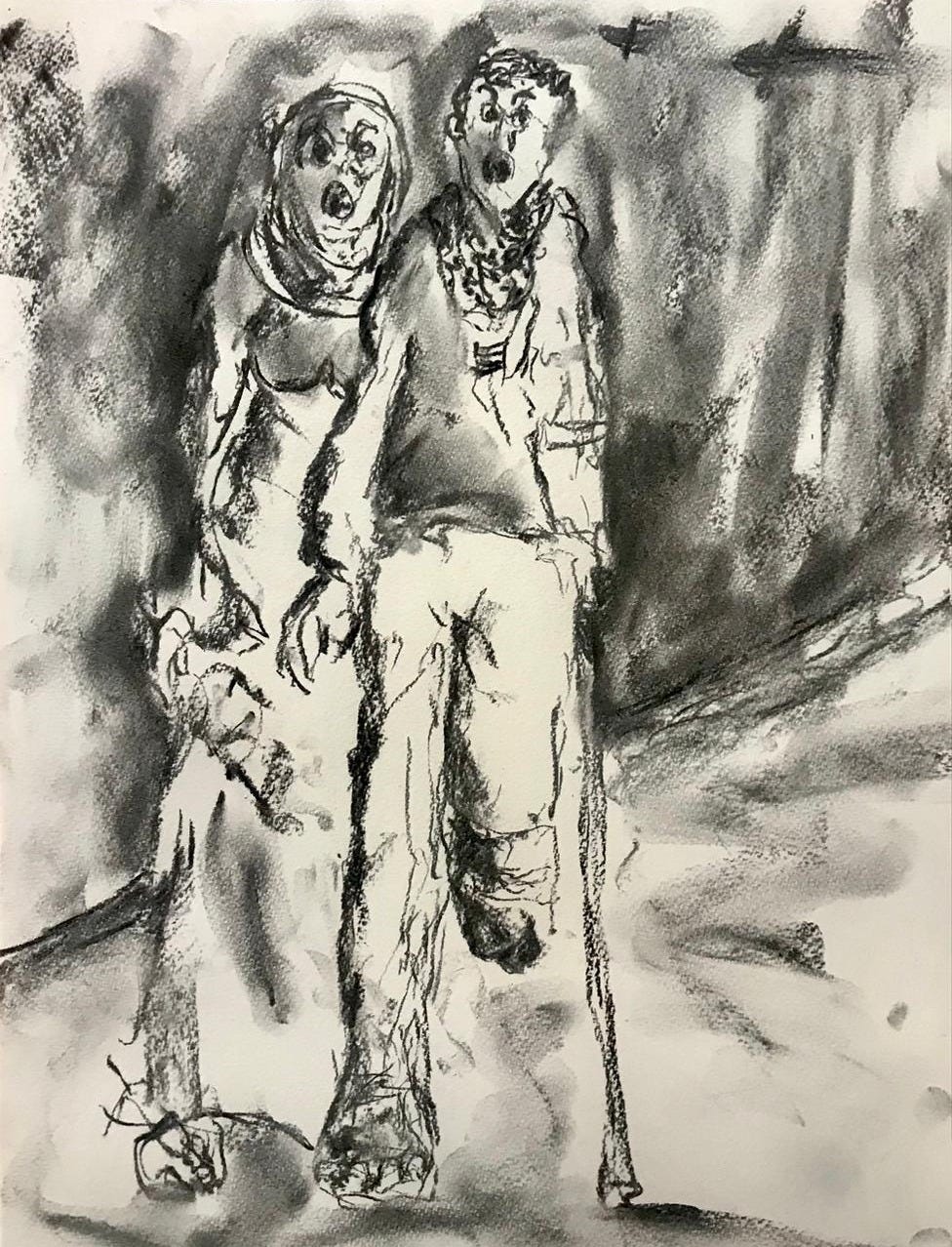
“I sought out the simplest paper I could find and began sketching in the heart of the refugee camps in Khan Younis. Art became my spiritual recovery, a way to channel the pain of the children and the silent weeping of the mothers. Through daily workshops of painting and movement, I try to open a window of hope.”
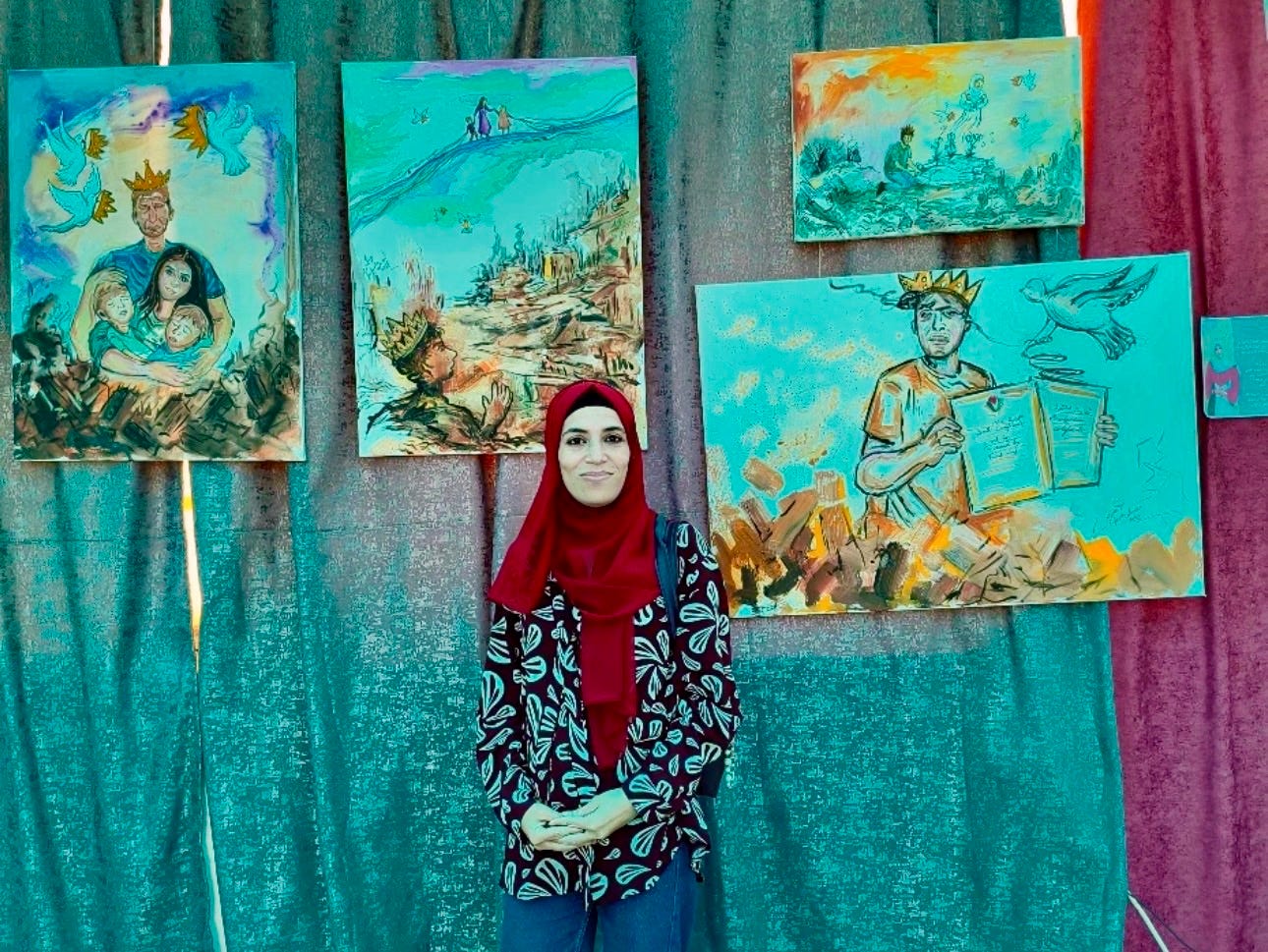
The blockade stops brushes and canvases, and Rufaida’s work is a constant struggle against the odds. How many more windows will be shattered before the world drowns in ugliness?
“I paint in a race against the sunset, before the darkness takes hold for lack of electricity. My exhibition Birth, which was physically destroyed, has now assumed a new existential form. I am colouring the ashes and asking if a human can be born anew from the time that tries to annihilate her.”
Postcards from Gaza
Khulud Shaban is a Palestinian journalist, born in Gaza in 1980, writing from exile.
Life. This series of personal stories is about how people once lived here – about the everyday life and the places that carried them. The culture, the food, the laughter, and everything they loved. A society forced to suffer and die. Survivors who remember what was with love and pain.
Death. The Hamas-led attack on Israel on October 7, 2023, killed 1,195 people, including 815 civilians and 36 children, according to AFP. Since then, Israel has killed over 72,587 people in Gaza and injured over 172,381, according to Gaza health authorities.
Children. Over 65,000 children have been killed or injured, over 56,000 have lost one or both parents, and between 3,000 and 4,000 have undergone one or more amputations, according to UNICEF.
Displaced. Approximately 90 percent of Gaza’s population has been forced to flee, many of them repeatedly, according to the UN.
Infrastructure. Large parts of Gaza’s housing, hospitals, schools, culture, crops, and historical and religious sites have been damaged or destroyed, according to the UN.
Read the next postcard:
