


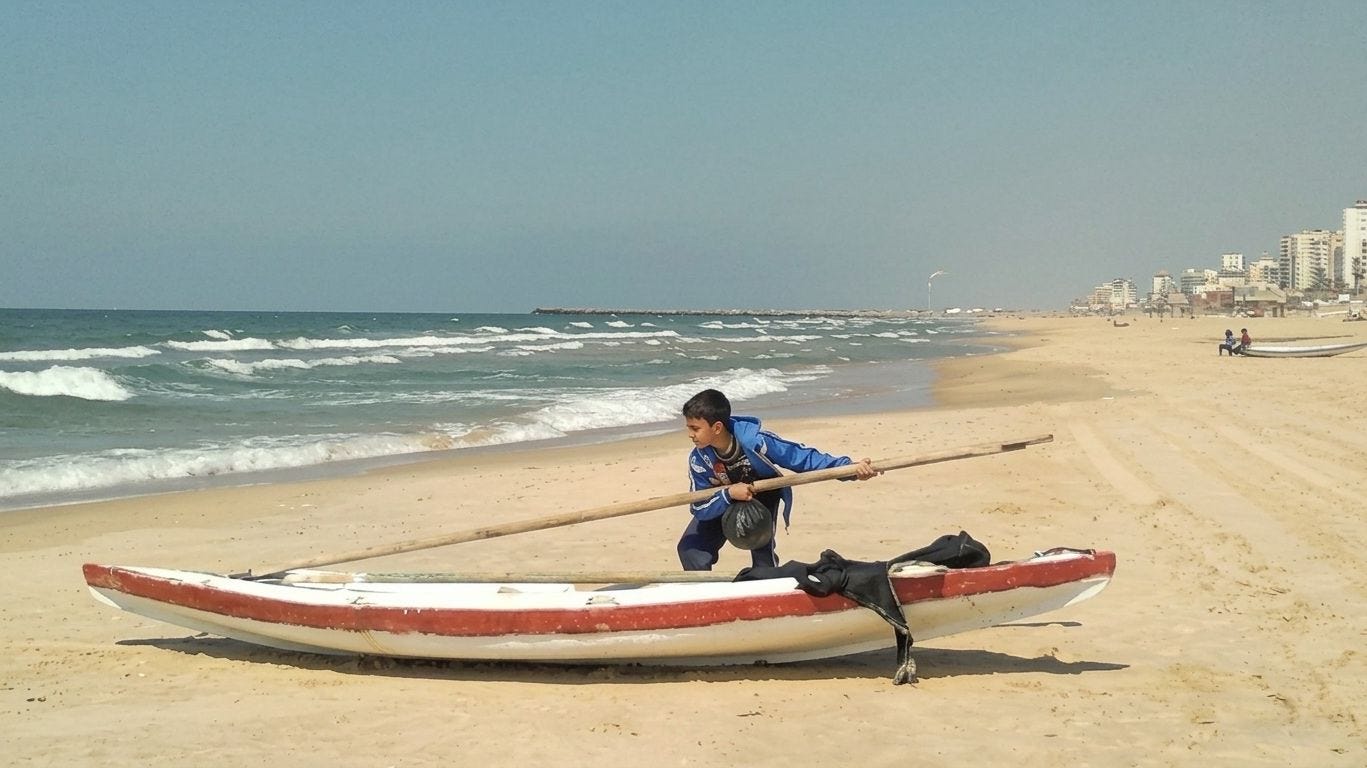
Our rituals for days at the beach are simple, but sacred. Before we even reach the sea, we stop at one of the many watermelon stands along the road. We move from one vendor to another, searching for the “perfect” melon.
We tap and listen for that distinct, hollow sound that tells us whether it will be good or not. Everyone wants to take part, and our laughter fills the air as we debate over which one to pick.
As soon as we arrive, my mother-in-law walks off to bury the melon deep in the wet sand to keep it cool. After our swim, the game begins when she asks the children to search for the hidden “treasure”.
The moment when my son Abood, who is five years old, finally finds it is one of pure joy. He insists that no one else is allowed to cut it open.
Still too small to slice it on his own, my mother places her hand over his to help him push the knife down. It is his first great victory, and his face shines with pride.
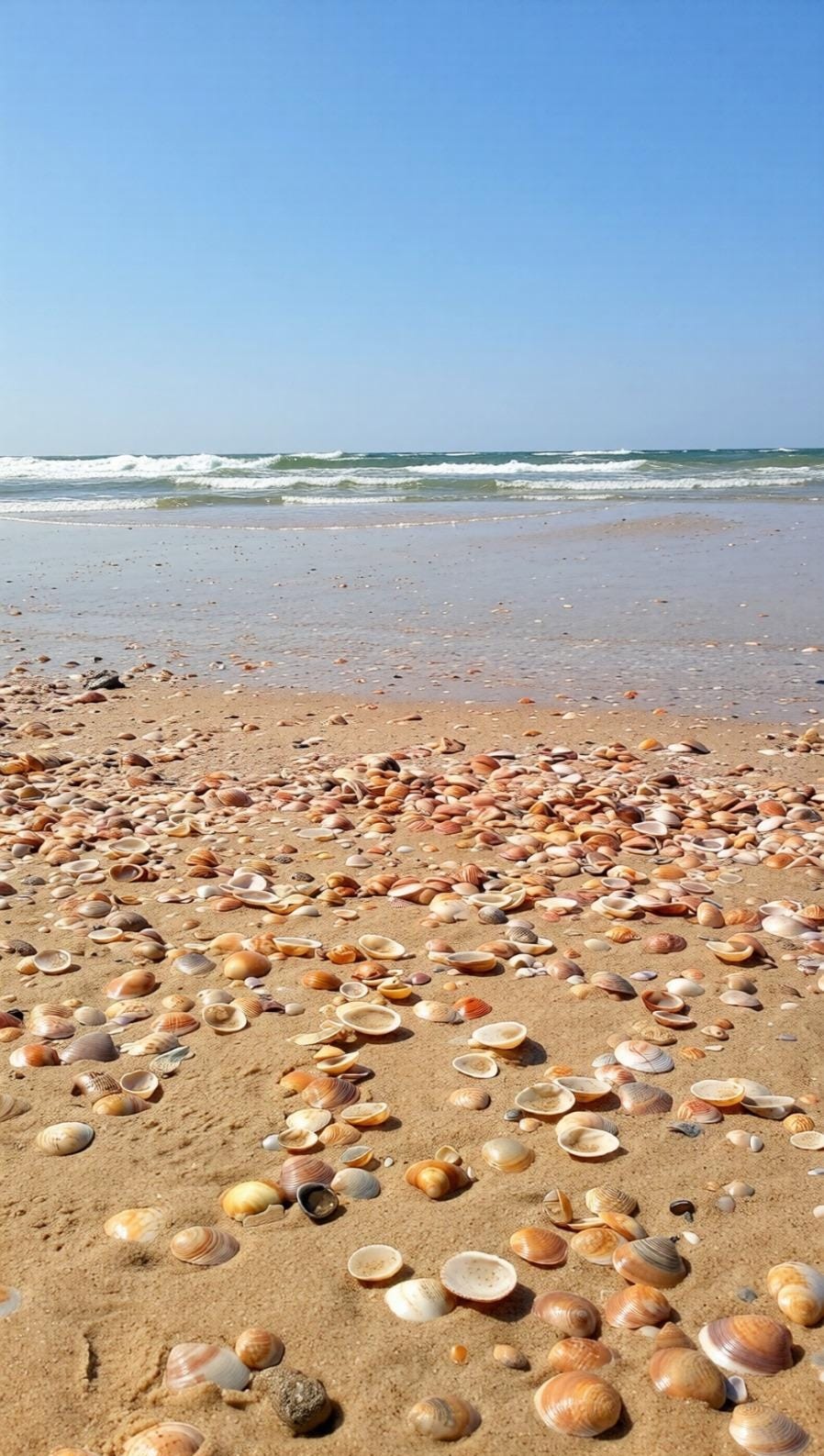
We serve everything with simple grace on a large aluminium tray, and eat the melon with sheep cheese we make ourselves from scratch. We bring our own bread, too, kneaded and baked by hand. Bread from the shop is something we hardly ever have.
Tea with fresh mint, sweetened just right, comes with us in a thermos. We refuse, however, to drink from plastic cups, so instead we bring real glasses, carefully wrapped in old newspapers we have finished reading, so they won’t break in the bag.
Everything tastes of sunshine, careful hands, and togetherness.
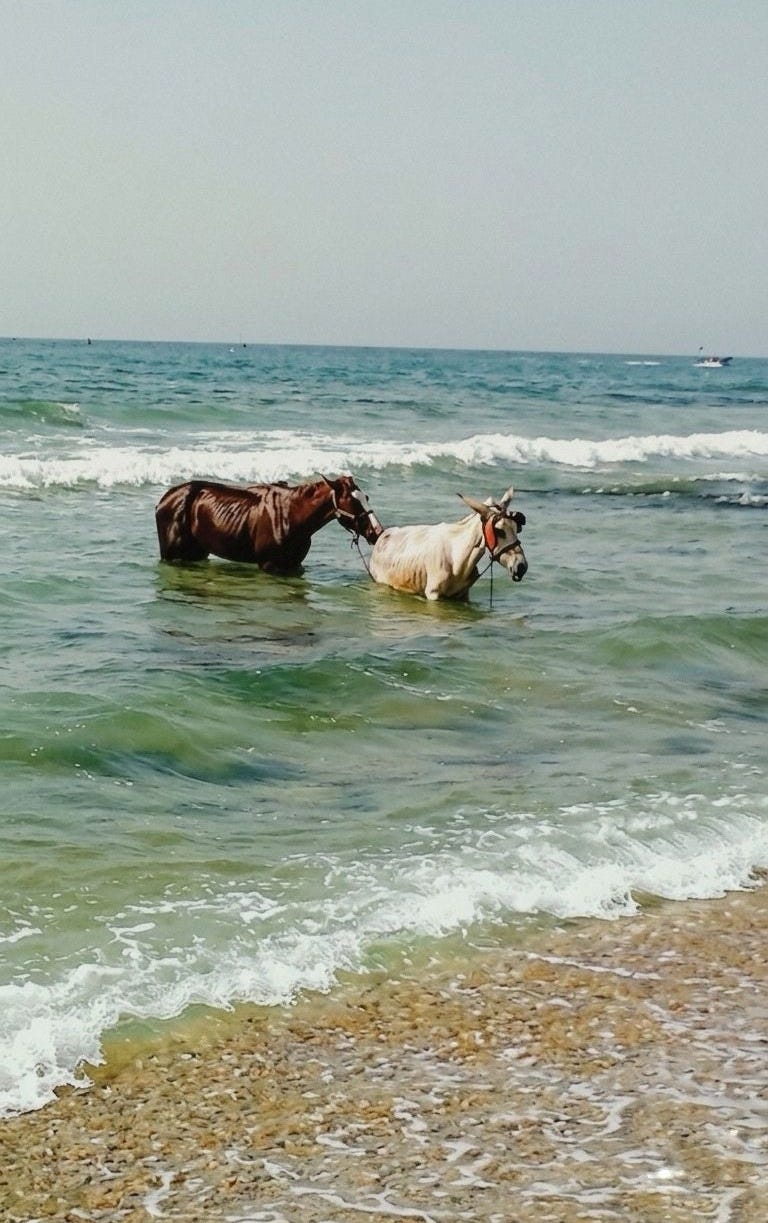
Then we wait for the cart with grilled sweet potatoes. The lovely scent of smoke and sweetness drifts on the wind, reaching us before we can see it. The children rush to meet it.
We buy the potatoes warm. As we walk along the water, the notes of the sweet potatoes mingle with the fresh saltiness of the sea. The sun warms our skin, and we toss a volleyball between us.
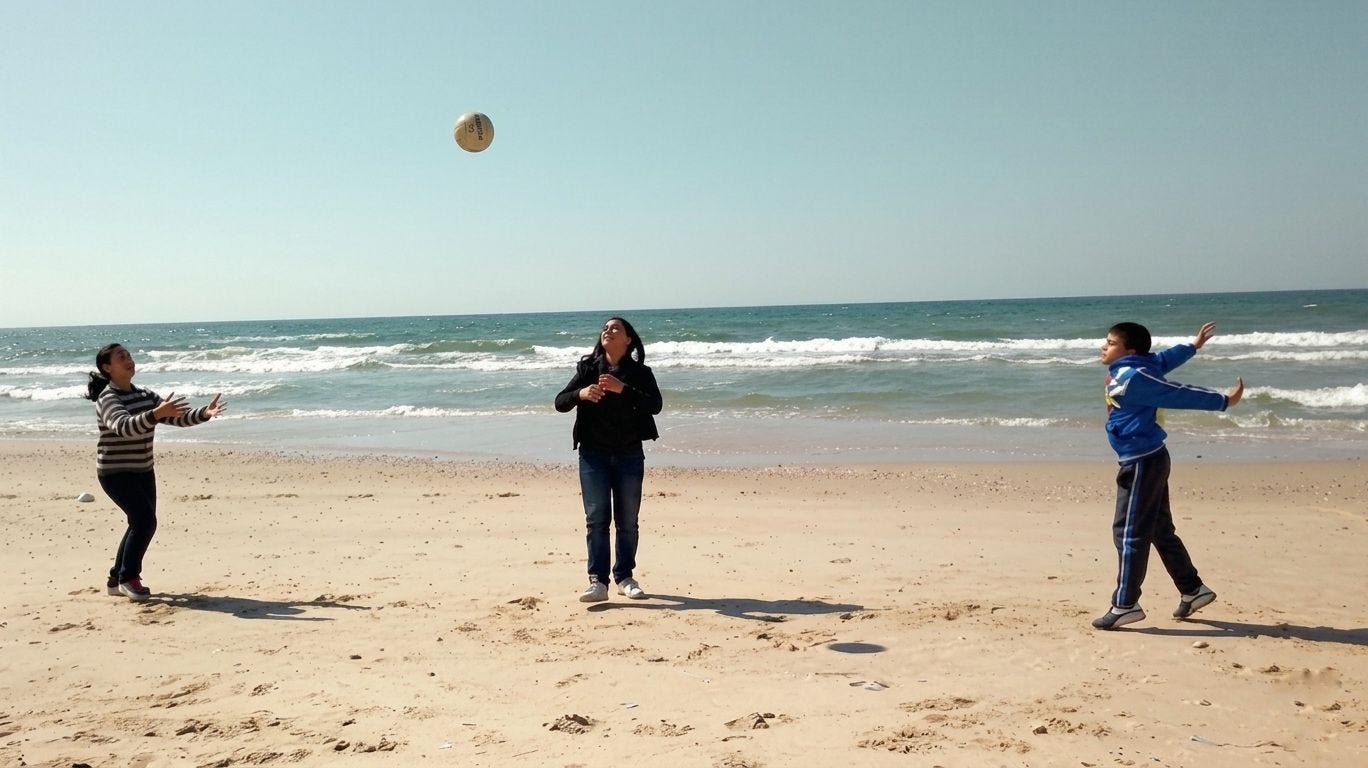
These days with my children, friends, and family are full of love. Here, I experience the most beautiful moments of my life.
The sea is our only refuge. Even though our fishermen are not allowed by the occupation to sail beyond three nautical miles, and risk being fired upon if they do, we feel a boundless freedom here, looking out over the vast blue.

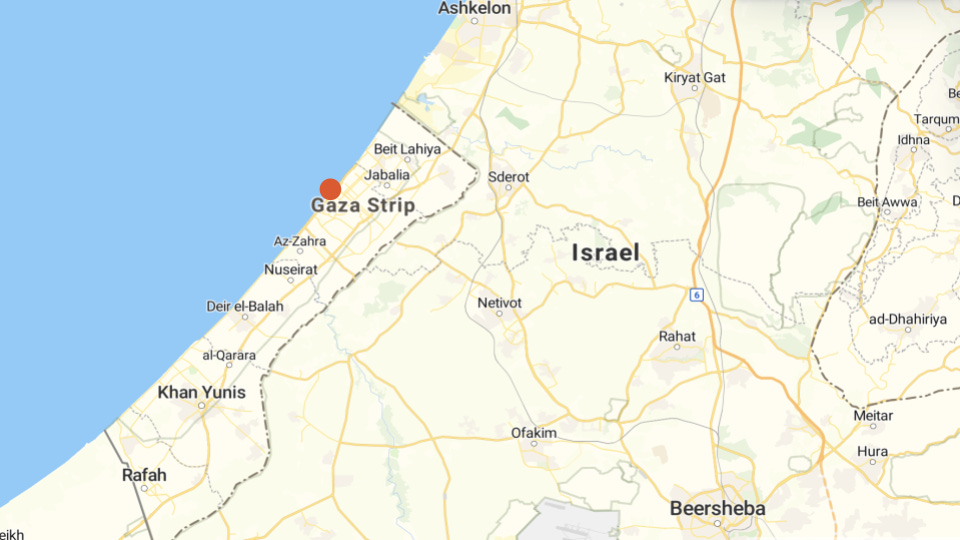
To us, the coast of Gaza is like no other. Its golden sand, the waves that caress the shore so gently, and children running, playing, and swimming everywhere.
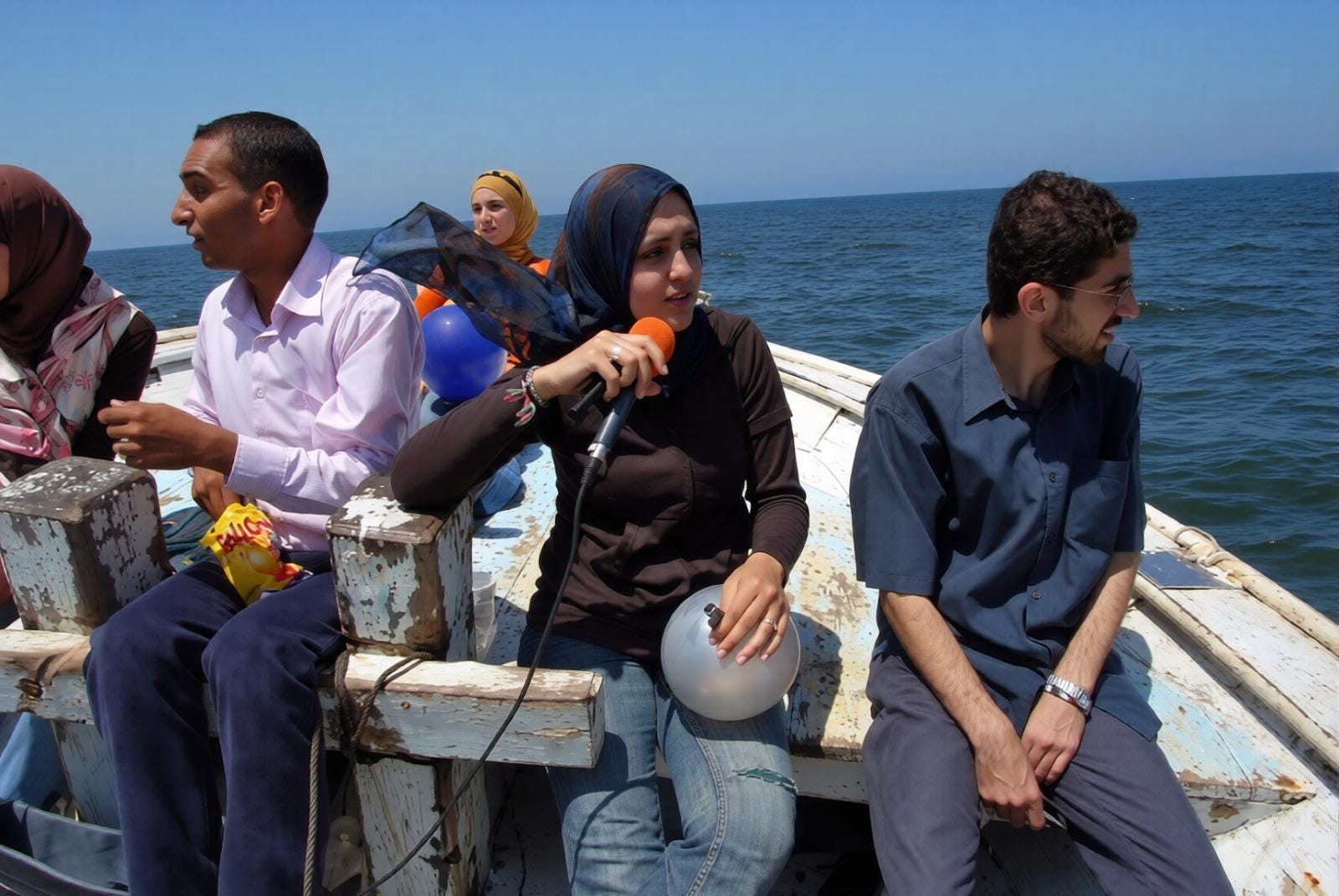
In my work as a journalist, the sea also gives my life a different flavour. Living near the harbour, I am close to the sea’s every detail, its touch at once harsh and tender, and the endless stories of the fishermen who call it home.
The sea soothes our worries, embraces our exhaustion, and washes our hearts with every wave.
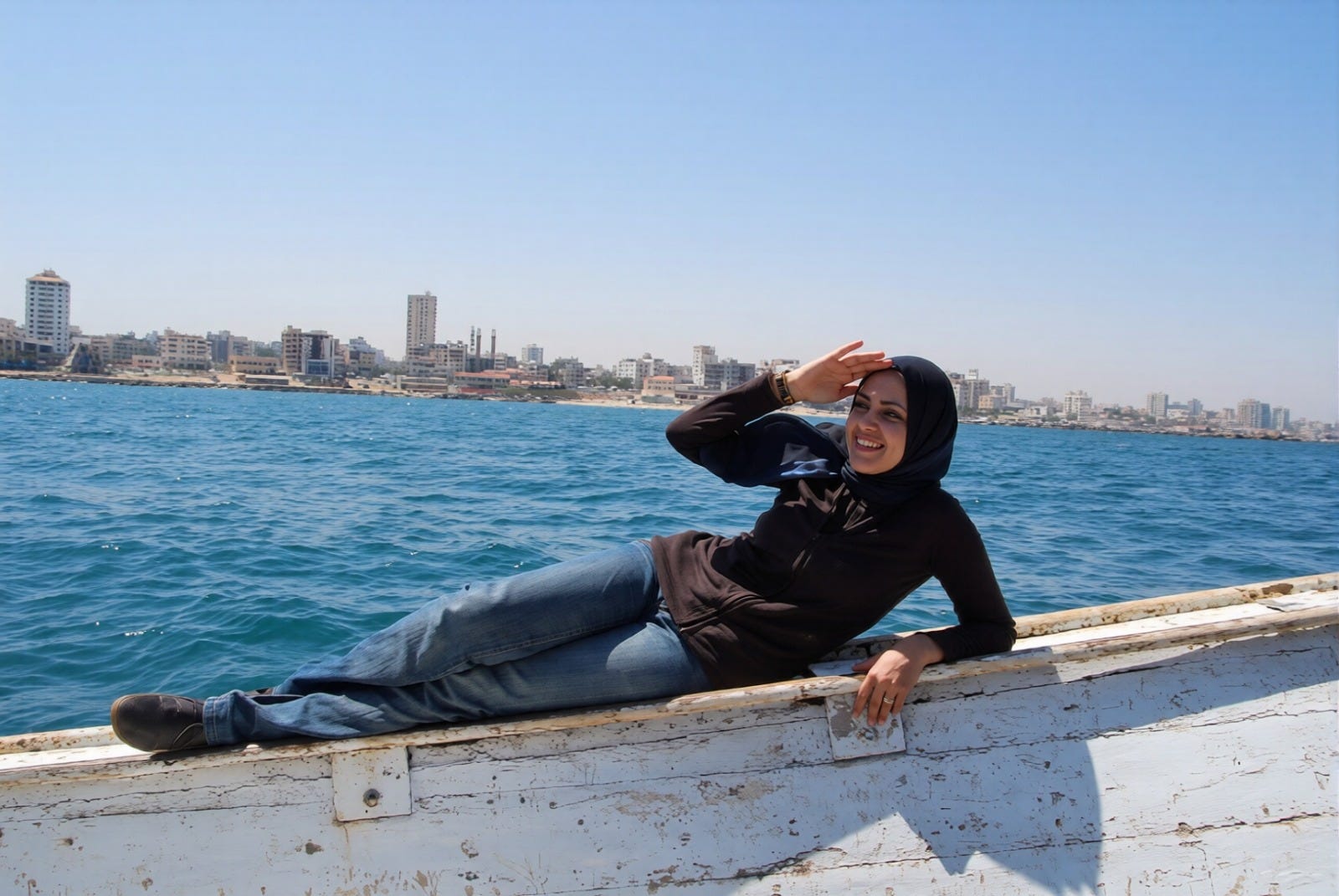
It is at once a sanctuary and an escape, yet also another wall. The loveliest wall of our prison.
I have been among the lucky few to travel to many countries and see many places, but I have never found a beach as vibrant as Gaza’s.
Today, everything is different. Families have been torn apart, and homes lie in ruins. The beach is strewn with the tents of the displaced.
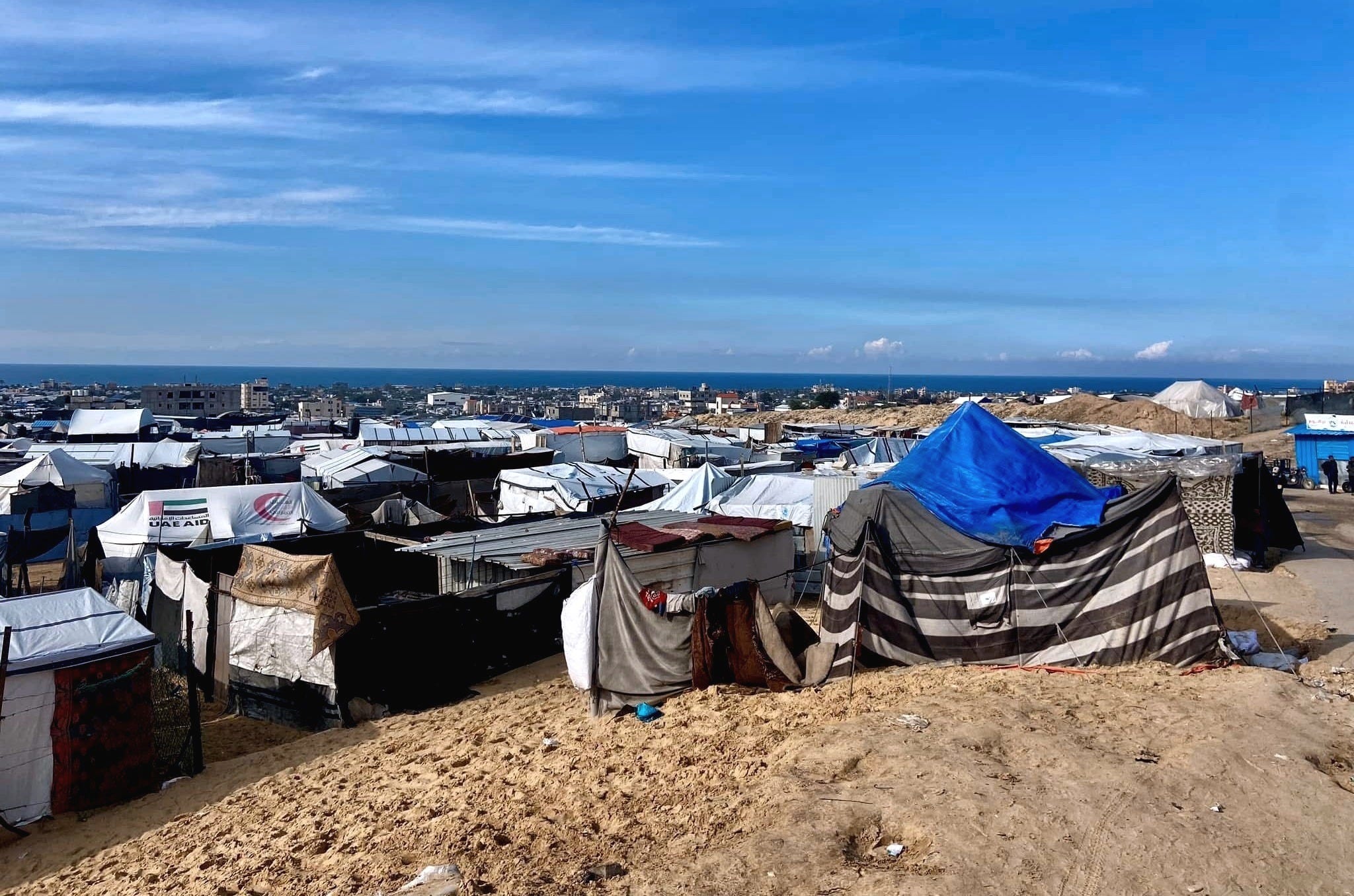
The sea is still there, right before our eyes, but no one can go down into it anymore, as death lurks constantly in the swell. Machine guns on the navy boats aim at anything that moves, and the occupation’s artillery spares no one.
It is as if they take pleasure in watching us die, unable to endure our will to live amid the destruction.
We are like fish that can no longer reach the sea. We die a hundred times each day, in a life without breath, under blockade, cut off from land, air, and water.
Now, only our memories of those days on the beach remain, beautiful yet painful. And I find myself wishing that life, in all its simplicity, might one day return.
Postcards from Gaza
Khulud Shaban is a Palestinian journalist, born in Gaza in 1980, writing from exile.
Life. This series of personal stories is about how people once lived here – about the everyday life and the places that carried them. The culture, the food, the laughter, and everything they loved. A society forced to suffer and die. Survivors who remember what was with love and pain.
Death. The Hamas-led attack on Israel on October 7, 2023, killed 1,195 people, including 815 civilians and 36 children, according to AFP. Since then, Israel has killed over 72,587 people in Gaza and injured over 172,381, according to Gaza health authorities.
Children. Over 64,000 children have been killed or injured, over 56,000 have lost one or both parents, and between 3,000 and 4,000 have undergone one or more amputations, according to UNICEF.
Displaced. Approximately 90 percent of Gaza’s population has been forced to flee, many of them repeatedly, according to the UN.
Infrastructure. Large parts of Gaza’s housing, hospitals, schools, culture, crops, and historical and religious sites have been damaged or destroyed, according to the UN.
Read the next postcard:
