


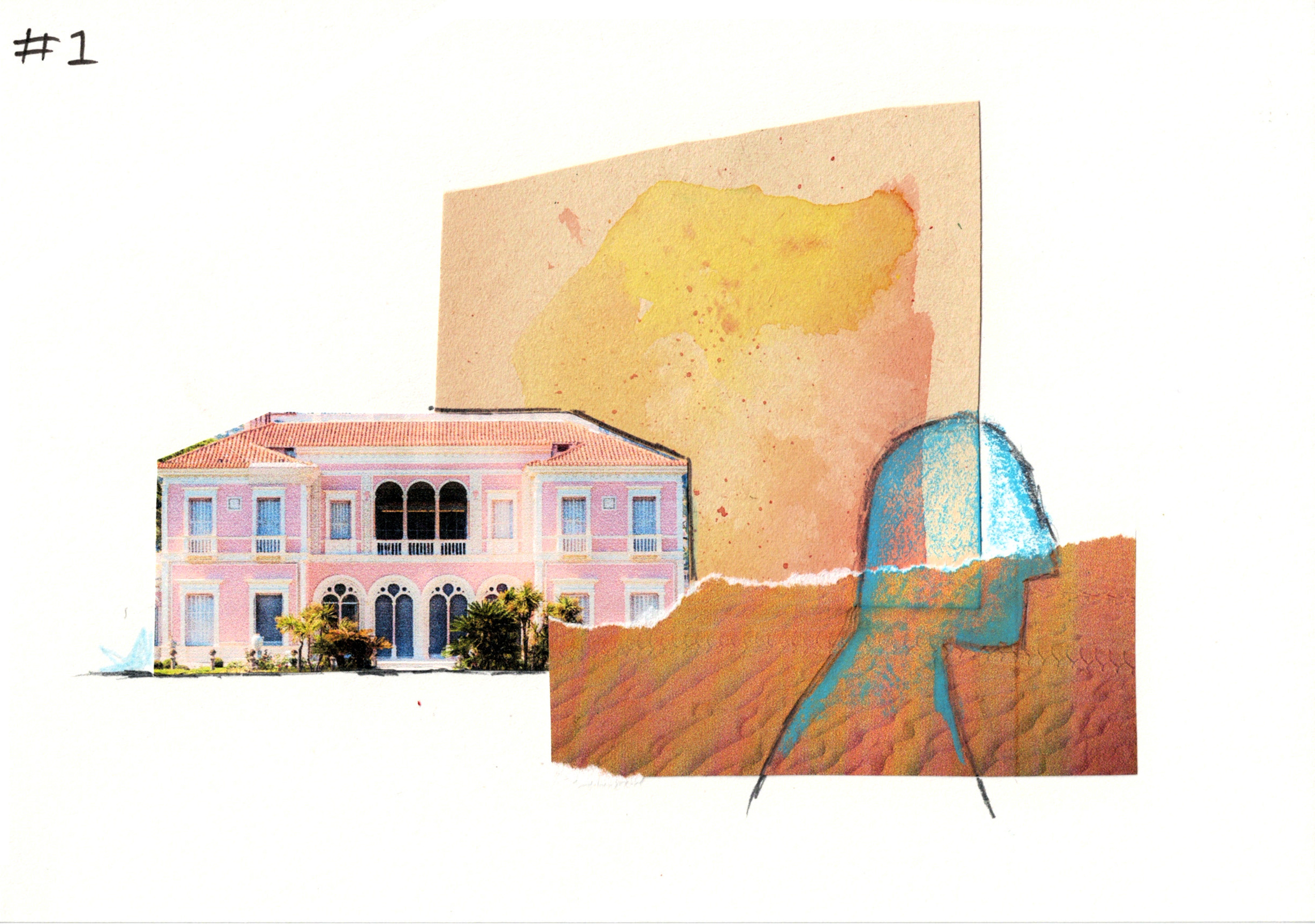
Dear friend, before I was born, my parents lived in and had their own villa in Mogadishu. Not a tent. Not a thorn tree. A real house with a door that locked, windows that faced the street and a big blue gate.
My father wore a clean ironed shirt to work. My mother wore a Somali dress and carried papers and notebook in her hand.
They could both read and write Somali and spoke Italian. They still do. They read the news. They wrote letters. They have university degrees.
My father had a job. My mother had a job. They paid for things with paper money, not with goats or EVC as we do now.
They drank tea from cups that matched. They slept in a bed – inside four walls, without my father keeping one hand on a gun.
They were ordinary people. They just wanted to eat anjera and drink tea for breakfast and go to work.
My mother laughs about it sometimes, but her eyes stay dry and steer to her past memories.
She says: “Guri Muqdisho aan ka ahayn, ma aanan garanayn. Xuduntayadu halkaas baa taalaa.” We did not know any home other than Mogadishu. That was our roots.
Then the civil war came in 1991.
Their clan became a curse. Neighbors turned into enemies. One night, they left everything. The house. The jobs. The cups that matched. The books. They ran with nothing but the clothes they wore, their faces and names they could not change.
Now my mother owns goats, sheep, cows and even camels. She inherited them from her parents who were nomads. My father owns an AK-47.

I own a story about a house I never saw.
Sometimes I close my eyes and try to imagine it. A door. A window. A light. A bed inside four walls. Expensive paintings on the walls. No gun.
My mother says: “Hanti waa laga tagaa, laakiin aqoonta lagama tago.” Wealth can be left behind, but knowledge cannot.
So I learn. For the house I never saw. For the life they lost.
May you never have to run from your own name,
Hibo
Journalist Wilo Abdulle helped Hibo, a young nomad student in Galgudud, central Somalia, write this postcard to you. She hopes it finds you well.
Hibo also drew a map with words that she wanted to show you. This is not a map with roads. This is a map of walking.
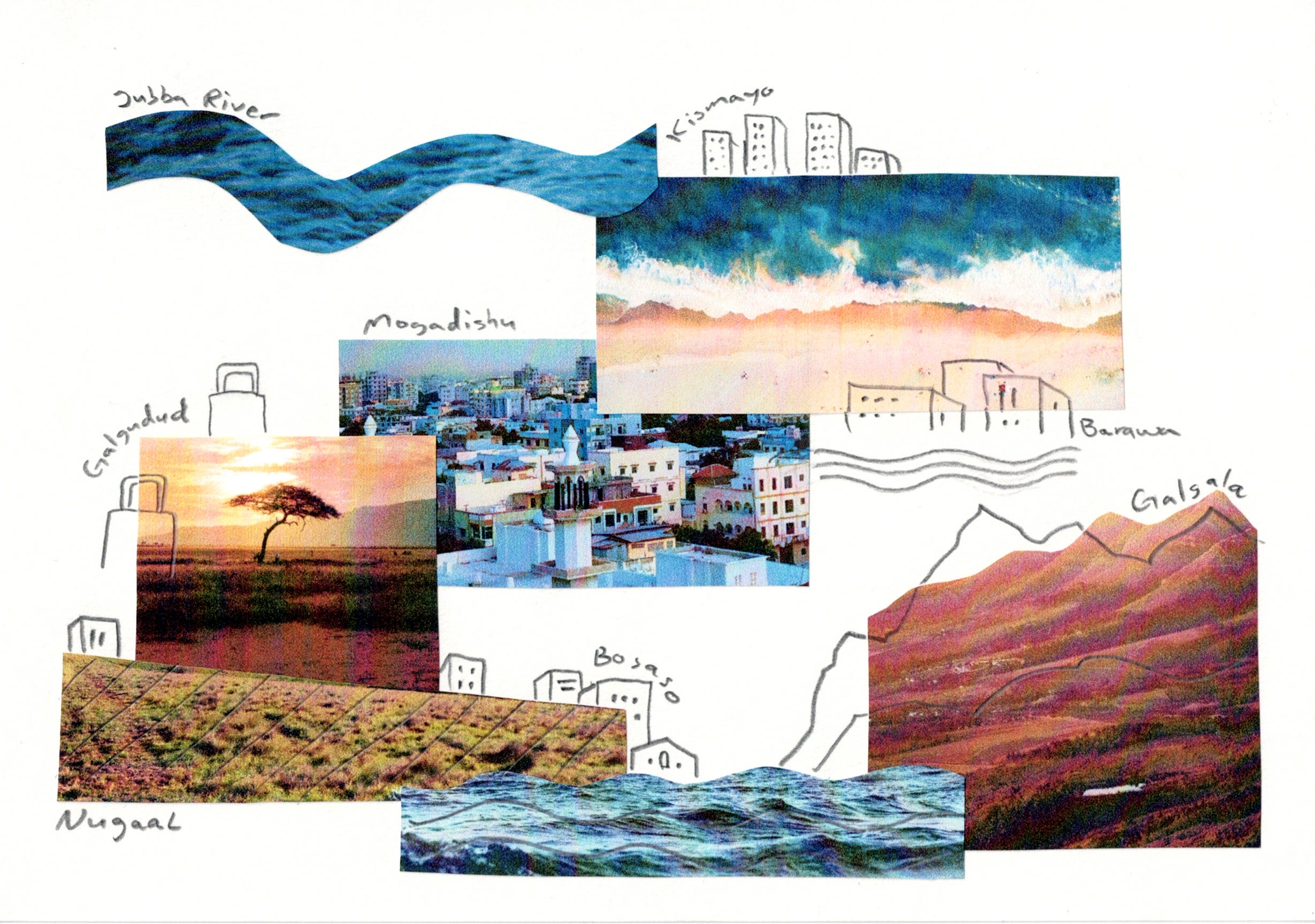
Kismayo. Southern Somalia. The blue ocean. Painted houses. Bougainvillea on walls.
Mogadishu. Mogadishu is a memory my parents carry like a small stone in their pocket.
The Flight. One night. No car. No taxi. Only feet. Walking east into bush. No map. No destination. Only away from bullets.
The Relative’s Camels. Somewhere in the middle. A cousin who still had a herd. That is how city people become nomads. Not by choice. By survival.
Galgudud. Dry earth. Acacia trees. Thorn bushes. No rivers. No schools. No hospitals. But clan soldiers – if you keep moving. We have walked for years. The rain does not come here anymore.

Galgala. Mountains in eastern Puntland. Stone and thorn. Where the maps are being redrawn for new resources. Where the fighters pass through. Where a woman watches her son walk three days for water that is barely there.
Wherever our teacher sets up the chalkboard. That is our school now.
The Forest. Where my father hides at night. No name on any map. Only moonlight, shadows and men with guns.
The next well. Always ahead. Never here. That is where we are going.
My mother says: “Khariidad la’aan, noloshu waa socod.” Without a map, life is just walking.
May you know where you come from, where you are, and where you are going.
We walk.
Postcards from Somalia
This is a series of postcards authored by aadmi in Somalia – ordinary human beings.
When the world looks at our country, it often sees only war, famine, pirates, clan killings, statelessness, displacement. Those things exist. But they are not the whole truth. They are not even most of the truth.
That version was written by the hunters.
War does not turn people into something else. It forces them to live ordinary lives in extraordinary circumstances. They still eat. Still teach. Still hope. Still sing songs for murdered leaders from other countries. The hunters’ stories never tell you that.
This is the lion’s story.
Inta libaaxu wax qorista ka
baranayo, sheeko kasta waxaa
sheegan doona ugaarsadeha.

Until the lion learns how to write,
every story will glorify the hunter.
Läs berättelsen bakom Aadmi Stories:

Read the story behind the Aadmi Stories:

Read the first Aadmi story:
